Dread the thought of soggy, lifeless leftovers from the microwave? You’re not alone. The microwave often sacrifices texture for speed, leaving many delicious meals a shadow of their former selves. Fortunately, your electric grill offers a fantastic, often overlooked solution to breathe new life into yesterday’s culinary creations. Whether it’s last night’s chicken, pizza, or grilled vegetables, an electric grill can crisp, warm, and revive your food with a desirable texture that other methods simply can’t match. This comprehensive guide will transform how you view leftovers, turning them into enjoyable meals once again.
Why Reheat Leftovers on an Electric Grill?
Reheating food on an electric grill presents several compelling advantages over traditional methods, though it also comes with a few considerations. Understanding these can help you decide when your electric grill is the perfect tool for the job.
Advantages:
- Superior Texture: Unlike microwaves that often steam food, an electric grill can restore a desirable crispness to items like pizza crusts, grilled chicken skin, or roasted vegetables. It helps to prevent the rubbery texture often associated with microwave reheating.
- Even Heating: With consistent heat distribution across the grill plates, your food warms more evenly, reducing cold spots that microwaves frequently leave behind.
- Enhanced Flavor: The gentle, dry heat can often bring back some of the original flavors and aromas, sometimes even adding a subtle grilled essence, especially if the food had a grilled component initially.
- Frees Up Oven Space: During busy meal prep or holiday gatherings, using an electric grill for reheating can save valuable oven space, allowing you to prepare other dishes simultaneously.
- Convenience for Small Portions: For a single serving, firing up a large oven can be inefficient. An electric grill heats up quickly and is ideal for smaller quantities.
|
Our Picks for the Best electric grill in 2026
As an Amazon Associate I earn from qualifying purchases.
|
||
| Num | Product | Action |
|---|---|---|
| 1 | Electric Grill, Techwood Indoor/Outdoor Electric BBQ Grill, 1600W Portable Removable Stand Grill with Adjustable Heat & Drip Tray, Double Layer Design for Party, Patio & Backyard (Blue) |

|
| 2 | Artestia 1800W Electric Outdoor Grills with Lid Indoor Smokeless Grill for Balcony with Temperature Control Portable Removable Stand Grill for Cooking, BBQ Party, Family |
|
| 3 | Chefman XL Electric Griddle with Removable Temperature Control, Immersible Flat Top Grill, Burger, Eggs, Pancake Griddle, Nonstick Extra Large Cooking Surface, Slide Out Drip Tray, 10 x 20 Inch |
|
| 4 | Hamilton Beach Electric Indoor Searing Grill with Viewing Window & Adjustable Temperature Control to 450F, 118 sq. in. Surface Serves 6, PFAS-Free Removable Nonstick Grate, Stainless Steel |
|
| 5 | Chefman Electric Smokeless Indoor Grill w/ Non-Stick Cooking Surface & Adjustable Temperature Knob from Warm to Sear for Customized BBQing, Dishwasher Safe Removable Water Tray, Black |
|
| 6 | Electric Grill, Techwood Indoor/Outdoor Electric BBQ Grill, 1600W Portable Removable Stand Grill with Adjustable Heat & Drip Tray, Double Layer Design for Party, Patio & Backyard (Black) |
|
| 7 | Ninja DG551 Foodi Smart XL 6-in-1 Indoor Grill with Air Fry, Roast, Bake, Broil, & Dehydrate, Foodi Smart Thermometer, 2nd Generation, Black/Silver |
|
| 8 | Chefman Smokeless Indoor Electric Grill, Extra Large Grilling Surface, Nonstick Table Top Grill for Indoor Grilling and BBQ with Adjustable Temperature Control, Drip Tray, Dishwasher-Safe Parts |
|
| 9 | Electric Grill, CUSIMAX Electric Indoor/Outdoor Grill, 1600W Portable BBQ with Lid for Indoor & Outdoor Use, Adjustable Heat, Removable Stand Grill for Cookouts, BBQ Gatherings, Small Spaces |
|
| 10 | Ninja Griddle and Indoor Grill, 14’’, Electric Grill, For Steak, Burgers, Salmon, Veggies, and More, Pancake Griddle, Nonstick, Dishwasher Safe, 500F, Even Cooking, Silver, GR101 |
|
Disadvantages:
- Can Dry Out Food: If not monitored carefully or if the heat is too high, food can quickly become dry and overcooked.
- Not Suitable for All Foods: Soups, stews, and very saucy dishes are generally not well-suited for an electric grill, as they can create a mess and won’t benefit from the grilling process.
- Slower Than a Microwave: While faster than a full-sized oven, reheating on an electric grill typically takes longer than a microwave, requiring a bit more patience.
- Requires Cleaning: Like any cooking surface, the grill plates will need to be cleaned after use, though many modern electric grills feature removable, dishwasher-safe plates.
Preparing Your Electric Grill for Reheating
Before you embark on your reheating journey, a little preparation goes a long way in ensuring safety, efficiency, and delicious results.
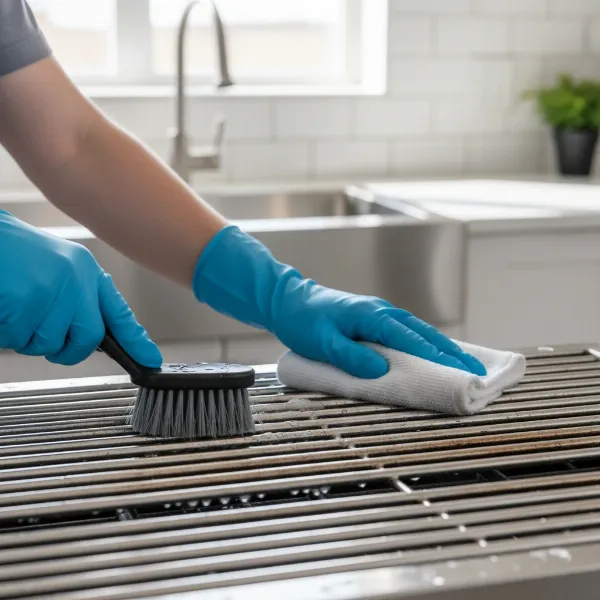
First, ensure your electric grill is clean. Any leftover food particles from a previous cooking session can burn and impart undesirable flavors to your reheated meal. Most electric grills have non-stick surfaces that are easy to wipe down.
Next, preheat your grill to the appropriate temperature. For reheating, a low to medium-low setting is almost always preferred. A general target temperature, if your grill has specific settings, would be around 250-300°F (120-150°C). The goal is gentle, gradual warming, not intense cooking. High heat will rapidly dry out or burn your leftovers.
Consider using aluminum foil for certain types of food. Placing food on a sheet of aluminum foil, shiny-side up, can create a barrier that protects against direct high heat, helps retain moisture, and prevents sticking. It’s particularly useful for delicate items or foods prone to drying. You can also form a loose tent with foil over your food to trap steam and promote more even heating, especially for thicker items.
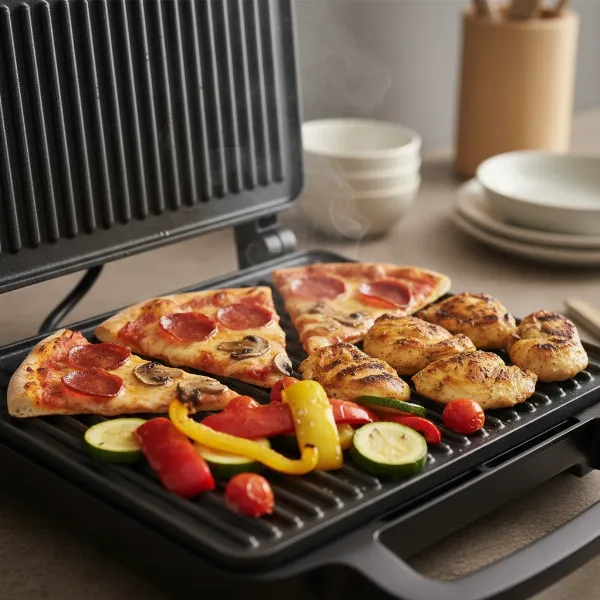 Close-up of an electric grill with various leftovers being reheated, including chicken, pizza, and vegetables
Step-by-Step Guide to Reheating Various Leftovers
The best approach to reheating depends on the type of food you’re working with. Here’s how to handle common leftovers on your electric grill for optimal results.
Reheating Meats (Chicken, Steak, Pork Chops)
Meats can be tricky to reheat without drying them out.
- Low and Slow: Set your electric grill to a low temperature.
- Add Moisture: Place the meat on a piece of aluminum foil. For drier meats like chicken breast, you can add a tiny splash of broth or water to the foil packet before sealing it loosely.
- Cover: Close the grill lid to trap heat and moisture, allowing the meat to warm through gently.
- Monitor: Flip the meat once or twice. Reheat until an internal temperature of 165°F (74°C) is reached. This process might take 10-15 minutes, depending on the thickness.
Crisping Up Pizza and Flatbreads
Electric grills are fantastic for reviving pizza, yielding a crispy crust and melted cheese.
- Medium-Low Heat: Preheat your grill to a medium-low setting.
- Direct Contact (Optional Foil): For a super crispy crust, place slices directly on the grill grates. If you prefer a slightly softer crust or want to avoid any charring, use a thin sheet of aluminum foil.
- Lid On: Close the lid to allow the cheese to melt and the toppings to warm without burning the crust.
- Quick Reheat: Pizza usually reheats quickly, typically within 5-8 minutes. Keep an eye on it to prevent burning.
Reviving Vegetables and Sides
Roasted vegetables, baked potatoes, or even hash browns can get a new lease on life.
- Low Heat: Use a low setting to gently warm vegetables.
- Lightly Oil: If reheating roasted vegetables, a very light spray of oil can help them crisp up and prevent sticking.
- Foil or Direct: Smaller, more delicate vegetables might benefit from foil, while heartier ones like potato wedges can go directly on the grates.
- Toss/Flip: Flip or toss vegetables periodically for even heating. Reheat until warmed through and slightly crisp, about 7-12 minutes.
Warming Sandwiches and Wraps
An electric grill can act like a panini press for leftover sandwiches or wraps.
- Low to Medium-Low Heat: Preheat your grill to a low or medium-low setting.
- Direct or Foil: Place the sandwich or wrap directly on the grill. For wraps or very cheesy sandwiches, a piece of foil can prevent excessive sticking and over-browning.
- Gentle Press: If your grill has a floating hinge, gently close the lid to apply light pressure, giving it that classic grilled sandwich look and texture.
- Short Duration: Reheat for 3-5 minutes, or until the bread is toasted and the fillings are warm.
Essential Tips for Safe and Delicious Reheating
Achieving perfectly reheated leftovers involves more than just turning on the grill. These tips will ensure your food is not only tasty but also safe to eat.
Food Safety First
Always reheat leftovers until they reach an internal temperature of 165°F (74°C). This is crucial for killing any harmful bacteria that might have grown while the food was cooling or stored. A reliable meat thermometer is an indispensable tool for verifying safety, especially for meats and thicker dishes.
Retain Moisture
One of the biggest challenges with reheating is preventing food from drying out. Using aluminum foil to create a loose packet, adding a small amount of liquid (like broth or water) for meats, or closing the grill lid to trap steam can significantly help. For drier items, a light brush of oil or butter before grilling can also make a difference.
Don’t Overcrowd the Grill
While it might be tempting to reheat a large batch, overcrowding your electric grill can lead to uneven heating. Give your food enough space for the heat to circulate properly, ensuring every piece warms up consistently. Reheat in batches if necessary.
Monitor Closely
Electric grills heat up quickly and can dry out food fast. Stay nearby and check your food frequently. Flipping items once or twice promotes even browning and heating.
Proper Storage is Key
The quality of your reheated leftovers starts with how they were stored. Ensure food is cooled rapidly (within 2 hours) and refrigerated promptly. Consume refrigerated leftovers within 3-4 days. Always discard any food that has been left at room temperature for too long. Avoid reheating the same food more than once.
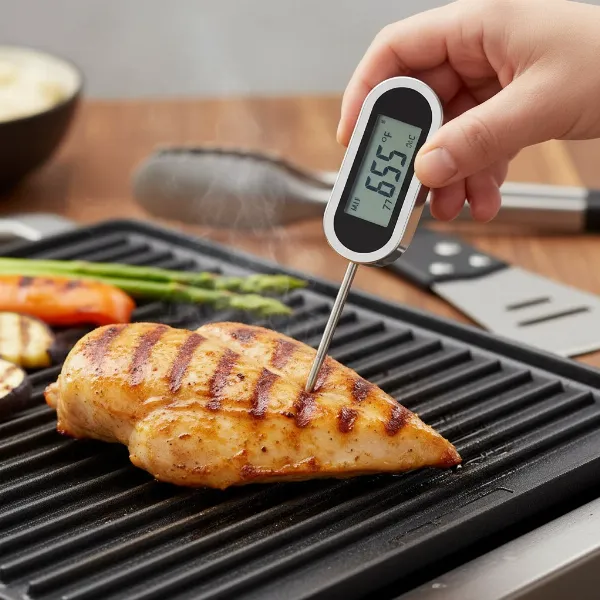 Hand holding a digital meat thermometer checking internal temperature of reheated chicken on electric grill
Comparing Electric Grill Reheating to Other Methods
Understanding how electric grill reheating stacks up against other common methods can help you choose the best option for your leftovers.
-
Microwave:
- Pros: Extremely fast, convenient.
- Cons: Can lead to uneven heating, rubbery textures, and soggy spots, often compromises food quality.
- Electric Grill Comparison: The electric grill excels in texture and evenness, though it’s slower.
-
Oven:
- Pros: Excellent for even heating and maintaining crispness, good for larger portions.
- Cons: Slow to preheat, uses more energy for small amounts of food, heats the kitchen.
- Electric Grill Comparison: The electric grill offers a quicker preheat and more energy-efficient solution for smaller portions, especially when you want a “grilled” finish.
-
Stovetop (Pan Frying):
- Pros: Good for certain foods like stir-fries or pancakes, can achieve crispiness.
- Cons: Requires constant attention, less suitable for thicker items or foods that benefit from covered heating, can splash grease.
- Electric Grill Comparison: The electric grill often provides more consistent, contained heat, and for many items, a better “grilled” texture without the need for additional oil or constant stirring.
Top Electric Grills for Reheating
While specific model recommendations depend on individual needs, certain features make an electric grill particularly effective for reheating leftovers. When selecting an electric grill, consider these attributes:
- Precise Temperature Control: The ability to adjust heat accurately to low and medium-low settings is paramount for gentle reheating without drying out food.
- Non-Stick Surfaces: High-quality non-stick plates prevent food from sticking, make flipping easy, and simplify cleanup, which is a major plus when dealing with saucy or cheesy leftovers.
- Removable, Dishwasher-Safe Plates: Ease of cleaning is crucial. Grills with plates that can be easily detached and placed in the dishwasher save a lot of time and effort.
- Floating Hinge Design: For sandwich-style items, a floating hinge allows the top plate to rest evenly on food of varying thicknesses, ensuring even contact and heating without squishing.
- Compact and Indoor-Friendly Design: Many electric grills are designed for indoor countertop use, making them a convenient option regardless of weather or outdoor space. Look for models that minimize smoke for a pleasant indoor cooking experience.
Conclusion
Reheating leftovers on your electric grill is a game-changer for anyone tired of rubbery textures and unevenly warmed meals. By understanding the right temperatures, employing simple techniques like using foil, and prioritizing food safety, you can consistently transform yesterday’s dishes into today’s culinary delights. This method not only preserves the original flavors and textures but often enhances them, providing a pleasant crunch or a perfectly warmed interior that other reheating options struggle to deliver. So, the next time you have uneaten food, consider giving your electric grill a starring role in your kitchen. What delicious leftover will you revive first?
Frequently Asked Questions
Can you reheat anything on an electric grill?
No, while versatile, electric grills are best for solid foods like meats, vegetables, pizza, and sandwiches. Avoid reheating liquids such as soups or stews, as they won’t heat effectively and can create a significant mess.
How long does it take to reheat leftovers on an electric grill?
The reheating time varies significantly depending on the type and thickness of the food, as well as the grill’s temperature setting. Thin items like pizza slices might take 5-8 minutes, while thicker meats could require 10-15 minutes or more. Always monitor closely and use a food thermometer to ensure proper internal temperature.
Is it safe to reheat food on an electric grill?
Yes, it is safe, provided you reheat the food thoroughly to an internal temperature of 165°F (74°C). Proper food storage before reheating (cooling quickly and refrigerating promptly) is also essential for food safety.
Does reheating food on an electric grill make it taste better?
Often, yes! The direct and even heat of an electric grill can restore crispness to crusts and skins, brown surfaces, and prevent the steaming effect common with microwaves. This often results in a more appealing texture and taste, making leftovers far more enjoyable.