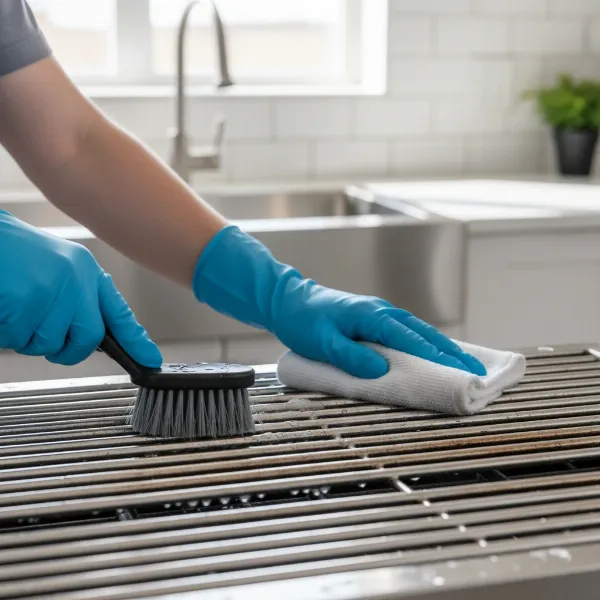
Few things are as frustrating for a home chef as discovering the non-stick coating on their favorite electric grill plates has started to peel. This isn’t just an aesthetic issue; it can affect your cooking performance and even raise concerns about safety. Electric grills are beloved for their convenience, ease of use, and ability to deliver delicious, perfectly seared meals right in your kitchen. However, maintaining that effortless cooking experience requires understanding how to care for their surfaces and what to do when wear and tear inevitably occur. This guide will walk you through the realities of peeling non-stick coatings, discuss the safety implications, offer practical advice on prevention, and help you determine when it’s time to replace your grill plates for optimal and safe grilling.
Understanding Non-Stick Coatings on Electric Grills
Electric grills rely heavily on their non-stick surfaces to prevent food from adhering, ensuring easy flipping, perfect browning, and quick cleanup. These coatings typically consist of materials like polytetrafluoroethylene (PTFE), commonly known by the brand name Teflon, or newer ceramic hybrid formulations. They work by creating a smooth, low-friction barrier that prevents food molecules from bonding with the metal beneath.
Over time, however, these coatings can degrade. Several factors contribute to this unwelcome deterioration, ranging from the natural aging of the material to improper handling. Thermal stress, caused by rapid temperature changes (like plunging a hot plate into cold water), and mechanical abrasion, from using metal utensils or abrasive cleaning pads, are primary culprits. Preheating an empty grill plate to high temperatures can also cause the coating and the underlying metal to expand at different rates, leading to microscopic gaps and eventually peeling or flaking.
Is It Safe to Use Electric Grill Plates with Peeling Non-Stick?
The question of safety is paramount when non-stick coating starts to peel. While small, ingested flakes of PTFE are generally considered inert and non-toxic, passing through the body without harm, there are broader concerns to consider. Historically, some non-stick coatings were manufactured using perfluorooctanoic acid (PFOA), a chemical linked to various health issues. However, modern non-stick coatings are largely PFOA-free, thanks to voluntary phase-outs by manufacturers.
Despite this, continuing to use grill plates with significant peeling or deep scratches can pose other risks. The exposed metal beneath the coating can be prone to rusting, and food is far more likely to stick and burn, making cooking a frustrating mess. Furthermore, deep scratches or areas where the coating has lifted can become breeding grounds for bacteria, impacting food hygiene. If your grill plates are warped, extensively peeling, deeply scratched, or showing dull gray patches where the coating has oxidized, it’s generally recommended to replace them to ensure both cooking performance and safety.
The Reality of “Fixing” Peeling Non-Stick Coating
Many people wonder if they can simply “fix” a peeling non-stick coating. The straightforward answer for home users is generally no. True peeling, where the coating has physically lifted, chipped, or flaked away from the metal surface, is typically irreversible with DIY methods. The application of non-stick coatings requires specialized industrial processes, including electrostatic spraying and high-temperature curing, which cannot be replicated in a home kitchen.
Some “restoration” methods you might encounter online often confuse the removal of accumulated food and grease residue (which can make a non-stick surface sticky) with the actual repair of physically damaged coating. While these cleaning methods can restore the non-stick properties of a pan suffering from residue buildup, they cannot re-bond or replace a peeling coating. Professional recoating services, like those offered by companies specializing in industrial coatings, do exist for electric grill surfaces, promising to restore original properties or even enhance durability. However, these are specialized services, not a quick home repair.
Addressing Loss of Non-Stickiness (When Not True Peeling)
Before concluding that your grill plates are irrevocably damaged, it’s worth identifying if the problem is true peeling or simply a buildup of stubborn residue that is causing food to stick. Often, a “sticky” non-stick pan isn’t peeling but has accumulated baked-on grease and food particles that interfere with its non-stick properties.
Deep Cleaning to Combat Residue Buildup
|
Our Picks for the Best electric grill in 2026
As an Amazon Associate I earn from qualifying purchases.
|
||
| Num | Product | Action |
|---|---|---|
| 1 | Ninja Griddle and Indoor Grill, 14’’, Electric Grill, For Steak, Burgers, Salmon, Veggies, and More, Pancake Griddle, Nonstick, Dishwasher Safe, 500F, Even Cooking, Silver, GR101 |

|
| 2 | Chefman Electric Smokeless Indoor Grill w/ Non-Stick Cooking Surface & Adjustable Temperature Knob from Warm to Sear for Customized BBQing, Dishwasher Safe Removable Water Tray, Black |
|
| 3 | Ninja DG551 Foodi Smart XL 6-in-1 Indoor Grill with Air Fry, Roast, Bake, Broil, & Dehydrate, Foodi Smart Thermometer, 2nd Generation, Black/Silver |
|
| 4 | Hamilton Beach Electric Indoor Searing Grill with Viewing Window & Adjustable Temperature Control to 450F, 118 sq. in. Surface Serves 6, PFAS-Free Removable Nonstick Grate, Stainless Steel |
|
| 5 | Artestia 1800W Electric Outdoor Grills with Lid Indoor Smokeless Grill for Balcony with Temperature Control Portable Removable Stand Grill for Cooking, BBQ Party, Family |
|
| 6 | Electric Grill, CUSIMAX Electric Indoor/Outdoor Grill, 1600W Portable BBQ with Lid for Indoor & Outdoor Use, Adjustable Heat, Removable Stand Grill for Cookouts, BBQ Gatherings, Small Spaces |
|
| 7 | Electric Grill, Techwood Indoor/Outdoor Electric BBQ Grill, 1600W Portable Removable Stand Grill with Adjustable Heat & Drip Tray, Double Layer Design for Party, Patio & Backyard (Blue) |
|
| 8 | Chefman Smokeless Indoor Electric Grill, Extra Large Grilling Surface, Nonstick Table Top Grill for Indoor Grilling and BBQ with Adjustable Temperature Control, Drip Tray, Dishwasher-Safe Parts |
|
| 9 | Chefman XL Electric Griddle with Removable Temperature Control, Immersible Flat Top Grill, Burger, Eggs, Pancake Griddle, Nonstick Extra Large Cooking Surface, Slide Out Drip Tray, 10 x 20 Inch |
|
| 10 | Electric Grill, Techwood Indoor/Outdoor Electric BBQ Grill, 1600W Portable Removable Stand Grill with Adjustable Heat & Drip Tray, Double Layer Design for Party, Patio & Backyard (Black) |
|
If your non-stick surface feels sticky rather than visibly peeling, a thorough deep clean might revive its performance. This method is primarily for pans that have lost their non-stick properties due to grime, rather than physical damage.
- Prepare a Vinegar Solution: Mix one part white vinegar with two parts water. For example, use one cup of water and half a cup of white vinegar.
- Boil and Simmer: Pour the mixture into the pan or a container large enough for your grill plate (if removable and suitable for stovetop heating). Bring the solution to a boil, then reduce the heat and let it simmer for about ten minutes. This process helps dissolve baked-on oil residue.
- Wipe Clean: Carefully pour out the hot mixture. Once cool enough to handle, wipe the surface with a soft cloth or paper towel. Much of the loosened residue should come off easily.
- Baking Soda Scrub: For any remaining stubborn spots, sprinkle a generous amount of baking soda onto the surface. Using a soft sponge, gently scrub the area. Baking soda is a mild abrasive that can help break down sticky particles without harming the non-stick coating.
- Final Rinse: Rinse the grill plate thoroughly with soapy water and a soft sponge, then wipe clean and dry completely.
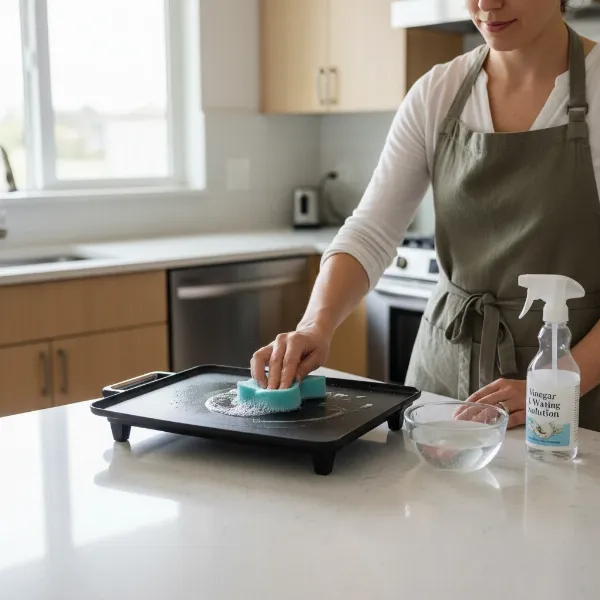 Woman cleaning an electric grill plate with a vinegar solution and a soft sponge
The Limitations of “Seasoning” on Non-Stick Surfaces
Some believe that seasoning a non-stick pan with oil, similar to cast iron, can restore its non-stick properties. However, this is largely a myth for true non-stick coatings. Unlike cast iron, which has a porous carbon structure that allows oils to polymerize and create a natural non-stick layer, synthetic non-stick surfaces are designed to be smooth and non-porous.
Attempts to “season” non-stick pans are not only ineffective but can actually be counterproductive. Excess baked-on oil can carbonize into a sticky, uneven residue, which further degrades the non-stick performance and can trap moisture, accelerating oxidation. Industry testing confirms no adhesion benefit from such attempts, only measurable degradation. For a non-stick surface, consistent and proper cleaning is key, not seasoning.
Preventing Peeling: Maximizing the Lifespan of Your Electric Grill Plates
The best “fix” for peeling non-stick coating is prevention. By adopting careful habits, you can significantly extend the life of your electric grill plates and maintain their non-stick performance for years.
Gentle Cleaning and Maintenance
- Hand Washing is Best: Always hand wash your electric grill plates with mild dish soap and a soft sponge. Many manufacturers claim dishwasher safety, but aggressive detergents and high temperatures can gradually destroy the non-stick coating, leading to premature wear and peeling.
- Avoid Abrasives: Never use metal utensils, abrasive scrubbers, steel wool, or harsh cleaning agents. These can scratch and damage the delicate non-stick layer, creating weak points where peeling can begin.
- Cool Completely Before Cleaning: Thermal shock is a major enemy of non-stick coatings. Always allow your grill plates to cool completely to room temperature before washing them. Plunging a hot plate into cold water causes rapid contraction and can compromise the coating’s bond with the base material.
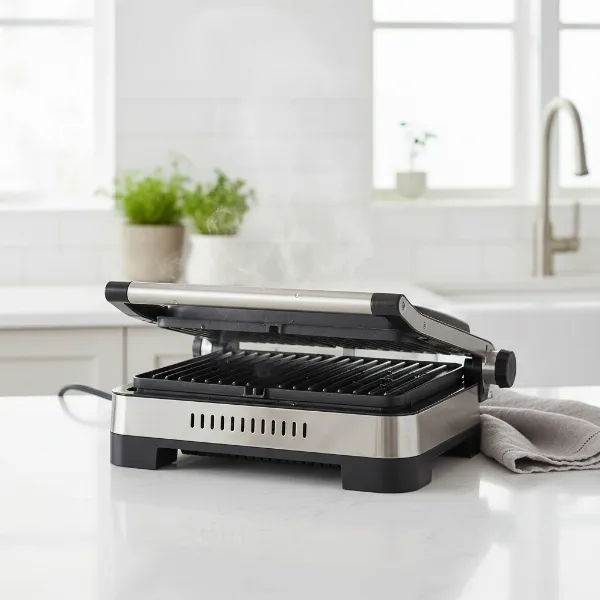 Electric grill plates cooling down on a counter after use
Mindful Heating and Cooling
- Cold Oil Start: Always add a thin layer of cooking oil to a cold grill plate before turning on the heat. Oil acts as a thermal buffer, ensuring uniform heating and reducing stress on the coating. Preheating an empty non-stick surface can create hot spots and differential expansion, leading to micro-delamination.
- Controlled Heat: Use low to medium heat settings for cooking on non-stick surfaces. Temperatures exceeding 400°F (204°C) for PTFE coatings can cause degradation and even release potentially toxic fumes. For high-searing tasks, consider alternative cookware like cast iron or stainless steel.
- No Cooking Sprays: Avoid aerosol cooking sprays. Their propellants and lecithin can leave a stubborn, gummy residue that bakes onto the surface, degrades the non-stick performance, and is difficult to remove without abrasive scrubbing.
Smart Storage
- Protect Surfaces: When storing multiple grill plates or stacking them with other cookware, always place a protective liner (like felt pads, paper towels, or a soft cloth) between them. This prevents scratches and chips that can occur from direct contact.
- Vertical Storage: If possible, store grill plates vertically in a rack to minimize contact and potential damage.
When It’s Time for Replacement: Choosing Durable Electric Grill Plates
Despite the best care, non-stick coatings have a finite lifespan, typically lasting 2-4 years with proper use. There comes a point when replacement is the safest and most practical option.
Recognizing Irreversible Damage
It’s time to replace your electric grill plates if you notice:
- Extensive Peeling or Flaking: Any significant area where the coating has visibly lifted, chipped, or flaked off.
- Deep Scratches: Scratches that penetrate through the non-stick layer to the metal beneath.
- Warping: The plates are no longer flat, leading to uneven cooking.
- Dull Gray Patches: Signs of coating oxidation or significant wear that no longer clean off.
- Food Sticking Consistently: Even after thorough cleaning and proper oil usage, food stubbornly sticks, indicating a severe loss of the coating’s integrity.
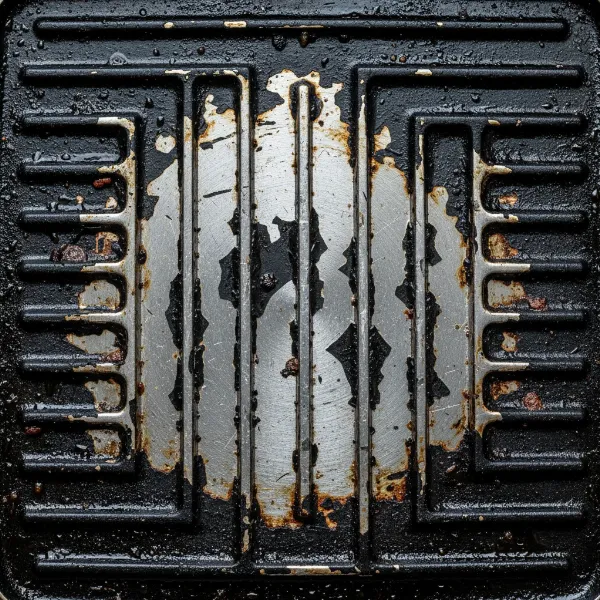 Close-up of an electric grill plate with noticeable peeling and scratches on the non-stick surface
Key Features for Durable Non-Stick Grill Plates
When purchasing new electric grill plates or a new grill, look for features that indicate greater durability and a longer lifespan:
- Advanced Coating Materials: Seek out plates with PFOA/PTFE-free ceramic coatings, often infused with materials like diamonds or titanium. These are engineered for enhanced durability and scratch resistance compared to traditional non-stick. Multi-layer coatings also offer improved longevity.
- Robust Construction: Plates made with a heavy-gauge aluminum or stainless steel core provide better heat distribution and resistance to warping, contributing to a longer lifespan.
- Removable and Replaceable Plates: Grills with removable plates are much easier to clean properly, which directly extends coating life. The availability of replacement plates also means you don’t have to discard the entire appliance if only the plates wear out.
- Precise Temperature Control: Models with accurate and consistent temperature controls help prevent accidental overheating, which is a major factor in non-stick degradation.
- Strong Warranty and Brand Reputation: A good warranty often reflects a manufacturer’s confidence in their product’s durability. Researching user reviews can also provide insights into real-world performance and longevity.
Conclusion
Dealing with peeling non-stick coating on your electric grill plates can be disheartening, but understanding the nature of these surfaces is key. While true physical peeling is generally not a DIY fix, vigilant prevention and proper care can drastically extend the life of your grill. Focus on gentle cleaning, mindful heating practices, and smart storage to keep your non-stick surfaces performing optimally. When the coating does eventually succumb to wear and tear, recognizing the signs of irreversible damage and opting for replacement plates or a new grill with durable features ensures continued safety and enjoyable cooking experiences. Ultimately, a well-maintained electric grill is a joy to use, bringing delicious grilled meals to your table with minimal fuss.
What steps will you take today to extend the life of your electric grill plates?
Frequently Asked Questions
Is peeling non-stick coating on an electric grill toxic?
Small flakes of modern PTFE (Teflon) are generally considered inert and harmless if ingested. However, older coatings containing PFOA could be a concern, and compromised surfaces can harbor bacteria. For safety and optimal cooking, replacement is recommended if peeling is extensive.
Can I re-coat my electric grill plates at home?
No, effectively re-coating electric grill plates at home is not feasible. Non-stick coatings require specialized industrial application processes, including high-temperature curing, which cannot be replicated safely or effectively in a home environment.
What causes non-stick coating to peel on electric grills?
Peeling is primarily caused by improper care, such as using metal utensils, abrasive cleaners, or dishwashers. Thermal shock (sudden temperature changes) and preheating empty plates to high temperatures also contribute significantly to the degradation and peeling of the coating.
How long do non-stick grill plates typically last?
With proper care, most quality non-stick grill plates can last between 2 to 4 years. Factors like frequency of use, adherence to care instructions, and initial quality of the coating will influence their exact lifespan.
What’s the best way to clean electric grill plates?
The best method is to hand wash the plates with warm water, mild dish soap, and a soft sponge. Always allow the plates to cool completely before washing to prevent thermal shock, and avoid abrasive scrubbers or harsh detergents.
Can I use metal utensils on non-stick grill plates?
No, metal utensils should be strictly avoided on non-stick grill plates. They can scratch, chip, and ultimately damage the delicate coating, leading to premature peeling and loss of non-stick effectiveness. Use silicone, wood, or heat-resistant plastic utensils instead.
What alternatives are there to traditional non-stick grill plates?
For greater durability, consider electric grills with PFOA/PTFE-free ceramic or diamond-infused coatings. Some grills may offer cast iron or stainless steel plates, which can be seasoned for a natural non-stick surface, though these may require different care routines.