The aroma of sizzling food on a grill is an undeniable invitation to a delicious meal. For many, this evokes images of smoky charcoal or the robust flame of a gas grill. But what happens when you switch to an electric grill? Does the food truly taste different, and if so, how can you achieve that mouth-watering flavor without the traditional fire? The short answer is yes, electric grilling presents a distinct flavor profile, but with the right techniques, you can still enjoy incredibly tasty results.
Understanding the Electric Grill: A Modern Approach to Cooking
An electric grill utilizes an electric heating element to cook food, differing significantly from the open flame or hot coals of traditional models. Its primary purpose is to provide a convenient and often safer grilling experience, especially for indoor use or on balconies where charcoal and gas might be prohibited. Electric grills come in various forms, including compact indoor countertop models, larger outdoor stand-alone units, and even smokeless options designed to minimize kitchen fumes.
Historically, grilling involved direct exposure to fire and smoke, imbuing food with unique characteristics. Electric grills, emerging as a safer and more accessible alternative, replace combustion with controlled heat. This shift in heating technology subtly alters the flavor profile, moving away from the robust, smoky notes to a cleaner, more focused taste that highlights the food’s natural essence. While they may not offer the same primal experience, their evolution has made them a staple for convenient and consistent cooking.
Advantages and Disadvantages of Electric Grills Regarding Flavor
Electric grills offer a unique set of pros and cons when it comes to the taste of your food. Understanding these can help you optimize your grilling technique and manage expectations.
Advantages: Preserving Natural Flavors and Consistent Cooking
|
Our Picks for the Best electric grill in 2026
As an Amazon Associate I earn from qualifying purchases.
|
||
| Num | Product | Action |
|---|---|---|
| 1 | Chefman XL Electric Griddle with Removable Temperature Control, Immersible Flat Top Grill, Burger, Eggs, Pancake Griddle, Nonstick Extra Large Cooking Surface, Slide Out Drip Tray, 10 x 20 Inch |

|
| 2 | Electric Grill, Techwood Indoor/Outdoor Electric BBQ Grill, 1600W Portable Removable Stand Grill with Adjustable Heat & Drip Tray, Double Layer Design for Party, Patio & Backyard (Blue) |
|
| 3 | Electric Grill, Techwood Indoor/Outdoor Electric BBQ Grill, 1600W Portable Removable Stand Grill with Adjustable Heat & Drip Tray, Double Layer Design for Party, Patio & Backyard (Black) |
|
| 4 | Artestia 1800W Electric Outdoor Grills with Lid Indoor Smokeless Grill for Balcony with Temperature Control Portable Removable Stand Grill for Cooking, BBQ Party, Family |
|
| 5 | Ninja DG551 Foodi Smart XL 6-in-1 Indoor Grill with Air Fry, Roast, Bake, Broil, & Dehydrate, Foodi Smart Thermometer, 2nd Generation, Black/Silver |
|
| 6 | Ninja Griddle and Indoor Grill, 14’’, Electric Grill, For Steak, Burgers, Salmon, Veggies, and More, Pancake Griddle, Nonstick, Dishwasher Safe, 500F, Even Cooking, Silver, GR101 |
|
| 7 | Electric Grill, CUSIMAX Electric Indoor/Outdoor Grill, 1600W Portable BBQ with Lid for Indoor & Outdoor Use, Adjustable Heat, Removable Stand Grill for Cookouts, BBQ Gatherings, Small Spaces |
|
| 8 | Chefman Electric Smokeless Indoor Grill w/ Non-Stick Cooking Surface & Adjustable Temperature Knob from Warm to Sear for Customized BBQing, Dishwasher Safe Removable Water Tray, Black |
|
| 9 | Hamilton Beach Electric Indoor Searing Grill with Viewing Window & Adjustable Temperature Control to 450F, 118 sq. in. Surface Serves 6, PFAS-Free Removable Nonstick Grate, Stainless Steel |
|
| 10 | Chefman Smokeless Indoor Electric Grill, Extra Large Grilling Surface, Nonstick Table Top Grill for Indoor Grilling and BBQ with Adjustable Temperature Control, Drip Tray, Dishwasher-Safe Parts |
|
One of the significant benefits of an electric grill is its ability to deliver precise and consistent heat. This allows for even cooking, minimizing hot spots and ensuring your food cooks uniformly. Unlike traditional grills that can introduce unwanted charring from direct flame, electric models excel at controlled browning and the Maillard reaction, which is crucial for developing rich, savory flavors and an appealing crust on meats and vegetables. [cite: 1, 1 (third search)] The absence of combustion byproducts means that the natural flavors of your ingredients often shine through more clearly, unmasked by smoke or fuel notes. [cite: 1, 2 (second search)] This can be particularly advantageous for delicate foods like fish or vegetables where a smoky flavor might be overpowering. Electric grills also prevent flare-ups, which can burn food and introduce bitter notes.
Disadvantages: The Absence of Smoky Depth
The primary drawback for many grilling enthusiasts is the distinct lack of smoky flavor. Charcoal grills, in particular, infuse food with a characteristic “campfire” or “smoked” taste derived from the combustion gases and smoke from wood chips. Electric grills, by design, do not produce this smoke, leading to a taste that some perceive as “less authentic” or “cleaner” but lacking the complex depth associated with traditional barbecue. [cite: 1, 2 (second search)] While high temperatures are achievable for searing, the unique flavor compounds created by burning charcoal or vaporizing drippings over an open flame are simply not present. This absence is a key differentiator in the tasting experience, making food taste subtly different than what many expect from a “grilled” meal.
“The true distinction in flavor often boils down to the presence or absence of smoke. Electric grills prioritize convenience and consistent heat, offering a pure expression of the food’s flavor, while charcoal adds a layer of smoky complexity.” – Chef Elena Rodriguez, Culinary Technologist
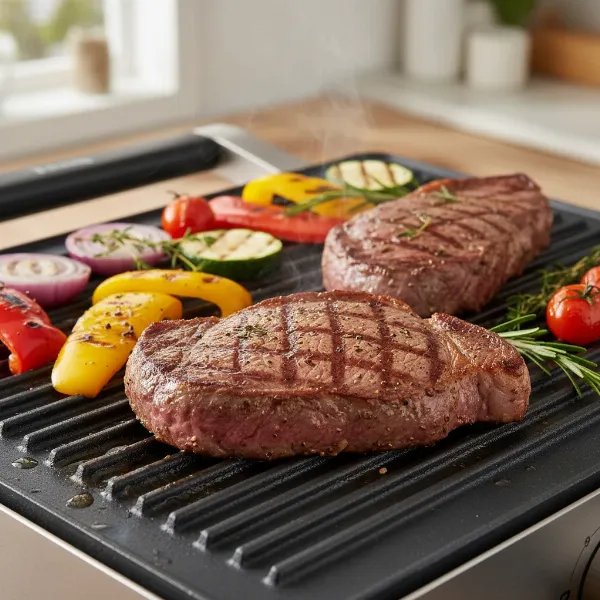 Delicious food sizzling on an electric grill with perfect sear marks, highlighting natural flavors
Essential Factors for Electric Grill Flavor (Buying Guide)
Choosing the right electric grill involves more than just size and price; several factors directly impact the flavor and quality of your cooked food. Considering these aspects can significantly enhance your electric grilling experience.
Type of Electric Grill
Electric grills typically fall into indoor, outdoor, or smokeless categories. Indoor electric grills are compact and designed for use within your kitchen, ideal for small apartments or adverse weather. Their sealed nature often means less flavor diffusion, but they offer immense convenience. Outdoor electric grills are larger, resembling traditional barbecues, and can reach higher temperatures, often allowing for better searing. Smokeless electric grills are a subset of indoor grills engineered to minimize visible smoke, making them pleasant for everyday use but still lacking true smoke flavor. The choice depends on your space and how much you prioritize the “grill experience” versus pure convenience and minimal cleanup.
Size and Power
The size of your electric grill should align with your cooking needs, but its power, measured in wattage, is paramount for flavor. A higher wattage (e.g., 1500W-1800W for many countertop models, or even higher for some outdoor units) generally translates to quicker preheating and the ability to reach and maintain higher temperatures. This high heat is crucial for effective searing, which locks in juices and develops the desirable Maillard reaction, creating that flavorful crust on meats and vegetables. [cite: 1 (third search)] Smaller, lower-powered grills may struggle to achieve the intense heat needed for optimal flavor development, potentially leading to food that steams rather than grills.
Material
The cooking surface material greatly influences heat distribution and searing. Cast iron plates, often found in higher-end models, retain and distribute heat exceptionally well, leading to superior grill marks and consistent cooking. Stainless steel surfaces are durable and easy to clean, also offering good heat transfer. Many electric grills feature non-stick coatings for easy food release and cleanup, but it’s important to choose durable, PFOA-free options to ensure longevity and food safety. The outer casing material, typically plastic or metal, impacts durability and aesthetics but has less direct bearing on cooking performance and flavor.
Features
Modern electric grills boast features that can significantly impact your cooking and the final taste. Adjustable temperature controls are essential for precise cooking, allowing you to go from a low simmer to a high sear. Timers can prevent overcooking. A drip tray not only collects grease for healthier cooking but can also be utilized to add moisture or even liquid smoke to subtly infuse flavor into your food. [cite: 1 (third search)] Good non-stick coatings and removable, dishwasher-safe plates contribute to easier cleaning, which, while not directly affecting flavor, ensures better hygiene and extends the grill’s lifespan.
Brand and Price
Reputable brands often invest in better heating elements, materials, and design, which translates to superior performance and, by extension, better flavor development through more consistent and higher heat. While it’s tempting to opt for cheaper models, investing in a mid-to-high-range electric grill from a known brand can yield significantly better cooking results. Comparing prices should involve weighing the features and build quality against your budget, prioritizing those aspects that directly enhance your grilling experience.
Comparing Types of Electric Grills and Their Flavor Potential
While all electric grills operate on similar principles, different designs can subtly influence the cooking process and the final taste. Here’s a comparison of common electric grill types and how their characteristics relate to flavor development.
| Feature | Indoor Contact Grill (e.g., Panini Press) | Indoor Open Grill (e.g., George Foreman) | Outdoor Electric Grill (Stand-alone) | Smokeless Electric Grill (Specialized Indoor) |
|---|---|---|---|---|
| Primary Use | Sandwiches, thin meats, quick meals | Meats, veggies, general grilling | Patio, balcony grilling | Indoor, minimal smoke for apartments |
| Heat Source | Dual plates (top & bottom) | Single heated grate | Hidden heating element below grate | Hidden element, advanced ventilation |
| Flavor Impact | Even cooking, good for searing, but can steam due to contact. Limited browning. | Good browning, allows drippings to fall, less steaming than contact. | High heat for searing, can get crispier. Better for “grill marks.” | Similar to open indoor, but with improved airflow for cleaner cooking. |
| Searing Capability | Moderate to High, but limited by thickness. | Moderate to High | High, especially for high-wattage models | Moderate to High |
| “Smoky” Add-ons | Very limited | Limited, may add liquid to drip tray | Possible with smoker box (indirect effect) | Limited, often relies on liquid smoke |
| Ease of Cleaning | High | High | Moderate | High |
| Typical Wattage | 1000-1500W | 1200-1600W | 1500-2400W | 1200-1500W |
Maximizing Flavor on Your Electric Grill
Even without charcoal or gas, you can achieve wonderfully flavorful results on an electric grill. It’s all about technique and a little culinary creativity.
Strategic Seasoning and Marinades
Marinades are your best friend when electric grilling. They penetrate the food, adding moisture and a burst of flavor that traditional grilling might achieve through smoke. Use acidic ingredients like vinegar or lemon juice to tenderize, and incorporate herbs, spices, and oils for depth. Dry rubs, applied generously an hour or more before grilling, also create a flavorful crust and enhance texture. “A good marinade doesn’t just add flavor; it can also help create a beautiful sear on an electric grill by developing a richer surface,” notes Grill Master Alex Chen. Consider incorporating ingredients like smoked paprika, garlic powder, onion powder, and a touch of brown sugar for a BBQ-like profile.
Embracing the Maillard Reaction and Searing
The Maillard reaction, a chemical process between amino acids and reducing sugars, is responsible for the delicious browning and complex savory flavors of grilled food. [cite: 1 (third search)] To maximize this on an electric grill, preheat your grill thoroughly to a high temperature before placing food on it. [cite: 2 (third search)] This intense initial heat creates a superb sear, locking in juices and developing those coveted grill marks and crust. Avoid overcrowding the grill, as this lowers the surface temperature and can lead to steaming rather than searing. [cite: 2 (third search)] Cook in batches if necessary, allowing each piece enough space to achieve optimal browning.
Innovative Smoke Infusion Techniques
While an electric grill won’t naturally produce smoke, you can introduce smoky notes. Liquid smoke is a straightforward option; a few drops added to marinades, sauces, or even diluted and lightly brushed onto food can impart a smoky essence. [cite: 1 (third search), 2 (third search), 5 (third search)] Smoked salts or smoked paprika can also mimic this flavor. For a more direct approach, some users experiment with placing a small, heat-safe foil packet of wood chips (soaked in water first) directly on the grill plate or heating element (if safely possible and approved by the manufacturer), though this often produces more aromatic steam than true smoke. [cite: 3, 4 (third search)] Always ensure proper ventilation if attempting this.
Optimal Cooking Practices
Beyond seasoning and searing, good cooking habits make a difference. Avoid pressing down on food with a spatula, as this squeezes out valuable juices and flavor. Use a meat thermometer to ensure food is cooked to the perfect internal temperature, preventing dryness. Flipping food only once or twice helps develop a better crust. For foods that benefit from longer, slower cooking, utilize the grill’s temperature control to maintain a steady, moderate heat after an initial sear. Don’t forget to let meats rest after grilling; this allows juices to redistribute, resulting in more tender and flavorful bites.
Cleaning and Maintenance for Lasting Performance
Regular cleaning is crucial for both hygiene and maintaining your electric grill’s performance and flavor. After each use, allow the grill to cool slightly, then scrape off any food residue with a non-abrasive scrubber. Most electric grills feature removable, non-stick plates that are dishwasher-safe, making cleanup simple. Ensure all components are dry before reassembling. Periodically check the heating element and drip tray for buildup. Proper maintenance prevents old food particles from burning and potentially imparting off-flavors to subsequent meals, ensuring your grill continues to deliver delicious results for years to come.
 Maintaining a clean electric grill for optimal performance and food taste
Conclusion
The question of whether food tastes different on an electric grill is met with a resounding “yes,” primarily due to the absence of smoke and combustion byproducts that characterize traditional charcoal or gas grilling. However, this difference is not inherently a deficit. Electric grills offer a clean, consistent cooking method that allows the natural flavors of your ingredients to truly shine.
While you won’t get that classic smoky BBQ taste without some creative intervention, the convenience, precision, and ability to achieve excellent searing make electric grills a powerful tool in any kitchen. By focusing on robust marinades, mastering the Maillard reaction through proper preheating and searing, and exploring techniques like liquid smoke, you can unlock a world of delicious possibilities. So, why not embrace the versatility of an electric grill and discover how truly flavorful your next meal can be? What exciting new dishes will you prepare on your electric grill tonight?
Frequently Asked Questions
Can an electric grill really produce grill marks?
Yes, high-quality electric grills with sufficient wattage can absolutely produce distinct grill marks by reaching high temperatures necessary for searing and the Maillard reaction. Preheating the grill thoroughly is key to achieving these desirable marks and enhancing flavor.
How can I add a smoky flavor to food cooked on an electric grill?
You can introduce smoky flavor using liquid smoke in marinades or sauces, or by sprinkling smoked paprika or smoked salts onto your food. Some users also experiment with placing a small, foil-wrapped packet of soaked wood chips on the heating element, but this requires caution and good ventilation.
Are electric grills healthier than charcoal grills?
Electric grills are often considered healthier because they eliminate combustion byproducts, which can contain carcinogens found in charcoal smoke. They also typically produce less fat drippings that burn and create unhealthy compounds, as grease usually collects in a drip tray.
What kind of foods cook best on an electric grill?
Electric grills are incredibly versatile. They excel at cooking thinner cuts of meat like chicken breasts, steaks, and fish fillets, as well as vegetables, burgers, and sandwiches. Foods that benefit from even cooking and good searing without a strong smoky flavor are ideal.
Is it possible to use wood chips directly on an electric grill?
While some enthusiasts try this by wrapping soaked wood chips in foil and placing them near the heating element, it is generally not recommended or as effective as with charcoal/gas grills. Electric grills don’t have an open flame to ignite the chips for proper smoke production, often resulting in minimal smoke and potential safety concerns.
How important is preheating an electric grill for flavor?
Preheating is extremely important for flavor development on an electric grill. A properly preheated grill ensures that food begins to sear immediately upon contact, creating the Maillard reaction for a flavorful crust and locking in moisture, preventing food from sticking or steaming.