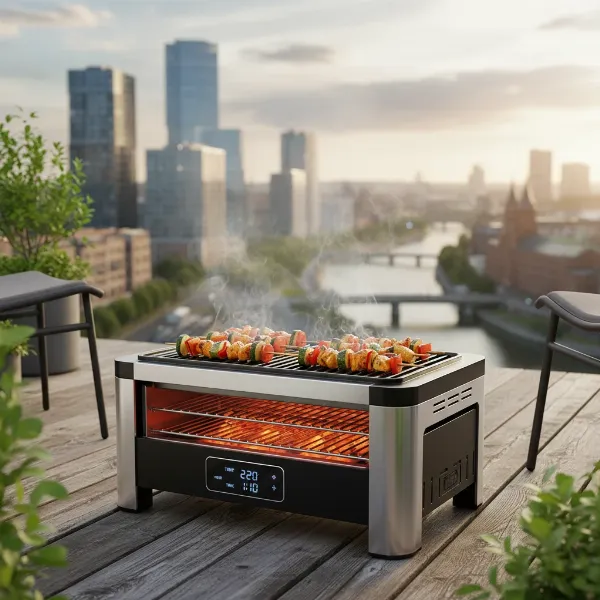
The tantalizing aroma of grilled food often comes with an unwelcome guest: smoke. While outdoor grilling allows for natural ventilation, bringing the sizzle indoors can quickly turn your kitchen into a hazy mess, triggering smoke alarms and leaving a lingering odor. But fear not, passionate grill masters! With the right preparation, techniques, and equipment—especially a versatile electric grill—you can achieve that perfect char and flavor without the smoke alarm serenade. This guide will walk you through practical strategies to transform your indoor grilling experience into a clean, enjoyable, and smoke-minimized culinary adventure.
Understanding Indoor Grilling Smoke: Causes and Impact
Smoke is a natural byproduct of cooking, but its intensity indoors can be a major challenge. When fats, oils, and food particles come into contact with a hot heating element or cooking surface, they burn and vaporize, releasing smoke into the air. This is especially prevalent with high-heat cooking methods like grilling.
The primary culprits behind excessive indoor grilling smoke include:
- Burning Fats and Drippings: As meat cooks, fat renders and juices drip onto the heating elements or hot grill plates, where they instantly burn and produce smoke.
- Low Smoke Point Oils: Cooking oils have a “smoke point,” the temperature at which they begin to break down and smoke. Using oils with a low smoke point for high-heat grilling is a common cause of smoke.
- Food Residue: Leftover bits of food, grease, or marinades from previous cooking sessions can burn and smoke even before fresh food is placed on the grill.
- Excessive Heat: While a hot grill is essential for searing, too much heat can cause food to burn quickly, leading to more smoke.
- Wet Marinades and Moisture: Excess moisture on food can cause steaming and spatters, contributing to smoke as it rapidly evaporates or burns.
Minimizing smoke isn’t just about preventing a blaring smoke detector; it’s crucial for several reasons. Consistent exposure to cooking smoke can be a health concern, irritate respiratory systems, and leave unpleasant odors on furniture, fabrics, and throughout your home. A cleaner cooking environment ensures a more pleasant and healthier experience for everyone.
Essential Food Preparation to Minimize Smoke
The journey to a smoke-free indoor grilling experience begins long before your food touches the hot grates. Proper preparation can significantly reduce the amount of smoke generated.
Trim, Thaw, and Dry for Success
|
Our Picks for the Best electric grill in 2026
As an Amazon Associate I earn from qualifying purchases.
|
||
| Num | Product | Action |
|---|---|---|
| 1 | Electric Grill, Techwood Indoor/Outdoor Electric BBQ Grill, 1600W Portable Removable Stand Grill with Adjustable Heat & Drip Tray, Double Layer Design for Party, Patio & Backyard (Blue) |

|
| 2 | Artestia 1800W Electric Outdoor Grills with Lid Indoor Smokeless Grill for Balcony with Temperature Control Portable Removable Stand Grill for Cooking, BBQ Party, Family |
|
| 3 | Ninja DG551 Foodi Smart XL 6-in-1 Indoor Grill with Air Fry, Roast, Bake, Broil, & Dehydrate, Foodi Smart Thermometer, 2nd Generation, Black/Silver |
|
| 4 | Electric Grill, CUSIMAX Electric Indoor/Outdoor Grill, 1600W Portable BBQ with Lid for Indoor & Outdoor Use, Adjustable Heat, Removable Stand Grill for Cookouts, BBQ Gatherings, Small Spaces |
|
| 5 | Ninja Griddle and Indoor Grill, 14’’, Electric Grill, For Steak, Burgers, Salmon, Veggies, and More, Pancake Griddle, Nonstick, Dishwasher Safe, 500F, Even Cooking, Silver, GR101 |
|
| 6 | Hamilton Beach Electric Indoor Searing Grill with Viewing Window & Adjustable Temperature Control to 450F, 118 sq. in. Surface Serves 6, PFAS-Free Removable Nonstick Grate, Stainless Steel |
|
| 7 | Chefman Electric Smokeless Indoor Grill w/ Non-Stick Cooking Surface & Adjustable Temperature Knob from Warm to Sear for Customized BBQing, Dishwasher Safe Removable Water Tray, Black |
|
| 8 | Electric Grill, Techwood Indoor/Outdoor Electric BBQ Grill, 1600W Portable Removable Stand Grill with Adjustable Heat & Drip Tray, Double Layer Design for Party, Patio & Backyard (Black) |
|
| 9 | Chefman Smokeless Indoor Electric Grill, Extra Large Grilling Surface, Nonstick Table Top Grill for Indoor Grilling and BBQ with Adjustable Temperature Control, Drip Tray, Dishwasher-Safe Parts |
|
| 10 | Chefman XL Electric Griddle with Removable Temperature Control, Immersible Flat Top Grill, Burger, Eggs, Pancake Griddle, Nonstick Extra Large Cooking Surface, Slide Out Drip Tray, 10 x 20 Inch |
|
One of the most effective ways to reduce smoke is by minimizing the amount of fat and moisture that can burn. Always trim any excess visible fat from your meats before grilling. Less fat means fewer drippings to ignite. If grilling frozen items, ensure they are completely thawed to room temperature. Frozen or partially frozen food prolongs cooking time and can lead to uneven cooking and more burning. Finally, and crucially, pat your food thoroughly dry with paper towels. Any excess moisture or marinade on the surface will create steam and potentially burn off rapidly, contributing to smoke. A dry surface also promotes better searing and a delicious crust.
The Importance of High Smoke Point Oils
The type of cooking oil you use plays a pivotal role in smoke production. Every oil has a specific smoke point—the temperature at which it starts to break down and produce smoke. For high-heat indoor grilling, selecting an oil with a high smoke point is paramount.
Oils like avocado oil (around 520°F/271°C), safflower oil (around 510°F/266°C), sunflower oil (around 450°F/232°C), and peanut oil (around 450°F/232°C) are excellent choices for indoor grilling due to their high tolerance for heat. Conversely, popular oils such as butter (around 302°F/150°C) and extra virgin olive oil (around 325-375°F/163-190°C) have lower smoke points and should generally be avoided for intense indoor grilling, as they will smoke quickly and excessively.
Mastering Grilling Techniques for a Smoke-Free Kitchen
Beyond preparation, how you operate your electric grill is key to keeping smoke at bay. Intelligent grilling techniques can make a significant difference.
Precise Temperature Control
While you want your grill hot enough to sear, excessively high temperatures are a primary cause of smoke. For electric grills, utilize the thermostat to your advantage. Preheat your grill adequately to ensure even cooking, but once it’s hot, be mindful not to crank the heat higher than necessary for the food you’re cooking. Many electric grills perform optimally at medium-high settings for most meats, allowing for a good sear without scorching. Learning your specific grill’s hot spots and ideal temperatures will greatly aid in smoke reduction.
Effective Dripping Management
Fats and juices dripping onto the heating element are a major source of smoke. Many electric grills come equipped with a drip tray designed to catch these liquids. Ensure the drip tray is properly in place and, if applicable, filled with water as recommended by the manufacturer. The water helps cool the drippings, preventing them from burning and smoking. For grills without an integrated water-filled drip tray, placing a layer of aluminum foil below the cooking surface to catch drippings can offer similar protection. Additionally, avoid overcrowding the grill surface. This allows for better air circulation and prevents juices from pooling, which can exacerbate smoke.
The Searing and Finishing Method
For thicker cuts of meat, consider a two-stage cooking approach. Start by searing the meat at a higher temperature for a short period to achieve that desirable crust and lock in juices. Once seared, reduce the heat on your electric grill to finish cooking, or transfer the meat to a preheated oven if your grill plates are oven-safe. This method prevents the prolonged exposure of drippings to extreme heat. Using a lid on your indoor grill can also help contain smoke and odors, especially during the latter stages of cooking, while also speeding up the cooking process and retaining moisture.
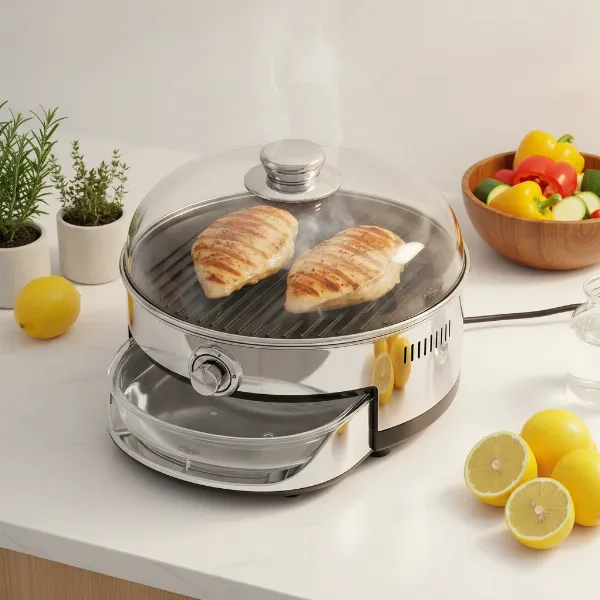 An indoor electric grill with a lid, showing minimal smoke during cooking, with fresh ingredients nearby.
Optimizing Your Environment: Ventilation and Airflow Strategies
Even with the best preparation and techniques, some smoke is inevitable. Managing your kitchen’s environment is crucial for effective smoke dispersion.
Maximize Your Kitchen’s Existing Ventilation
The simplest step is to utilize your kitchen’s built-in ventilation system. Always turn on your range hood or exhaust fan to its highest setting before you start grilling. These systems are designed to draw smoke, steam, and cooking odors out of your kitchen. If your microwave has an integrated vent, ensure it’s clean and consider installing non-ducted carbon filters if compatible, which can help capture some airborne particles.
Harnessing Natural Airflow
Creating a natural cross-draft is an incredibly effective, and free, way to clear smoke. Open windows near your kitchen. If possible, open a window on the opposite side of your home or apartment and prop open an interior door to create a powerful air current that pulls smoke out. This “backdraft” effect can dramatically improve air quality. For additional assistance, position a portable fan to blow air towards an open window or door, actively pushing smoke out of your cooking area.
Advanced Air Purification Solutions
For those looking for an extra layer of defense, or in spaces with limited natural ventilation, advanced solutions can be beneficial. Large, high-efficiency air purifiers equipped with HEPA and activated carbon filters can effectively capture smoke particles and absorb odors. While these can be a significant investment, they offer a continuous benefit beyond just grilling, improving overall indoor air quality. Passive deodorizers like houseplants can help freshen the air, and charcoal air-purifier bags may offer a subtle benefit, but they are generally no match for active smoke production from grilling.
“Many home cooks underestimate the power of a well-ventilated kitchen. It’s not just about comfort; it’s about making your indoor grilling safer and more enjoyable. Think of it as your first line of defense against smoke.” – Chef Elena Rodriguez, Culinary Systems Specialist.
Choosing the Right Electric Grill for Minimal Smoke
The market offers a variety of electric grills, and some are specifically designed with smoke reduction in mind. Selecting the right appliance can make a substantial difference.
Features of “Smokeless” Electric Grills
True “smokeless” electric grills are engineered to minimize smoke through various innovative designs. Many incorporate a built-in fan that actively pulls smoke downwards into a water-filled drip tray, where it’s cooled and dissipated before it can escape into the air. Others might use infrared heating elements that heat the food directly, rather than the air or dripping fats, significantly reducing smoke. Look for models with ceramic non-stick plates, as these often heat more evenly and release food more cleanly, preventing burnt residue.
Drip Tray Design and Efficiency
A well-designed drip tray is non-negotiable for an indoor grill. Opt for models with large, easily accessible, and removable drip trays. A deeper tray can hold more rendered fat and juices, and if it’s designed to be filled with water, it will efficiently cool these liquids, preventing them from smoking upon contact. Easy removal and cleaning of the drip tray also contribute to overall smoke prevention by ensuring no old residue burns during your next grilling session.
Non-Stick Surfaces and Power
Grill plates with a high-quality non-stick coating prevent food from sticking and burning, making cleanup easier and reducing the chances of accumulated residue causing smoke. Adequate wattage and consistent heat distribution are also important. A grill that can maintain its temperature evenly will cook food more consistently, reducing the likelihood of hot spots that can scorch food and generate smoke.
Post-Grill Maintenance: Preventing Future Smoke
The work isn’t over once the food is served. Proper cleaning after each use is essential for maintaining your grill’s performance and preventing future smoke issues.
Immediate and Thorough Cleaning
As soon as your electric grill cools down sufficiently, it’s critical to clean it thoroughly. Food particles, grease, and marinade residue left on the grill grates or heating elements will burn and produce smoke the next time you cook. Scrape off any charred bits from the grill plates. Remove and empty the drip tray, washing it thoroughly with warm, soapy water. For non-stick surfaces, use a soft sponge to avoid damaging the coating.
Long-Term Care
Regular, deep cleaning extends the life of your electric grill and ensures optimal smoke reduction. Consult your grill’s manual for specific cleaning instructions for all components, including heating elements (if accessible and removable) and any fan systems. Consistent maintenance ensures that your grill remains efficient and smoke-free for countless delicious meals.
Conclusion
Indoor grilling offers the convenience and joy of year-round barbecuing, but managing smoke is often the biggest hurdle. By thoughtfully preparing your food, mastering your grilling techniques, optimizing your kitchen’s ventilation, selecting a smoke-conscious electric grill, and committing to thorough cleaning, you can significantly reduce smoke. Embrace these strategies, and you’ll discover that delicious, smoke-minimized indoor grilling is not just a dream, but a perfectly achievable reality. So, are you ready to fire up your electric grill without the smoky aftermath?
Frequently Asked Questions
What is the best electric grill for no smoke?
While no grill can be entirely “smokeless” when cooking fatty foods at high temperatures, models designed with integrated exhaust fans, water-filled drip trays, and advanced non-stick surfaces are highly effective. Brands like George Foreman, Cuisinart, and Ninja often offer models with features aimed at minimizing smoke for a cleaner indoor grilling experience.
Can I use olive oil on an indoor grill?
It is generally not recommended to use regular olive oil for high-heat indoor grilling due to its relatively low smoke point. It will typically start smoking at lower temperatures, leading to unwanted haze. Instead, opt for oils with much higher smoke points such as avocado, safflower, or peanut oil for a more smoke-free cooking experience.
How do I clean my indoor grill to prevent smoke?
To prevent smoke from leftover residue, always clean your indoor grill thoroughly after each use. Remove the grill plates and drip tray, wash them with warm, soapy water, and scrape off any burnt-on food particles. Ensure the heating elements are also wiped clean if accessible, and always allow all parts to dry completely before reassembling or storing.
Why does my grill still smoke after cleaning?
If your grill still smokes after cleaning, check for a few common culprits. You might be using an oil with too low a smoke point, or your cooking temperature could be excessively high. Ensure all fat has been trimmed from your meat and that the meat itself is patted thoroughly dry. Sometimes, even clean grills can smoke if the conditions for fat rendering and burning are still present.
Are smokeless grills truly smokeless?
“Smokeless” grills are designed to significantly reduce smoke, but the term “smokeless” is often used to describe their superior smoke-minimizing capabilities compared to traditional indoor grilling methods. They typically employ features like integrated fans or water trays to capture and cool smoke, making them far less smoky than standard electric grills, but some amount of vapor or light smoke may still be produced depending on the food and temperature.