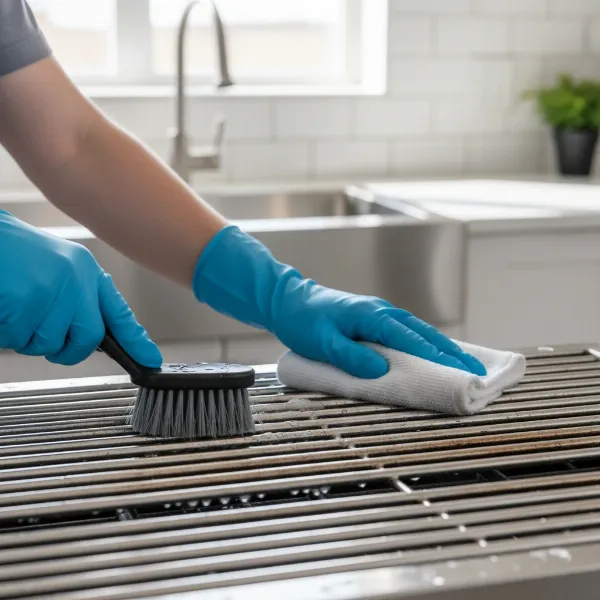
Keeping your electric grill plates pristine is crucial not only for hygiene and optimal cooking performance but also for extending the lifespan of your appliance. A well-maintained grill ensures your meals taste great and your investment lasts longer. Improper cleaning methods can quickly lead to scratched non-stick coatings, rust, or even damage to electrical components, turning a simple task into a costly mistake. This comprehensive guide will walk you through the safest and most effective ways to clean your electric grill plates, whether they’re removable or fixed, ensuring they remain in top condition for years to come.
The Importance of Regular Grill Plate Cleaning
Regular cleaning of your electric grill plates goes beyond just aesthetics; it’s fundamental to the health and longevity of your appliance. Over time, food residues, grease, and carbonized bits build up, forming a stubborn layer that not only affects the taste of your food but can also degrade the non-stick coating on your grill plates. This accumulation can lead to uneven cooking, reduced heat transfer efficiency, and a sticky surface that makes future grilling sessions frustrating. More critically, neglecting to clean can cause corrosive substances to eat into the plate’s material, potentially leading to permanent damage, rust, and ultimately, a shortened service life for your electric grill. Prioritizing cleanliness is an act of preserving both your grill’s performance and your culinary joy.
Essential Tools and Supplies for Safe Cleaning
To effectively clean your electric grill plates without causing damage, gathering the right tools is key. Avoid abrasive materials at all costs, as they can scratch delicate non-stick surfaces or even stainless steel.
Here’s a list of safe and essential cleaning supplies:
- Soft Sponges or Cloths: Ideal for gently wiping surfaces.
- Paper Towels: Excellent for initial grease removal and the steaming method.
- Mild Dish Soap or Detergent: Choose a gentle formula that cuts through grease without being harsh.
- Warm Water: Essential for dissolving grease and grime.
- Plastic or Silicone Scraper: Useful for dislodging stubborn, stuck-on food without scratching.
- Old Toothbrush or Non-Abrasive Cleaning Brush: Perfect for reaching into grooves and crevices.
- Drying Cloths or Microfiber Towels: For thoroughly drying plates and preventing water spots or rust.
Step-by-Step Guide to Cleaning Removable Electric Grill Plates
Removable plates offer the convenience of easier cleaning. Follow these steps to ensure a thorough and safe clean:
Safety First: Unplug and Cool Down
Always begin by unplugging your electric grill from the power outlet. Safety is paramount when dealing with electrical appliances. Allow the grill plates to cool down completely to a safe-to-handle temperature before attempting any cleaning. Handling hot plates can lead to burns and can also damage the non-stick surface if cold water is applied suddenly.
Remove Excess Debris
Once the plates are cool, use a paper towel or a soft cloth to wipe away any loose food particles and excess grease. Gently push any crumbs or drippings towards the grill’s drip tray (if applicable) for easy disposal. For slightly more stubborn bits, a plastic or silicone scraper can be used carefully to dislodge them without scratching the surface.
Soak and Soften Stubborn Residue
For baked-on food or stubborn grime, soaking is your best friend. Fill a sink with warm water and a few drops of mild dish soap. Submerge the removable grill plates and let them soak for 15-30 minutes. The warm, soapy water will help to loosen and soften the stuck-on food, making it much easier to wipe away. Alternatively, for persistent residue, you can lay a few wet paper towels over the still-warm (but unplugged) grill plates and close the lid, allowing the steam to loosen the grime as it cools.
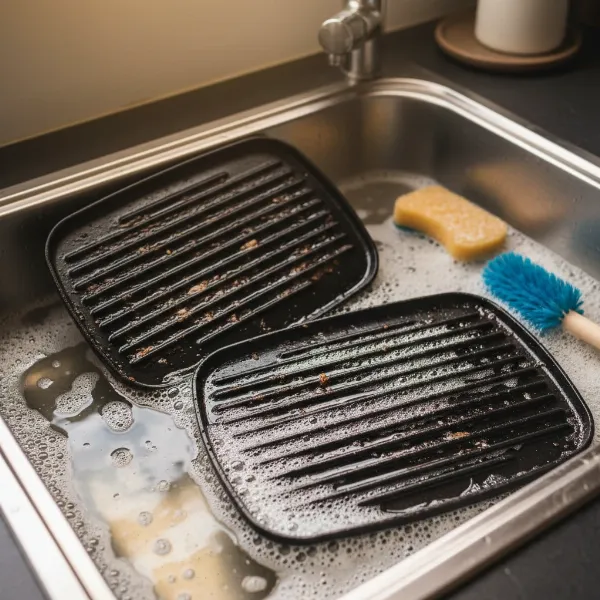 Removable electric grill plates soaking in a kitchen sink with warm, soapy water to soften food residue.
Wash with Care
After soaking, use a soft sponge or cloth dampened with warm, soapy water to gently scrub the grill plates. Pay attention to the grooves and ridges where food residue often hides. An old toothbrush can be incredibly effective for reaching into these tighter spots without applying excessive pressure or scratching the surface. Work methodically to remove all grease and food remnants.
Rinse Thoroughly
Rinse the grill plates under warm running water to remove all traces of soap and loosened food. Ensure no suds remain, as dried soap residue can affect the taste of future grilled meals. If your plates are dishwasher safe (always check your grill’s manual), you can place them in the dishwasher for a more effortless rinse and clean, but be mindful of any electrical contacts.
Dry Completely
This step is critical to prevent rust, especially for non-stick or cast iron plates. Use a clean, dry cloth or microfiber towel to thoroughly dry both sides of the grill plates. Alternatively, allow them to air dry completely on a drying rack before reattaching them to your grill or storing them. Any residual moisture can lead to rust formation over time.
Re-season (If Applicable, e.g., Cast Iron)
If your electric grill plates are made of cast iron, or if you want to further protect the non-stick surface, consider a light re-seasoning. After drying, apply a very thin layer of high-smoke-point cooking oil (like vegetable or canola oil) to the surface with a paper towel. This helps maintain the non-stick properties and prevents rust for cast iron.
Cleaning Non-Removable Electric Grill Plates
Cleaning electric grills with non-removable plates requires a slightly different approach, focusing on careful technique to avoid damaging electrical components.
The “Steam Clean” Method
This method is highly effective for non-removable plates. After unplugging the grill and while the plates are still warm (not hot), lay several damp paper towels directly onto the grill surface. Close the lid and let the grill cool down completely. The residual heat will create steam, which softens and loosens cooked-on grease and food particles, making them much easier to wipe away without harsh scrubbing.
Gentle Wiping and Scrubbing
Once the plates have cooled and the residue has softened, open the grill and remove the paper towels. Dip a soft sponge or cloth into warm, soapy water (using mild dish soap). Carefully wipe down the grill plates, working along the grooves to dislodge any remaining grime. An old toothbrush can be particularly useful for scrubbing stubborn bits out of tight corners and ridges without scratching the surface.
Rinse and Dry Carefully
Rinsing non-removable plates requires caution. Dampen a clean cloth with plain water and wipe down the grill surfaces multiple times to remove all soap residue. It’s crucial to avoid getting excessive water into any electrical openings or components. Use a second, dry cloth to thoroughly dry the plates immediately after rinsing. Ensure there is no moisture left on the grill surface or in the crevices to prevent electrical hazards or rust.
What to Avoid: Protecting Your Grill Plates from Damage
Understanding what not to do is as important as knowing what to do when cleaning your electric grill plates. Avoiding these common mistakes will significantly extend the life and effectiveness of your appliance.
Abrasive Materials
Never use metal sponges, steel wool, wire brushes, or harsh abrasive scrubbers on your electric grill plates, especially those with non-stick coatings. These materials can easily scratch and damage the surface, compromising its non-stick properties and potentially exposing the underlying metal, which can lead to rust. Stick to soft sponges, cloths, and plastic or silicone scrapers.
Harsh Chemicals
Stay away from strong degreasers, oven cleaners, or other harsh chemical cleaning agents. While they might seem effective, they can strip the non-stick coating, leave behind harmful residues, or discolor the grill plate material. Mild dish soap and water are usually sufficient for effective and safe cleaning.
Submerging Electrical Components
For grills with non-removable plates, or even for removable plates that contain electrical contacts, never submerge them in water. Water can seep into electrical components, causing short circuits, malfunction, or permanent damage to the grill. Always clean these parts with damp cloths and ensure they are thoroughly dried.
Metal Utensils on Non-Stick Surfaces
During the cleaning process, and indeed during cooking, avoid using metal spatulas, tongs, or scrapers on non-stick grill plates. These can easily gouge and scratch the delicate coating. Opt for plastic, silicone, or wooden utensils instead.
Leaving Moisture
Allowing water to sit on your grill plates, especially metal ones, is an open invitation for rust. Always ensure that the plates are completely dry before reassembling your grill or storing it away. This step is particularly vital for cast iron or stainless steel components.
Advanced Tips for Deep Cleaning and Stubborn Stains
Even with regular cleaning, some electric grills might accumulate stubborn stains or burnt-on spots that require a little extra effort. Here are some advanced tips:
- Baking Soda Paste: For tough, carbonized residue, mix baking soda with a small amount of water to create a thick paste. Apply the paste directly to the stained areas and let it sit for 15-30 minutes. The mild abrasive nature of baking soda, combined with its cleaning properties, can help lift stubborn grime. After soaking, gently scrub with a soft sponge or brush and rinse thoroughly.
- Vinegar Spray for Grease: For lingering grease and odors, a solution of apple cider vinegar can be effective. Mix about 200 milliliters of fat-dissolving apple cider vinegar with two tablespoons of sugar in a spray bottle. Spray this solution onto greasy areas, let it sit for a few minutes, then wipe clean with a damp cloth. The acidity helps to break down grease.
- Utilize a Silicone/Plastic Scraper: For dried, stuck-on food particles, a dedicated silicone or plastic grill scraper can be invaluable. These tools are designed to conform to the grill’s ridges and valleys, effectively lifting debris without scratching the non-stick surface. Always use a light touch to avoid damage.
Expert Insights for Long-Term Maintenance
“The secret to a long-lasting electric grill isn’t just about cleaning it; it’s about making cleaning a habit. A quick wipe down after every use prevents stubborn build-up, preserving your non-stick surface and ensuring peak performance.” – John Smith, Grill Maintenance Specialist
To truly ensure your electric grill plates stand the test of time, adopt these long-term maintenance practices:
- Clean After Every Use: The easiest way to deal with food residue and grease is immediately after cooking, once the grill has cooled. Fresh spills are far simpler to clean than baked-on grime that has sat for days.
- Light Oil Coating: For non-stick plates, applying a very thin layer of cooking oil after cleaning and drying can help maintain the non-stick properties and protect the surface. For cast iron plates, this is essential for seasoning and rust prevention.
- Proper Storage: Store your electric grill in a clean, dry place. If it has a lid, ensure it’s closed to prevent dust and debris from settling on the plates between uses. If storing outdoors, use a weather-protective cover.
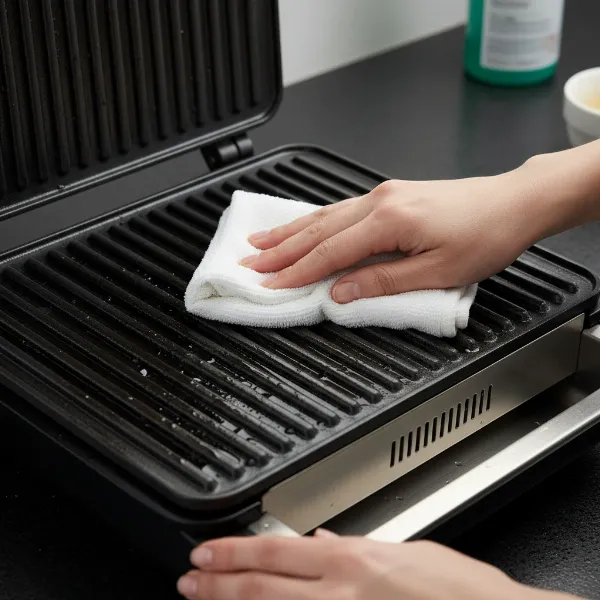 A person carefully wiping down the interior, non-removable plates of an electric grill with a soft cloth after cleaning.
Conclusion
Cleaning your electric grill plates doesn’t have to be a daunting chore. By following these straightforward, damage-preventing steps and using the right tools, you can ensure your grill remains in excellent condition, performing optimally for countless meals to come. Remember the golden rules: unplug, cool, use soft materials, avoid harsh chemicals, and always dry thoroughly. Embracing these practices will not only extend your grill’s lifespan but also guarantee a consistently clean and hygienic cooking surface. A little care goes a long way in preserving your investment and enhancing your grilling experience. What are your favorite quick cleaning tips for electric grills?
Frequently Asked Questions
Can I put my electric grill plates in the dishwasher?
Many removable electric grill plates are indeed dishwasher safe. However, always check your specific grill’s instruction manual before placing them in the dishwasher. Some plates may have electrical connections or materials that are not suitable for high-temperature cycles or harsh detergents.
How often should I clean my electric grill?
Ideally, you should clean your electric grill plates after every use, once they have cooled down. This prevents food residue and grease from hardening, making subsequent cleaning much easier and maintaining the grill’s performance and hygiene.
What if food is really stuck on?
For truly stuck-on food, the best approach is to let it soak. For removable plates, soak them in warm, soapy water. For non-removable plates, apply wet paper towels to the still-warm (but unplugged) surface and let them steam as the grill cools. A plastic scraper or baking soda paste can also help loosen stubborn bits after soaking.
Can I use oven cleaner on my electric grill?
No, you should never use oven cleaner on electric grill plates. Oven cleaners contain harsh chemicals that can severely damage non-stick coatings, corrode metal surfaces, and leave behind toxic residues that are unsafe for food contact. Stick to mild dish soap and water.