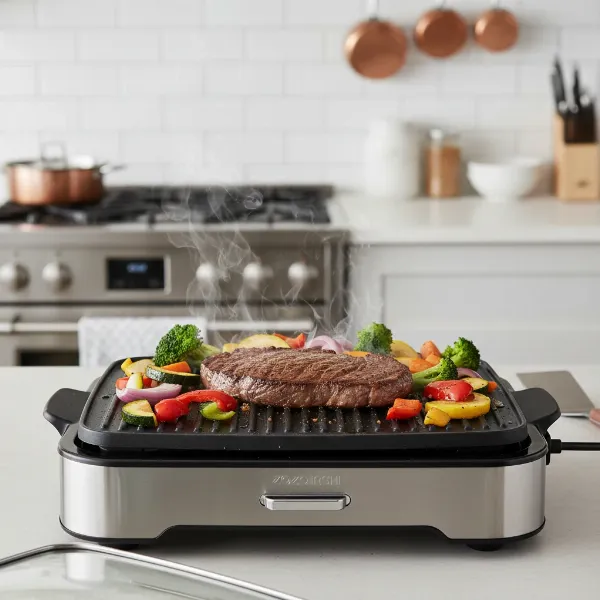
Craving that delicious grilled flavor but worried about apartment or condo restrictions? You’re not alone. Many residents in multi-unit dwellings dream of sizzling steaks and charred vegetables on their balcony, only to be met with confusing rules and fire safety concerns. The good news is that electric grills often offer a convenient and compliant solution, opening up a world of culinary possibilities without the traditional hazards. However, understanding the specific regulations that govern your living space is paramount before you plug in.
This comprehensive guide will navigate the nuances of Electric Grill USAge in condos and apartments, helping you discern what’s typically allowed, what to look out for, and how to grill responsibly.
Understanding Grilling Regulations in Multi-Unit Dwellings
The primary reason traditional grilling methods are often prohibited in apartments and condos stems from significant fire risks. Open-flame devices like charcoal or propane grills, especially those with larger fuel tanks, pose a serious danger in densely populated residential buildings. National Fire Protection Association (NFPA) guidelines and local fire codes across many jurisdictions strictly regulate or outright ban these types of grills on balconies, under overhangs, or within a specified distance of multi-family structures. The concern isn’t just about the flame itself, but also the storage of flammable fuels and the potential for grease fires in close quarters. Annually, thousands of home fires are attributed to grilling equipment, making these restrictions a critical safety measure for residents and property alike.
The Green Light for Electric Grills: Why They’re Often Allowed
Electric grills frequently bypass the stringent prohibitions placed on their charcoal and gas counterparts because they eliminate the root causes of fire risk. Without an open flame, combustible fuels, or the need for propane tanks, electric models inherently present a safer alternative for apartment and condo living. This reduced risk profile is why many building managements and fire departments consider electric grills permissible where other types are not.
Beyond safety, electric grills offer unparalleled convenience for residents in smaller spaces. They require no messy charcoal or heavy propane tanks, simply plugging into a standard electrical outlet. Modern electric grills heat up quickly, provide precise temperature control, and are often designed with compact footprints, making them ideal for balconies, patios, or even indoor use. Moreover, electric grills align with growing environmental considerations, producing no direct carbon emissions from burning fuel.
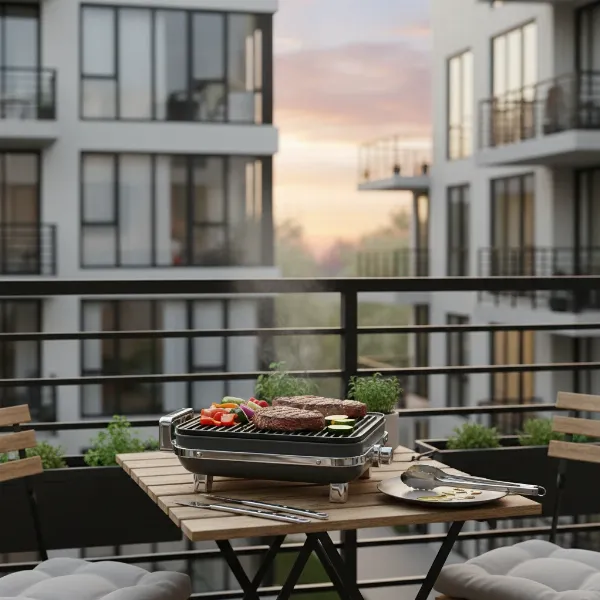 Electric grill on a small apartment balcony with food, showing compact design and urban convenience.
Key Factors Influencing Electric Grill Allowance
While electric grills are generally more accepted, their allowance is not universal and can be subject to several influencing factors.
Building Management and HOA Rules
The most crucial authority on grilling within your specific building is your property management or Homeowners Association (HOA). These entities often have bylaws and lease agreements that outline permissible activities, and they can impose rules that are stricter than local fire codes. Always consult your building’s documentation or directly contact management before purchasing or using an electric grill. What’s allowed in one building might be prohibited next door.
Local Fire Codes
Local municipal fire codes provide the foundational regulations for grill usage. While many codes exempt electric grills from the “no open flame” rules that restrict gas and charcoal, some may still have specific distance requirements from combustible materials or restrict their use on certain types of balconies. The National Fire Protection Association (NFPA) sets standards, with recent editions of NFPA 1 (like the 2024 edition) permitting listed electric cooking appliances on balconies in residential occupancies that are protected by sprinkler systems or constructed with Type I or Type II fire-resistant materials.
Type of Electric Grill
Not all electric grills are created equal in the eyes of regulations.
- Indoor vs. Outdoor Models: Ensure any electric grill you intend to use outdoors is explicitly rated and listed (e.g., by Underwriter’s Laboratories or UL) for outdoor patio use. Indoor electric grills, like many countertop griddles, are typically designed for kitchen use.
- Enclosed Heating Elements: Grills with enclosed heating elements are generally preferred as they further minimize direct contact with potential grease flare-ups.
- Smokeless Features: Many electric grills advertise “smokeless” technology. While no grill is entirely smoke-free, these models significantly reduce smoke, which is a major advantage in multi-unit living to avoid bothering neighbors or triggering smoke alarms.
Balcony/Patio Construction
The construction of your balcony or patio can also play a role. Balconies made of non-combustible materials, or those in buildings with robust sprinkler systems, may have more lenient regulations regarding electric grill use compared to wooden balconies or older structures without such fire suppression measures. The NFPA’s updated guidelines reflect a growing recognition of these building characteristics.
What to Consider Before Plugging In Your Electric Grill
Even if electric grills are broadly permitted, a few practical considerations will ensure a safe and harmonious grilling experience.
Check Your Lease/Bylaws
This step is non-negotiable. Before you buy an electric grill, thoroughly review your lease agreement, condo bylaws, or HOA rules. Look for specific language regarding “grills,” “cooking appliances,” or “balcony usage.” If unsure, seek clarification in writing from your building management or HOA. Ignoring these rules could lead to fines, eviction, or even liability in the event of an incident.
Electrical Capacity
Electric grills require a significant amount of power. Ensure the electrical outlet you plan to use is in good working order and can handle the grill’s wattage without overloading the circuit. For high-performance electric patio grills, some models may even require a dedicated 240V circuit and a NEMA 6-30 receptacle, which would need to be installed by a licensed electrician. Most standard indoor/outdoor electric grills will operate on a typical 120V household outlet. Always avoid using extension cords, especially thin indoor ones, as they can pose a fire hazard if not rated for outdoor, high-wattage appliance use.
Proximity to Combustibles
Even without an open flame, an electric grill still generates substantial heat. Position your grill a safe distance from any combustible materials, such as curtains, furniture, plants, or building walls. While some fire codes explicitly exempt electric grills from the 10-foot distance rule, exercising caution and maintaining a reasonable buffer zone (e.g., 2-3 feet) is always a smart practice to prevent accidental scorching or fire.
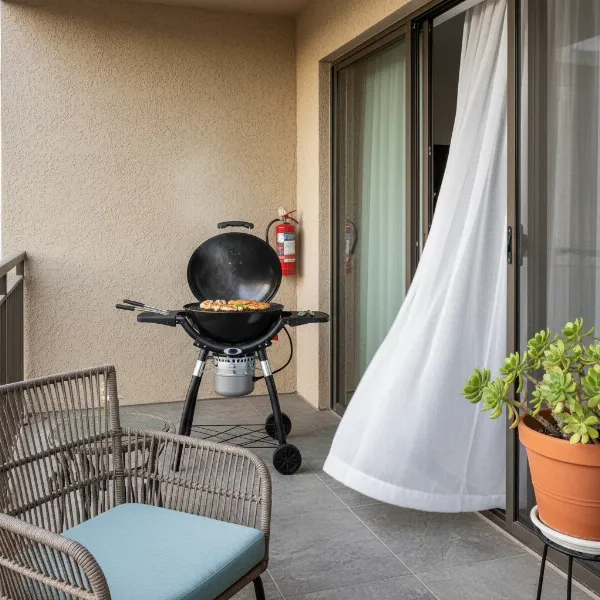 An electric grill placed safely away from combustible items on an apartment balcony, demonstrating fire safety.
Ventilation and Smoke Management
While “smokeless” electric grills greatly reduce visible smoke and odors, some amount will still be produced, especially when cooking fatty foods. If grilling on an enclosed balcony or indoors, ensure adequate ventilation to prevent smoke buildup, lingering food odors, or setting off smoke detectors. Using a range hood or opening windows can help mitigate these issues.
Maximizing Your Apartment Grilling Experience with Electric Grills
Once you’ve confirmed your electric grill is compliant, embrace the joy of grilling in your apartment or condo.
Tips for Safe Operation
- Supervise Constantly: Never leave a hot grill unattended.
- Clean Regularly: Built-up grease is a fire hazard. Clean your grill after every use.
- Stable Surface: Place your grill on a stable, non-combustible surface.
- Proper Placement: Keep the grill away from high-traffic areas where it could be accidentally knocked over.
- Read the Manual: Always follow the manufacturer’s instructions for assembly, use, and cleaning.
Cleaning and Maintenance
One of the major benefits of electric grills is their ease of cleaning. Many models feature removable, non-stick grill plates that are dishwasher-safe or easily wiped down. Regular cleaning not only maintains hygiene but also prevents grease accumulation that can lead to flare-ups and affect the grill’s performance and longevity.
Choosing the Right Electric Grill
Consider these features when selecting an electric grill for your multi-unit home:
- Size: Choose a compact model that fits comfortably on your balcony or countertop without overcrowding.
- Smokeless Technology: Look for features that minimize smoke output for a more pleasant experience for you and your neighbors.
- Temperature Control: Precise temperature settings are crucial for cooking a variety of foods evenly.
- Drip Trays: Easy-to-clean drip trays make grease management simple.
- Indoor/Outdoor Versatility: Some models are designed for both uses, offering greater flexibility.
“For apartment dwellers, the convenience and safety of electric grills are game-changers. But remember, your building’s rules are the ultimate authority—always check them first!” – Sarah Chen, Urban Living Expert
Conclusion
The desire for grilled food doesn’t have to be extinguished when living in a condo or apartment. Electric grills offer a compelling and often compliant solution, allowing you to enjoy delicious outdoor flavors with significantly reduced fire risks compared to traditional charcoal or gas models. While generally permitted due to their inherent safety features, it’s absolutely crucial to remember that local fire codes, building management policies, and HOA bylaws dictate the final say on grilling in your specific residence. Always prioritize safety, consult your building’s rules, and choose an electric grill that suits your needs and space.
Ready to fire up your electric grill? Don’t forget to confirm compliance with your building’s regulations to ensure a safe and enjoyable grilling season for everyone.
Frequently Asked Questions
Can I use an electric grill inside my apartment?
Yes, many electric grills are designed for indoor use, often marketed as “indoor” or “smokeless” grills. However, even indoor use may require good ventilation to manage smoke and odors, and you should still confirm with your building’s rules if there are any restrictions on indoor cooking appliances that generate smoke.
Do electric grills produce smoke?
While often advertised as “smokeless,” electric grills can still produce some smoke, particularly when cooking fatty foods or if grease accumulates on the heating elements. However, they produce significantly less smoke than charcoal or gas grills, making them a much better option for confined spaces.
Are there any size restrictions for electric grills on balconies?
Size restrictions for electric grills on balconies are typically not explicitly outlined in fire codes but may be part of your building’s aesthetic guidelines or general rules for balcony usage. It’s best to choose a compact model that fits comfortably without obstructing walkways or appearing oversized for the space.
What kind of electric grill is best for an apartment?
The best electric grill for an apartment is typically a compact, portable model with excellent temperature control, non-stick surfaces, and integrated drip trays for easy cleaning. “Smokeless” features are highly beneficial to minimize impact on neighbors. Always ensure it’s rated for outdoor use if you plan to use it on a balcony.
What should I do if my building says no to electric grills?
If your building explicitly prohibits electric grills, respect their rules. You may still have options for grilling in common areas (if provided) or using indoor cooking methods like grill pans on your stovetop or oven broiler to achieve similar results. Always avoid violating your lease terms.