Best Electric Grills for Vegetables (2026)
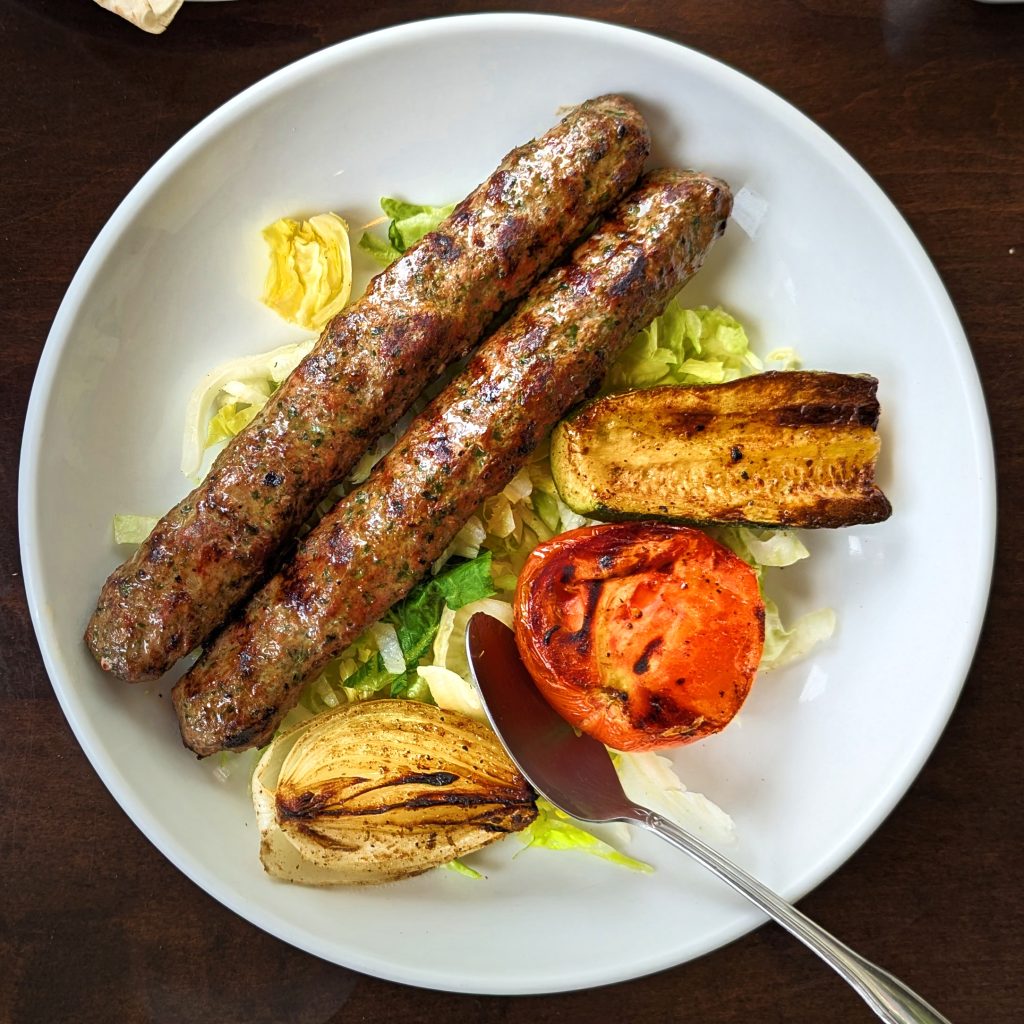
Quick Verdict: The best electric grills for vegetables in 2026 combine a large open surface (so vegetables don’t steam in their own moisture), precise temperature control (vegetables cook best at 375–450°F), and grates that produce grill marks without losing small pieces through gaps. The Weber Lumin leads at 600°F+ with cast-iron grates. The Ninja Woodfire OG321 adds smoke flavor that transforms grilled vegetables from good to memorable. For indoor vegetable grilling, the Cuisinart Griddler Five’s reversible flat-griddle plate is the best option for small or cut vegetables that would otherwise fall through ridged grates.
| Award | Model | Best For | Power / Surface Type | Price Tier |
|---|---|---|---|---|
| Best Overall for Vegetables | Weber Lumin Outdoor Electric Grill | High-heat char on any vegetable, outdoor use | 1800W / 600°F+ / cast-iron grates | Premium (around $250–$350) |
| Best Smoke Flavor | Ninja Woodfire OG321 | Wood-smoked vegetables, multi-function | 1760W / wood pellet system | Mid-Premium (around $200–$230) |
| Best Indoor Versatile | Cuisinart Griddler Five (GR-5BP1) | Small-piece vegetables, flat griddle + grill | 1500W / reversible flat+ridged plates | Mid (around $80–$120) |
| Best for Large Batches | George Foreman 15-Serving Indoor/Outdoor Grill | Large-surface open-format vegetable grilling | 1200W / 240 sq in open surface | Budget/Mid (around $60–$80) |
| Best Precision Control | Hamilton Beach Electric Indoor Searing Grill | Precise temperature vegetable cooking indoors | 1200W / 450°F / dial temp control | Budget (around $50–$80) |
| Best for Delicate Vegetables | T-fal OptiGrill XL GC722D53 | Sensor-adjusted cooking for varied vegetables | 1800W / automatic sensor cooking | Mid-Premium (around $130–$180) |
What Makes an Electric Grill Good for Vegetables
Vegetables have different grilling requirements than meat, and many electric grills perform differently on vegetables than their protein-focused marketing suggests. We evaluated each model on six vegetable-specific criteria:
- Surface type and gap size — Small vegetables (cherry tomatoes, asparagus tips, corn kernels, sliced mushrooms) fall through wide-gap grates. Grates with narrower spacing or a flat griddle surface option work better for small-piece vegetable cooking. The Cuisinart GR-5BP1’s flat griddle side is specifically valuable here.
- Temperature range and control — Vegetables overcook faster than proteins. A grill with precise temperature control (dial or digital) allows cooking delicate items like tomatoes and zucchini at 350–400°F while charring bell peppers and corn at 450°F+. Single-setting budget grills are less precise but still functional for robust vegetables.
- Surface area relative to food volume — Vegetables should be spread in a single layer without overlapping. Overlapping causes steaming rather than grilling. A 200 sq in surface is adequate for one to two people; 240+ sq in handles larger batches or mixed vegetable sessions.
- Smoke output — Vegetables release water vapor during cooking, which combines with any smoke from the grill surface. For indoor vegetable grilling, lower-smoke designs are more practical than high-smoke outdoor models.
- Grill marks on vegetables — Visually appealing grill marks on zucchini, bell peppers, and portobello mushrooms require close grate-to-vegetable contact with ridged grates. Cast-iron ridged grates (Weber) produce the deepest marks; thinner steel grates produce lighter marks.
- Cleanup after high-moisture vegetables — Vegetables release more water than most proteins, which can pool in grate channels and carbonize. Models with removable, dishwasher-safe plates or drip-away designs clean more easily after vegetable sessions.
Best Overall for Vegetables — Weber Lumin Outdoor Electric Grill
Best for: Outdoor vegetable grilling where deep char marks, high heat, and cast-iron grate quality are the priority.
The Weber Lumin’s 600°F+ heat ceiling and cast-iron grate produce the deepest grill marks and highest char development on vegetables of any model on this list. This matters most for vegetables that benefit from char flavor — corn, bell peppers, eggplant, and portobello mushrooms develop a depth of flavor at 550–600°F that lower-temperature grills cannot replicate. The built-in lid thermometer allows temperature targeting — setting up a high-heat zone for peppers and a lower zone for delicate items like asparagus. The modular grill basket accessory (sold separately) is specifically useful for grilling small vegetable pieces that would otherwise fall through standard grate gaps.
- 600°F+ heat — enables genuine char on vegetables like corn and bell peppers
- Cast-iron grates produce the deepest grill marks of any model on this list
- Built-in lid thermometer for precise temperature targeting per vegetable type
- Grill basket accessory available for small-piece vegetables
- Around $250–$350 — premium pricing; grill basket accessory adds additional cost
- Outdoor use with outlet required; not suitable for indoor cooking sessions
- Standard grate gap is too wide for small pieces — basket accessory is a necessity for those items
Best Smoke Flavor — Ninja Woodfire OG321
Best for: Cooks who want wood smoke flavor in grilled vegetables — transforming an already good vegetable into a deeply flavored dish.
Wood smoke transforms grilled vegetables more dramatically than it does most proteins. Eggplant, zucchini, bell peppers, corn, and portobello mushrooms absorb wood smoke readily and develop a complexity that standard grilling cannot produce. The Ninja Woodfire OG321’s wood pellet system delivers genuine hardwood smoke during the cooking cycle, which no other electric grill achieves. Beyond smoke, its five cooking modes include roasting and air frying — both relevant for vegetables — and its 1760W heating system provides consistent temperatures. For the vegetable-focused cook who also wants outdoor grilling capabilities, the Woodfire OG321 is the most distinctive option on this list.
- Wood pellet smoke system: hardwood smoke flavor on vegetables — genuinely transformative for eggplant, corn, peppers
- Five cooking modes including grill, smoke, roast, and air fry — all relevant for vegetable cooking
- 1760W provides consistent cooking temperatures
- Compact portable footprint despite its full capability set
- Not fully smokeless — some smoke output is inherent; check balcony/building rules
- Pellets are a consumable requiring ongoing supply and storage
- Around $200–$230 — mid-premium pricing
Best Indoor Versatile — Cuisinart Griddler Five (GR-5BP1)
Best for: Indoor vegetable cooking where small pieces, precise temperature control, and minimal smoke are all important.
The Cuisinart Griddler Five’s reversible plates are its key advantage for vegetable cooking. The flat griddle side eliminates the gap problem entirely — no vegetable, regardless of size, falls through. Cherry tomatoes, sliced mushrooms, thin asparagus spears, corn kernels, and diced peppers all cook successfully on the flat griddle surface. The ridged grill side produces grill marks on larger vegetables like zucchini slices and portobello mushrooms when marks are desired. Independent top and bottom temperature controls allow the bottom plate to be set hotter for contact searing while the lid provides ambient heat for delicate items. At 1500W and $80–$120, it is the best-valued multi-surface indoor vegetable option on this list.
- Reversible flat griddle side eliminates the small-vegetable gap problem entirely
- Independent top and bottom temperature controls for precision
- Ridged side available for grill marks on larger vegetables
- 1500W / $80–$120 — best indoor versatility per dollar for vegetable cooking
- 1500W does not reach the 600°F+ of the Weber Lumin — char development is lighter
- Contact grill format reduces surface visibility during cooking compared to open grills
- More complex setup and cleanup than single-plate models
Best for Large Batches — George Foreman 15-Serving Indoor/Outdoor Grill
Best for: Cooks who want to grill a large mix of vegetables simultaneously without batching, at an affordable price.
The George Foreman 15-Serving Indoor/Outdoor grill’s 240 sq in open round surface is the largest affordable vegetable grilling surface on this list. Its open format (no lid pressing down) means mixed vegetables with different heights cook simultaneously without being compressed — important for a mix of whole mushrooms, asparagus, zucchini slices, and bell pepper strips that all have different profiles. The non-stick surface reduces sticking without requiring much oil. At $60–$80, it is the most affordable way to grill a full vegetable spread for a family of four in a single cooking session.
- 240 sq in open surface — the largest on this list for simultaneous multi-vegetable cooking
- Open format accommodates mixed vegetables of varying heights without compression
- Non-stick surface reduces sticking, important for high-moisture vegetables
- $60–$80 — the best price for this surface area
- 1200W limits maximum temperature; char development is lighter than premium models
- Round surface is less efficient than rectangular for even-size arranged items
- Open surface produces more smoke than closed-lid models when cooking oil-dressed vegetables
Best Precision Control — Hamilton Beach Electric Indoor Searing Grill
Best for: Indoor vegetable cooking where precise temperature management from 200°F to 450°F is the priority.
The Hamilton Beach Electric Indoor Searing Grill’s temperature dial provides genuine range control from warming (approximately 200°F) to searing (450°F) — more useful for vegetable cooking than many grills at this price. Different vegetables cook best at different temperatures: delicate cherry tomatoes at 350–375°F, zucchini and bell peppers at 400°F, corn and portobello mushrooms at 425–450°F. A grill with a dial that covers this full range allows purposeful temperature selection per vegetable type. Its removable, dishwasher-safe non-stick plate simplifies cleanup after oil-dressed or high-moisture vegetables.
- 200°F to 450°F dial control — genuine temperature range for different vegetable types
- 450°F maximum enables proper char on mushrooms and corn
- Removable, dishwasher-safe non-stick plate — easy cleanup after oiled vegetables
- $50–$80 — best precise temperature control at the budget tier
- Contact grill format; vegetables are pressed from above — not ideal for height-varied mixed loads
- Smaller surface area limits simultaneous batch size
- Ridged grate may mark delicate vegetables (tomatoes) more than desired
Best for Delicate Vegetables — T-fal OptiGrill XL GC722D53
Best for: Cooks who want automatic sensor cooking to handle delicate or varied vegetables without manual temperature monitoring.
The T-fal OptiGrill XL’s automatic thickness sensor measures food depth when the lid closes and adjusts the cooking cycle accordingly — which is useful for vegetable cuts of varying thickness that would otherwise require different manual timing. While its programs are primarily calibrated for proteins, the grill function with sensor cooking reduces the risk of overcooking delicate vegetables that cook faster than thicker items. At 1800W, it provides the temperature performance needed for real vegetable cooking. Its removable, dishwasher-safe plates clean easily after high-moisture vegetable sessions.
- Automatic thickness sensor — adjusts cooking for varying vegetable cut thicknesses
- 1800W — highest wattage on this list tied with the Breville and Weber Lumin
- Removable, dishwasher-safe plates for easy post-vegetable cleanup
- Reduces overcooking risk for delicate or varying-thickness vegetables
- Around $130–$180 — mid-premium pricing
- Sensor programs primarily calibrated for proteins; vegetable cooking uses manual grill mode
- Contact grill format does not accommodate very thick or irregular-shaped vegetables well
Vegetable Grilling Guide: Temperature and Technique
Temperature Guide by Vegetable Type
Getting vegetable grilling right on an electric grill is largely about matching temperature to the vegetable’s density and moisture content. Approximate grill temperature targets by vegetable:
- Corn (on the cob or kernels): 425–450°F for char development; 10–15 minutes on the cob with regular turning
- Bell peppers (halved or sliced): 400–450°F; 5–8 minutes per side for skin blistering
- Zucchini and summer squash (sliced 1/4 inch): 375–400°F; 3–4 minutes per side
- Portobello mushrooms: 400–425°F; 4–5 minutes per side; gill-side down first
- Asparagus: 375–400°F; 4–6 minutes total; roll/turn frequently
- Cherry tomatoes: 350–375°F; 3–5 minutes; use a grill basket or flat griddle surface
- Eggplant (sliced 1/2 inch): 400–425°F; 4–5 minutes per side; salt and drain before grilling
The Small-Vegetable Problem and Solutions
Cherry tomatoes, thin asparagus, sliced mushrooms, and other small vegetables fall through standard electric grill grate gaps — this is the most common practical frustration with grilling vegetables on a ridged grate. Solutions: (1) Use the flat griddle side of a reversible plate grill (Cuisinart GR-5BP1); (2) Use a grill basket accessory (available for the Weber Lumin); (3) Skewer small pieces on metal skewers before grilling — skewers span the grate gaps. For cut corn kernels, a flat griddle is the only practical solution on an electric grill.
Should You Oil Vegetables Before Grilling?
A light coat of oil on vegetables before grilling serves two functions: it promotes browning and prevents sticking to the grate. Use a high-smoke-point oil (avocado oil, grapeseed oil, or canola) rather than olive oil when grilling above 400°F — extra virgin olive oil has a smoke point around 375°F and will smoke excessively above that. Apply oil by tossing vegetables in a bowl or brushing lightly; avoid pouring oil directly onto the grill surface, which causes smoke and flare-up on the heating element.
Open Surface vs. Contact Grill for Vegetables
Open-surface electric grills (Weber Lumin, George Foreman 15-Serving, Ninja Woodfire) allow vegetables to be placed, monitored, and flipped like a traditional grill — the experience most cooks expect. Contact grills (Hamilton Beach, T-fal OptiGrill, Cuisinart GR-5BP1 in closed position) press vegetables from both sides simultaneously — this works well for sliced dense vegetables (zucchini, eggplant, bell peppers) but crushes tomatoes and very tender items. For mixed vegetable sessions with different textures, an open-surface grill gives more control.
Frequently Asked Questions
What is the best electric grill for vegetables in 2026?
For outdoor vegetable grilling with maximum char and flavor, the Weber Lumin at 600°F+ with cast-iron grates is the top performer. For smoke-flavored vegetables, the Ninja Woodfire OG321 is uniquely capable. For indoor vegetable cooking, the Cuisinart Griddler Five’s flat griddle side handles small pieces and mixed loads that ridged grates cannot.
Can an electric grill produce good grill marks on vegetables?
Yes, on an open-surface or reversible-plate grill with ridged grates and adequate heat (400°F+). Vegetables take grill marks well when they have flat surfaces to contact the ridges — zucchini, eggplant, portobello mushrooms, and bell pepper halves all grill-mark excellently. Round or irregular shapes (cherry tomatoes, broccoli florets) do not contact the ridges consistently and develop patchy marks at best.
What temperature should I grill vegetables at?
Most vegetables grill best between 375°F and 450°F. Dense vegetables (corn, bell peppers) benefit from higher temperatures (425–450°F) for char development. Delicate or high-moisture vegetables (cherry tomatoes, asparagus) cook better at 350–400°F to prevent burning the exterior before the interior softens.
Can I grill frozen vegetables on an electric grill?
Yes, though the results differ from fresh vegetables. Frozen vegetables release more water during cooking — this can cause steaming rather than grilling on contact with the hot surface. Thaw and pat dry before grilling for better grill marks and less steam. Alternatively, use a flat griddle surface and accept a griddle-sear result rather than grill marks. Frozen corn, broccoli florets, and sliced peppers are the most practical frozen vegetable options for electric grill cooking.
Final Verdict
For outdoor vegetable grilling, the Weber Lumin produces the best char and grill marks of any electric grill currently available — its 600°F+ capability and cast-iron grates deliver results that approach what a gas grill achieves for vegetables. For something genuinely special, the Ninja Woodfire OG321 adds hardwood smoke flavor to grilled vegetables that no other electric grill can replicate.
For indoor vegetable cooking, the Cuisinart Griddler Five’s reversible flat griddle side is the practical best choice — it handles small and mixed vegetables without the gap problem, while the ridged side provides grill marks on larger pieces. Budget buyers get good results from the George Foreman 15-Serving Indoor/Outdoor — 240 sq in of open surface for $60–$80 is the best affordable option for a full vegetable spread.
Last updated: June 2026
See our main guide: Best Electric Grills.