Stepping into the world of electric grilling offers unparalleled convenience and consistent results, transforming your kitchen or patio into a year-round grilling station. But achieving that perfect sear and preventing food from sticking hinges on one often-overlooked secret: choosing the right cooking oil. Without the fiery theatrics of charcoal or gas, electric grills rely on precise heat, making the smoke point of your oil a critical factor for both flavor and safety.
Understanding Electric Grills and the Role of Oil
Electric grills provide a controlled environment for cooking, whether you’re using an indoor countertop model or an outdoor stand-alone unit. They eliminate flare-ups and heavy smoke, making them ideal for apartments or areas with grilling restrictions. This precise heat control allows for consistent cooking, but it also demands careful consideration of your cooking medium.
The primary function of oil on an electric grill is twofold: to prevent food from adhering to the grates and to contribute to a beautiful, even sear. A thin layer of oil creates a barrier between your delicate fish, vegetables, or meats and the hot grilling surface, ensuring they release cleanly. Beyond preventing sticking, the right oil can enhance flavor and help achieve that desirable golden-brown crust.
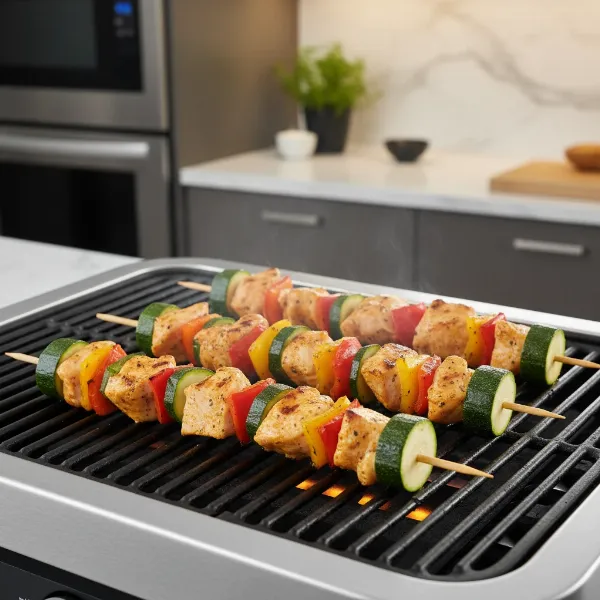 Chicken, peppers, and zucchini perfectly seared on an electric grill, demonstrating ideal non-stick cooking.
The Science Behind Smoke Points: Why It Matters for Electric Grilling
An oil’s smoke point is the temperature at which it begins to produce visible smoke. When an oil reaches this point, its chemical structure breaks down, releasing free radicals, acrolein (the chemical that causes the pungent taste of burnt food), and potentially carcinogenic compounds. This breakdown not only negatively impacts the flavor of your food, lending it a bitter or burnt taste, but also diminishes the oil’s nutritional value.
Electric grills often operate at high temperatures, especially when searing. Using an oil with a smoke point lower than your grill’s cooking temperature will result in a smoky kitchen, unpleasant flavors, and an unhealthy cooking environment. Refined oils typically boast higher smoke points than their unrefined counterparts because the refining process removes impurities and free fatty acids that cause oil to smoke prematurely. Understanding this crucial difference is key to successful and healthy electric grilling.
Top High Smoke Point Oils for Your Electric Grill
Selecting an oil that can withstand the high heat of an electric grill is paramount. These oils offer stability, neutral to pleasant flavors, and ensure your food cooks perfectly without burning the oil.
Avocado Oil: The Champion
Avocado oil stands out as the undisputed champion for high-heat cooking, boasting an impressive smoke point of 500-520°F. This makes it exceptionally stable and perfect for searing and grilling at the highest temperatures. Beyond its heat tolerance, avocado oil is lauded for its health benefits, being rich in monounsaturated fats. It typically has a subtle, buttery, or slightly avocado-like flavor that won’t overpower your dishes.
Safflower Oil
Refined safflower oil is another excellent choice, with a smoke point ranging from 450-510°F. It’s a neutral-flavored oil, making it versatile for a wide range of grilled foods where you don’t want the oil to impart any specific taste. Its high heat stability ensures it won’t smoke or break down, keeping your food pure and delicious.
Refined Sunflower Oil
With a smoke point typically between 450-500°F, refined sunflower oil is a reliable option for electric grilling. Similar to safflower oil, it offers a neutral flavor profile, allowing the natural tastes of your ingredients to shine through. Ensure you choose refined sunflower oil, as unrefined versions have a significantly lower smoke point.
Canola Oil
Canola oil is a widely available and affordable option with a smoke point generally between 400-475°F. It has a very neutral flavor, making it a workhorse in many kitchens. Its balance of high smoke point and mild taste makes it a practical choice for everyday electric grilling.
Refined Peanut Oil
Refined peanut oil can handle temperatures up to 440-450°F, making it suitable for high-heat applications on an electric grill. It imparts a mild, nutty flavor that can complement certain dishes, particularly those with an Asian or savory profile. Like other oils, opt for the refined version for higher heat stability.
Grapeseed Oil
Grapeseed oil offers a smoke point in the range of 390-510°F, depending on its refinement. It’s known for its light body and very neutral flavor, which makes it another excellent choice when you desire minimal interference with the food’s taste.
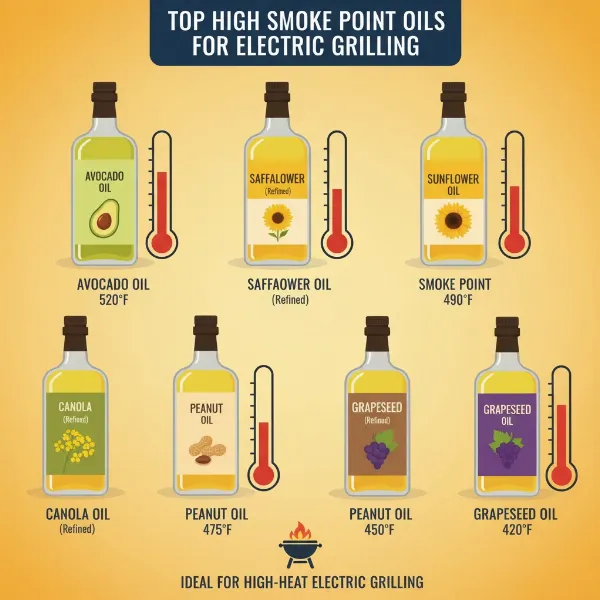 Infographic comparing high smoke point cooking oils like avocado, safflower, and sunflower for grilling.
Oils to Avoid or Use with Caution on an Electric Grill
While some oils are culinary staples, their lower smoke points make them unsuitable for the intense heat of electric grilling. Using these oils can lead to burnt flavors and unhealthy byproducts.
Extra Virgin Olive Oil
While a cornerstone of Mediterranean cuisine, extra virgin olive oil has a relatively low smoke point, typically ranging from 325-400°F (unrefined). It’s best reserved for salad dressings, dipping, or finishing dishes where its robust, fruity flavor can be appreciated without direct high heat. Lighter or refined olive oils have slightly higher smoke points but are still generally not ideal for searing temperatures.
Unrefined Coconut Oil
Unrefined coconut oil has a smoke point around 350-380°F. While it can add a lovely tropical flavor to certain foods, its lower smoke point and distinct taste mean it’s not the best all-around choice for high-temperature electric grilling. Use it for specific recipes or at lower grill settings.
Butter
Butter’s smoke point is quite low, usually between 300-350°F, due to its milk solids. It burns quickly, producing a bitter taste and black specks on your food. While clarified butter (ghee) has a higher smoke point, regular butter is best avoided for direct electric grilling.
“Choosing the right oil isn’t just about preventing sticking; it’s about preserving the integrity of your food’s flavor and ensuring a healthier cooking experience. Always match your oil’s smoke point to your cooking method.”
Expert Tips for Oiling Your Electric Grill
Proper oiling techniques are just as important as choosing the right oil. A little goes a long way, and careful application can make all the difference.
Prepping the Grill Grates
Before applying any oil, ensure your electric grill grates are clean. Any leftover food particles will burn and stick, regardless of how well you oil the surface. Use a grill brush to remove debris, ideally while the grill is warm, then wipe it down.
Application Techniques
The most common and effective method for oiling your electric grill grates is to use a paper towel dipped in oil, held with tongs. Lightly dab the paper towel in a small bowl of your chosen high smoke point oil, then carefully wipe a thin, even layer over the entire grilling surface. For a hot grill, a brush can also be used, but ensure it’s heat-resistant. Some chefs prefer to oil the food directly or use an oil-based marinade, which can be an excellent alternative, especially for delicate items.
The Right Amount of Oil
This is crucial: less is more. An overly saturated paper towel or too much oil applied directly to the grates will lead to excessive smoking, flare-ups (if applicable to your model), and a burnt residue that will adhere to your food. You only need a thin, almost imperceptible film of oil to create that non-stick barrier. If you see visible pooling of oil, you’ve used too much.
When to Oil
For optimal results, oil the grates when your electric grill is cool. After applying a thin layer, preheat the grill. Allow the grill to heat up and the oil to “smoke off” for about 15-30 minutes. This creates a seasoned surface. If you’re using an already hot grill, apply a minimal amount of oil just before placing the food on the grates.
Enhancing Flavor and Longevity with the Right Oil
The impact of your oil choice extends beyond simply preventing sticking. High-quality, high smoke point oils can subtly enhance the flavor of your grilled meats and vegetables, allowing their natural essence to shine without undesirable off-notes from burnt oil. A well-oiled grill also benefits from increased longevity. The thin layer of oil acts as a protective barrier, especially for cast iron grates, helping to prevent rust and corrosion over time. Regular cleaning combined with appropriate oiling ensures your electric grill remains in top condition, ready for countless delicious meals.
Conclusion
Mastering electric grilling involves more than just plugging in your device; it requires understanding the nuances of your ingredients, especially cooking oils. By prioritizing high smoke point oils like avocado, safflower, refined sunflower, canola, refined peanut, and grapeseed oil, you ensure a safe, flavorful, and non-stick grilling experience. Avoiding oils with low smoke points, such as extra virgin olive oil or butter, prevents burnt flavors and unhealthy byproducts. Remember the golden rule: a thin, even layer of the right oil. With these insights, you’re well-equipped to elevate your electric grilling, achieving perfectly cooked, delicious results every time. What’s your go-to high smoke point oil for electric grilling?
Frequently Asked Questions
Can I use olive oil on an electric grill?
While some light or refined olive oils have higher smoke points than extra virgin, olive oil is generally not recommended for high-temperature electric grilling. Its smoke point is typically too low, leading to burning, unpleasant flavors, and potential health concerns. It’s best reserved for lower heat applications or as a finishing oil.
How do I prevent oil from causing smoke on my electric grill?
To prevent excessive smoke, ensure you’re using a high smoke point oil and applying it sparingly. Wipe the grates with a very thin layer using a paper towel held by tongs. Too much oil is the most common cause of smoke and burnt residue on electric grills.
Should I oil the food or the grill grates?
Both methods are acceptable, and sometimes a combination works best. Oiling the food directly, especially if it’s marinated, can be very effective. If you oil the grates, apply a thin layer to a cool grill before preheating, or a minimal amount to a hot grill just before adding food, to ensure a non-stick surface.
Does refined oil mean it’s unhealthy?
Not necessarily. The refining process removes impurities and free fatty acids, which increases an oil’s smoke point and makes it more suitable for high-heat cooking. While some unrefined oils retain more nutrients, refined versions are often a better choice for grilling where heat stability is critical for health and flavor.
How often should I oil my electric grill grates?
It’s a good practice to lightly oil your grates before each grilling session, especially if you’re cooking delicate items that are prone to sticking. This helps maintain a non-stick surface and can contribute to the longevity of your grill, particularly if it has cast iron grates that benefit from seasoning.