Do Electric Grills Taste Good? An Honest Look
As an Amazon Associate, electricgrillusa.com earns from qualifying purchases. Prices and availability shown are approximate and change frequently — check the live price on Amazon. Recommendations are based on synthesizing manufacturer specifications and independent expert reviews; we do not accept payment for placement.
Quick Verdict: Yes — electric grills can produce genuinely good-tasting food, but with an honest caveat. Most of grilled flavor comes from high-heat browning (the Maillard reaction), not from smoke, and a capable electric grill that reaches 450–500°F or higher delivers that browning well. What standard electric grills lack is natural smoke flavor, which is the one area where charcoal still wins. The good news: high heat and a few simple techniques close most of the gap, and pellet-electric hybrids like the Ninja Woodfire add real wood smoke. This is the honest, no-hype breakdown. For our vetted picks, see the Best Electric Grills guide.
Where Grilled Flavor Actually Comes From
The “grilled” taste people love comes from two separate sources, and untangling them explains exactly what electric grills do and don’t deliver.
1. The Maillard Reaction (the bigger contributor)
Most of the flavor in grilled food comes from how it’s cooked over high heat, not from smoke. The Maillard reaction is the browning chemistry between amino acids and sugars that creates the savory, complex, golden-brown crust on a seared steak or burger. It accelerates dramatically above roughly 300°F and produces that deep “grilled” taste. An electric grill that reaches high temperatures triggers this reaction and produces real grill marks and browning.
2. Smoke (the flavor electric grills lack)
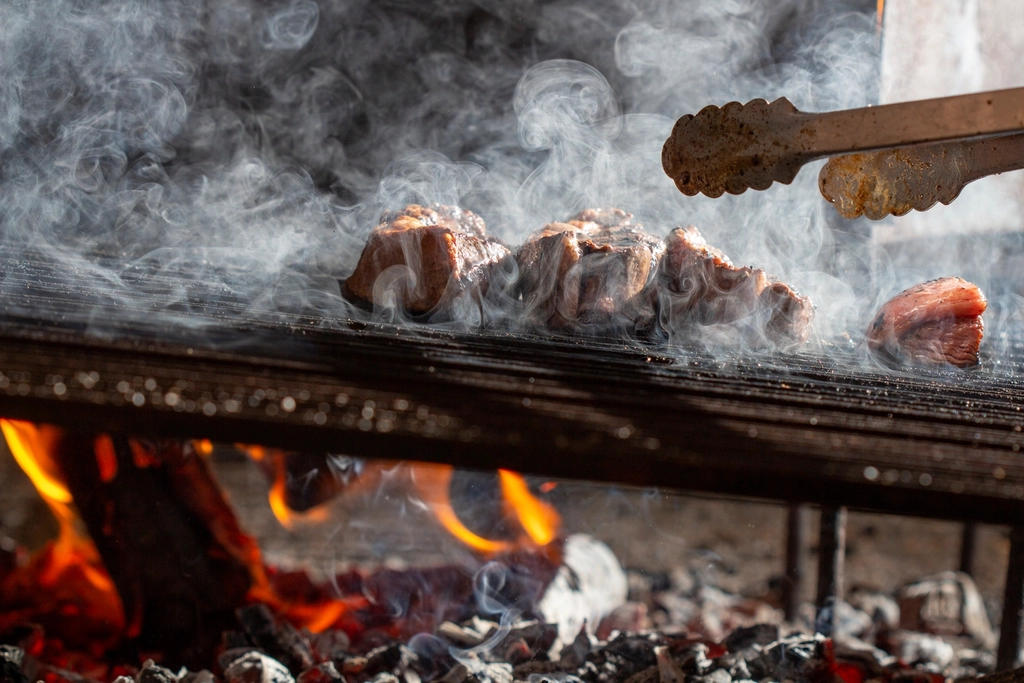
The second source is smoke — the compounds released when fat drips onto hot coals or a flame, and when wood combusts. This is where charcoal genuinely shines and where standard electric grills fall short, because they produce minimal smoke by design (which is also what makes them apartment-safe).
The Honest Limitation: Heat Ceilings
Here’s the fair criticism: many electric grills, especially budget models, struggle to reach the temperatures needed to fully drive the Maillard reaction. If a grill tops out around 350–400°F, you’ll get pale, steamed-looking food rather than a proper sear, and the taste suffers accordingly.
This is why temperature ceiling is the spec that most predicts flavor. Capable units change the picture entirely:
- The Ninja Sizzle GR101 reaches 500°F and produces defined char-grill marks indoors via edge-to-edge heating.
- The Ninja Foodi indoor grills use 500°F cyclonic heat plus a 500°F grate to char-grill effectively.
- The Weber Lumin reaches over 600°F outdoors — high enough for genuine searing that rivals gas.
Buy a grill that reaches at least 500°F and the “electric food tastes bland” complaint largely disappears.
What the Reviews Actually Found
Independent testing backs up the nuanced picture. In hands-on reviews of the Ninja Woodfire outdoor grill, testers cooked New York strip steaks to medium-rare with clearly defined grill marks; the evenly distributed heat seared the outside and the results impressed. Consumer Reports found the Woodfire matched or even beat barbecue from pricier pellet grills, generating generous plumes of smoke that flavored ribs and pulled pork beautifully — because it burns actual wood pellets alongside its element.
The honest qualifier from those same reviews: you don’t always get the same hard char that an open charcoal flame produces. The grill marks and crust are real and good, but a charcoal purist will still notice a difference on a side-by-side steak. That’s the trade-off, stated plainly.
How to Make Electric Grill Food Taste Better
A few techniques meaningfully improve flavor on any electric grill:
- Preheat fully. Give the grill 10–15 minutes to reach its maximum temperature before food touches the surface. A hot grate is the single biggest factor in good browning and grill marks.
- Dry the surface of your food. Pat steaks and chicken dry with paper towels. Surface moisture turns to steam and blocks the Maillard reaction until it evaporates.
- Don’t overcrowd. Too much cold food at once drops the grate temperature and causes steaming instead of searing. Cook in batches if needed.
- Use a smoker box or wood chips on a high-heat outdoor electric to add smoke flavor the grill won’t produce on its own.
- Lean on rubs, marinades, and a finishing sear. Seasoning and a hard final minute on the hottest setting build flavor and crust.
- Choose a pellet-electric hybrid if smoke flavor is non-negotiable. The Ninja Woodfire is purpose-built for this.
Electric vs. Gas vs. Charcoal: Taste Reality Check
| Flavor factor | Electric | Gas | Charcoal |
|---|---|---|---|
| Maillard browning / crust | Good on 500°F+ models | Very good | Excellent |
| Grill marks | Yes, defined | Yes | Yes, hardest char |
| Natural smoke flavor | Minimal (hybrid excepted) | Moderate | Best |
| Consistency / control | Excellent | Very good | Hardest to control |
| Best use case | Weeknights, apartments, year-round | Backyard all-rounder | Low-and-slow, max smoke |
Which Foods Taste Best on an Electric Grill?
- Excellent: Burgers, steaks (on a 500°F+ model), chicken breasts and thighs, salmon and firm fish, vegetables, paninis, and quesadillas — all benefit from clean, controllable high heat.
- Very good with technique: Pork chops and kebabs, which reward a hot preheat and a dry surface.
- Better on a hybrid or charcoal: Ribs, brisket, and pulled pork, where deep smoke flavor is central — a pellet-electric like the Ninja Woodfire handles these far better than a standard electric.
Indoor vs. Outdoor: Does Location Change the Taste?
Where you grill affects flavor more than people expect. Indoor electric grills are deliberately designed to minimize smoke — that’s what makes them kitchen-safe — so they lean entirely on the Maillard reaction for flavor. They still produce excellent browning and grill marks on a hot surface, but you won’t get any smoke contribution at all. Outdoor electric grills, by contrast, can be paired with a smoker box or wood chips, and they often run hotter (the Weber Lumin’s 600°F-plus ceiling versus 500°F indoors), which means a stronger crust. If flavor is your priority and you have an outdoor outlet, an outdoor electric gives you more levers to pull. If you only have a kitchen, focus on maximizing heat, drying your food, and seasoning aggressively to compensate.
The Verdict on Hybrid Pellet-Electric Grills
The single biggest development in electric-grill flavor is the pellet-electric hybrid. Units like the Ninja Woodfire use an electric element for heat and ignition but burn a small hopper of real wood pellets to generate genuine smoke — so they sidestep the category’s one true weakness. In independent testing, the Woodfire produced generous smoke that flavored ribs and pulled pork beautifully and matched or beat pricier dedicated pellet grills. The catch is that it’s still electric-dependent (you need an outlet) and pellets are a small ongoing cost. But for anyone who wants electric convenience without sacrificing smoke flavor, a hybrid is the most compelling answer to the “do electric grills taste good” question — because it gets you both the Maillard crust and the smoke.
Frequently Asked Questions
Do electric grills taste as good as gas grills?
On a capable model, very close. Most grilled flavor comes from high-heat browning rather than smoke, and an electric grill that reaches 500°F or more produces a comparable crust and grill marks. Gas has a slight edge in peak heat and a bit of smoke from fat dripping onto burners, but for most everyday foods the taste difference is small.
Why does some electric grill food taste bland?
Usually because the grill doesn’t get hot enough or wasn’t preheated. Low-temperature grills (around 350–400°F) steam food instead of searing it, blocking the Maillard reaction that creates flavor. Use a grill that reaches at least 500°F, preheat it fully for 10–15 minutes, and pat your food dry before cooking.
Can you get smoke flavor from an electric grill?
Standard electric grills produce minimal smoke, but you can add it with a smoker box or wood chips on a high-heat outdoor model. For real wood smoke, a pellet-electric hybrid like the Ninja Woodfire burns actual wood pellets and, in independent testing, matched or beat pricier pellet grills on smoke flavor.
Do electric grills make grill marks?
Yes. Grills with ridged plates and enough heat — such as the Ninja Sizzle (500°F) and the Weber Lumin (600°F+) — produce defined char-grill marks. The marks come from direct contact with a hot ridged surface, so a full preheat and a dry food surface make them more pronounced.
Is the taste difference worth choosing charcoal instead?
Only if maximum smoke flavor is your top priority and you have somewhere to legally use charcoal. For apartment cooks, weeknight grilling, and convenience, the small flavor gap is a worthwhile trade for plug-in ease, lower running cost, and indoor/balcony use. A pellet-electric hybrid narrows the gap further.
Final Verdict
Do electric grills taste good? Honestly, yes — provided you buy one that gets hot enough and use it well. Because the majority of grilled flavor comes from high-heat browning rather than smoke, a 500°F-plus electric grill produces a genuinely satisfying crust, real grill marks, and great results on burgers, steaks, chicken, fish, and vegetables. The one true limitation is natural smoke flavor, which charcoal still owns and which a pellet-electric hybrid like the Ninja Woodfire largely replicates. Preheat fully, dry your food, don’t overcrowd, and the “electric tastes bland” myth falls apart. For models that actually reach searing temperatures, see the Best Electric Grills guide, and learn the technique in How to Cook Steak on an Electric Grill.
Last updated: June 2026
See our main guide: Best Electric Grills.