Electric Grill Temperature Guide
As an Amazon Associate, electricgrillusa.com earns from qualifying purchases. Prices and availability shown are approximate and change frequently — check the live price on Amazon. Recommendations are based on synthesizing manufacturer specifications and independent expert reviews; we do not accept payment for placement.
Quick overview: Getting electric-grill temperatures right is the difference between a seared, juicy result and pale, dry food. The two numbers that matter are the grate temperature you set (how hot the cooking surface is) and the internal temperature you cook food to (its safe, ideal doneness). This guide gives both: recommended grate settings and target internal temperatures for steak, burgers, chicken, pork, fish, and vegetables, plus the searing science, preheating, and food-safety minimums you need. It applies to indoor grills like the Ninja Sizzle (max 500°F) and outdoor units like the Weber Lumin (600°F+).
Two Temperatures You Need to Understand
- Grate (surface) temperature: What you set on the grill’s dial — the heat of the cooking surface. Higher grate temps sear and brown; lower temps cook gently. Searing generally needs 450–500°F or more.
- Internal (food) temperature: Measured with a meat thermometer in the thickest part of the food. This determines doneness and food safety, and it’s the number that actually tells you the food is ready.
You control the grate temperature; you verify the internal temperature. Both matter, and confusing the two is the most common grilling mistake.
Why High Heat Matters: The Maillard Reaction
The browned, savory crust on grilled food comes from the Maillard reaction, which accelerates above roughly 300°F and really takes off at searing temperatures. This is why a grill that reaches 450–500°F or more produces a proper crust and grill marks, while a grill stuck near 350°F tends to steam food gray. Most of grilled flavor comes from this high-heat browning, not from smoke — so hitting the right grate temperature is the key to good taste on any electric grill.
Recommended Grate Temperatures by Food
| Food | Grate temp setting | Approx. time | Notes |
|---|---|---|---|
| Steak (sear) | 450–500°F+ | 3–5 min/side (1 in) | High heat for crust; rest after |
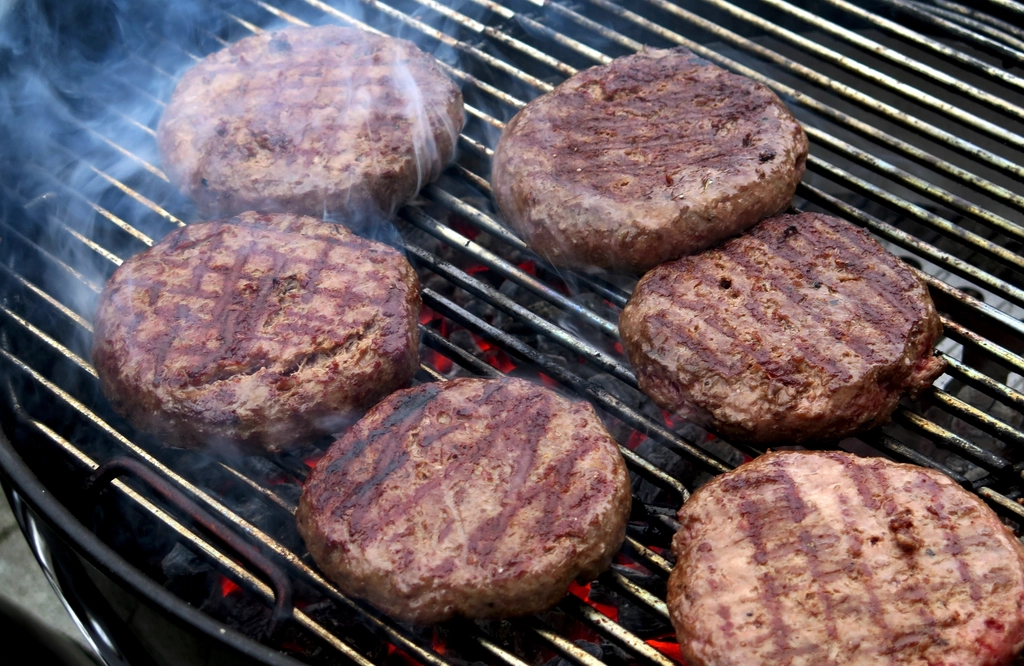
| Burgers | 375–400°F | 4–5 min/side | Cook to 160°F internal |
| Chicken breast | 350–400°F | 5–7 min/side | Moderate heat prevents drying |
| Chicken thighs / bone-in | 350–375°F | longer, lid closed | Lower and slower to cook through |
| Pork chops | 375–400°F | 4–6 min/side | Cook to 145°F + rest |
| Fish / salmon | 375–400°F | 3–5 min/side | Firm fish handles the grate best |
| Shrimp | 375–400°F | 2–3 min/side | Cooks fast; watch closely |
| Vegetables | 375–425°F | varies | Higher heat for char on firmer veg |
| Paninis / sandwiches | 350–375°F | 3–5 min | Contact grill, both sides |
Safe Internal Temperatures (Food Safety)
Grate temperature controls the cook; internal temperature confirms the food is safe and done. These are widely recognized USDA-aligned minimums — pull a few degrees early for carryover cooking where a rest applies.
| Food | Target internal temp | Rest after? |
|---|---|---|
| Steak — medium-rare | 130–135°F | ~5 min |
| Steak — medium | 140–145°F | ~5 min |
| Ground beef / burgers | 160°F | brief |
| Poultry (chicken, turkey) | 165°F | brief |
| Pork (chops, roasts) | 145°F | 3 min |
| Fish | 145°F | brief |
A meat thermometer is the only reliable way to confirm these. Insert it into the thickest part, away from bone. For ground meat and poultry, hit the full safe temperature — these aren’t optional for safety.
Preheating: Don’t Skip It
Preheat your electric grill for at least 10–15 minutes before food goes on. The dial may reach its setpoint quickly, but the grate and any cast metal need time to fully heat and store energy, so they don’t crash in temperature the moment you add cold food. A fully preheated surface is what produces searing and grill marks; an under-heated one steams. Closing the lid during preheat (where the grill has one) speeds this up.
Managing Temperature Recovery
- Don’t overcrowd the grate. Adding too much cold food at once drops the surface temperature and causes steaming. Cook in batches so the grate stays hot.
- Bring food closer to room temp. Tempering steaks and chops for 30–45 minutes before grilling reduces the temperature shock to the grate.
- Use the lid for thicker cuts. A closed lid traps heat and cooks food through evenly while the surface sears.
- Higher wattage recovers faster. Grills around 1,500–1,800W (like the ~1,760W Ninja Foodi line) reheat the grate more quickly between batches.
Two-Zone and Reverse-Sear Techniques
Some electric grills let you cook smarter than a single setting allows:
- Reverse sear: For thick steaks and roasts, cook at a lower setting (around 350–400°F) until the interior nears your target, then crank to maximum to sear the crust at the end. This gives an even interior and a strong crust.
- Gentle-then-hot for chicken: Start bone-in chicken at a moderate temperature to cook through, finishing hotter for color so the outside doesn’t burn before the inside reaches 165°F.
How to Measure Grate Temperature Accurately
Many electric grills label their dials with vague settings — “Low / Medium / High” or numbers 1–5 — rather than precise degrees, which makes hitting a target temperature a guessing game. A few habits remove the guesswork. First, if your grill displays an actual temperature or has preset modes (the Ninja Sizzle and Ninja Foodi line use defined settings up to 500°F), use those as your reference. Second, for dial-only grills, an inexpensive infrared (laser) thermometer pointed at the grate gives you the real surface temperature in seconds — far more reliable than the dial. Third, a simple sanity check: at proper searing heat the grate sizzles aggressively the instant food touches it. If it’s quiet, the grate isn’t hot enough and you should keep preheating.
Temperature and Food Safety: Why Internal Temp Wins
It’s tempting to judge doneness by appearance, but color is unreliable — especially for poultry and ground meat, where undercooking carries real illness risk. A burger can brown on the outside while the center is still below the 160°F it needs; chicken can look done well before it reaches a safe 165°F. This is why the internal temperature, measured with a thermometer, is the only dependable indicator. Keep a leave-in or instant-read thermometer beside the grill and treat the safe-minimum chart above as non-negotiable for ground meat, poultry, and pork. For steaks and whole cuts, where the surface is seared and the risk profile is different, doneness preference (and the medium-rare-and-up range) is a matter of taste rather than safety.
Quick Temperature Troubleshooting
- Food steams instead of searing: Grate isn’t hot enough — preheat longer, cook in smaller batches, and dry the food first.
- Outside burns before inside cooks: Grate is too hot for the cut — lower the setting or move to a reverse-sear approach.
- Uneven cooking across the grate: Some elements have hot spots — rotate food, or use models with edge-to-edge heating like the Ninja Sizzle.
- Temperature crashes when food is added: Too much cold food at once, or low wattage — temper food first and cook in batches.
Frequently Asked Questions
What temperature should an electric grill be for searing?
Aim for a grate temperature of 450–500°F or higher to sear. That range drives the Maillard reaction strongly enough to build a browned crust and grill marks. High-heat outdoor models like the Weber Lumin reach over 600°F, while capable indoor grills such as the Ninja Sizzle and Ninja Foodi top out around 500°F.
What’s the difference between grate temperature and internal temperature?
Grate temperature is the heat of the cooking surface, which you set on the grill and which controls searing. Internal temperature is the heat inside the food, measured with a thermometer, which determines doneness and food safety. You set the grate temperature and verify the internal temperature — both matter for a good, safe result.
How long should I preheat an electric grill?
Preheat for at least 10–15 minutes before adding food. The dial may reach its setting sooner, but the grate needs time to fully heat so it doesn’t lose temperature when cold food touches it. A fully preheated surface sears and marks food properly; an under-heated one steams it gray.
What internal temperature is safe for chicken on an electric grill?
Cook poultry to an internal temperature of 165°F, measured in the thickest part away from bone. Use a moderate grate temperature (around 350–400°F) so the inside reaches 165°F before the outside burns, and check with a meat thermometer — color alone isn’t a reliable safety indicator for chicken.
Why isn’t my electric grill getting hot enough to sear?
Common causes are insufficient preheating, overcrowding the grate with cold food, or a grill whose maximum temperature simply tops out too low (some budget models peak near 400°F). Preheat fully for 10–15 minutes, cook in smaller batches, and for serious searing choose a model rated to at least 500°F.
Conclusion
Mastering electric-grill temperatures means working with two numbers: set the grate hot enough for the job — 450–500°F+ for searing, 350–400°F for gentler cooking — and cook food to its correct internal temperature, verified with a thermometer. Preheat fully for 10–15 minutes, avoid overcrowding so the grate stays hot, and use reverse-searing for thick cuts. Hit the safe internal minimums (165°F for poultry, 160°F for ground beef, 145°F for pork and fish) every time. Get these right and an electric grill delivers seared, juicy, properly cooked food consistently. For the technique applied to steak, see How to Cook Steak on an Electric Grill, and to pick a grill that reaches the temperatures you need, see the Best Electric Grills guide.
Last updated: June 2026
See our main guide: Best Electric Grills.