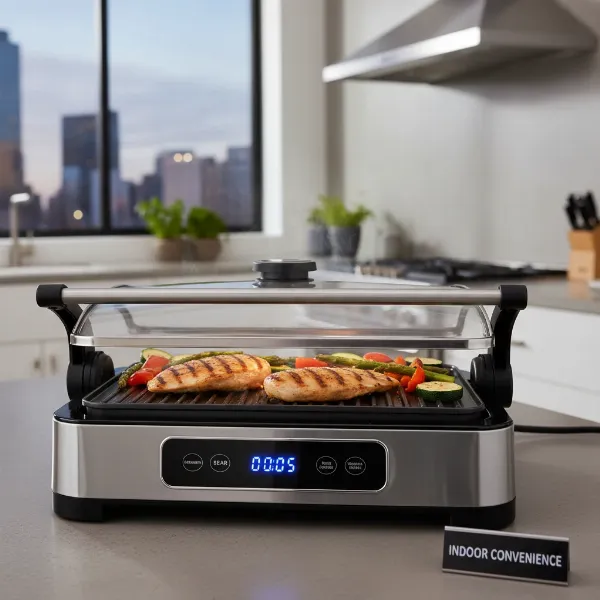
The lifespan of a beloved electric grill, while filled with countless delicious meals, eventually comes to an end. As an appliance technician with over a decade of experience, I’ve seen countless electric grills—from compact indoor models to robust outdoor units—reach the point of retirement. When that time comes, simply tossing it in the regular trash isn’t the best solution, and in many places, it’s not even permissible. Understanding how to properly dispose of your old electric grill is crucial for environmental responsibility and adhering to local waste management regulations.
This guide will walk you through everything you need to know about discarding your electric grill safely and sustainably, ensuring you make an informed choice that benefits both your community and the planet.
Understanding Electric Grills as E-Waste
Many household appliances, including electric grills, contain electronic components, plastics, and various metals. These materials classify them as “e-waste,” or electronic waste. Unlike general refuse, e-waste requires specialized handling due to the presence of potentially hazardous substances like lead, mercury, and cadmium in circuit boards and other parts. When these items end up in landfills, these chemicals can leach into the soil and groundwater, posing significant environmental and health risks.
Proper disposal of an electric grill isn’t just about adherence to environmental regulations; it’s a commitment to protecting natural resources and reducing your carbon footprint. Recycling allows valuable materials, such as steel and aluminum, to be reclaimed and reused, lessening the demand for new raw materials and conserving energy.
Preparing Your Electric Grill for Disposal
Before you consider any disposal method, preparing your old electric grill is a vital first step to ensure safety and efficiency.
First and foremost, unplug the electric grill from its power source and allow it to cool completely. Safety should always be your top priority to prevent any electrical shock or burn hazards. Once cool, thoroughly clean the grill. Remove any food residue, grease, or charred bits from the cooking plates, drip trays, and exterior surfaces. A clean grill is more readily accepted by donation centers, recycling facilities, and junk removal services.
If you plan to disassemble the grill for scrap or to separate components for different recycling streams, gather the necessary tools such as screwdrivers, wrenches, and pliers. Carefully take apart the various sections, separating metals from plastics and electrical wiring. Pay particular attention to any batteries or specific electronic circuit boards. These components, often found in control panels or digital displays, should be removed and set aside for dedicated e-waste recycling, as they contain the highest concentration of potentially hazardous materials.
Top Disposal Options for Your Old Electric Grill
When it’s time to part ways with your electric grill, you have several responsible avenues to consider, depending on its condition and your local resources.
Donation or Selling (If Functional)
|
Our Picks for the Best electric grill in 2026
As an Amazon Associate I earn from qualifying purchases.
|
||
| Num | Product | Action |
|---|---|---|
| 1 | Electric Grill, Techwood Indoor/Outdoor Electric BBQ Grill, 1600W Portable Removable Stand Grill with Adjustable Heat & Drip Tray, Double Layer Design for Party, Patio & Backyard (Black) |

|
| 2 | Ninja Griddle and Indoor Grill, 14’’, Electric Grill, For Steak, Burgers, Salmon, Veggies, and More, Pancake Griddle, Nonstick, Dishwasher Safe, 500F, Even Cooking, Silver, GR101 |
|
| 3 | Electric Grill, Techwood Indoor/Outdoor Electric BBQ Grill, 1600W Portable Removable Stand Grill with Adjustable Heat & Drip Tray, Double Layer Design for Party, Patio & Backyard (Blue) |
|
| 4 | Chefman XL Electric Griddle with Removable Temperature Control, Immersible Flat Top Grill, Burger, Eggs, Pancake Griddle, Nonstick Extra Large Cooking Surface, Slide Out Drip Tray, 10 x 20 Inch |
|
| 5 | Electric Grill, CUSIMAX Electric Indoor/Outdoor Grill, 1600W Portable BBQ with Lid for Indoor & Outdoor Use, Adjustable Heat, Removable Stand Grill for Cookouts, BBQ Gatherings, Small Spaces |
|
| 6 | Ninja DG551 Foodi Smart XL 6-in-1 Indoor Grill with Air Fry, Roast, Bake, Broil, & Dehydrate, Foodi Smart Thermometer, 2nd Generation, Black/Silver |
|
| 7 | Hamilton Beach Electric Indoor Searing Grill with Viewing Window & Adjustable Temperature Control to 450F, 118 sq. in. Surface Serves 6, PFAS-Free Removable Nonstick Grate, Stainless Steel |
|
| 8 | Artestia 1800W Electric Outdoor Grills with Lid Indoor Smokeless Grill for Balcony with Temperature Control Portable Removable Stand Grill for Cooking, BBQ Party, Family |
|
| 9 | Chefman Smokeless Indoor Electric Grill, Extra Large Grilling Surface, Nonstick Table Top Grill for Indoor Grilling and BBQ with Adjustable Temperature Control, Drip Tray, Dishwasher-Safe Parts |
|
| 10 | Chefman Electric Smokeless Indoor Grill w/ Non-Stick Cooking Surface & Adjustable Temperature Knob from Warm to Sear for Customized BBQing, Dishwasher Safe Removable Water Tray, Black |
|
If your electric grill is still in good working order, donating or selling it is an excellent way to give it a second life. Organizations like Habitat for Humanity ReStore often accept gently used appliances, which are then sold to support their community housing initiatives. Local thrift stores or community centers might also welcome donations. For those looking to recoup some of their initial investment, online marketplaces such as Craigslist, Facebook Marketplace, or local classifieds can connect you with buyers in your area. Always ensure the grill is clean, fully functional, and safe for its next owner if choosing this path.
Local Waste Management and Bulk Pickup
Your municipal waste management service is a key resource for disposing of larger household items. Many cities offer special curbside bulky item collection services, either on a scheduled basis or by appointment. These services are designed to handle items too large for regular trash bins. It’s essential to check your local waste department’s website or contact them directly to understand their specific policies, collection schedules, and any associated fees. Some communities also host periodic “bulk item disposal events” or “household hazardous waste days” where residents can drop off large appliances and e-waste.
Electronics Recycling Centers (E-Waste Facilities)
For electric grills, which contain significant electronic components, an electronics recycling center is often the most environmentally sound disposal option. These specialized facilities are equipped to safely dismantle e-waste, separate materials, and ensure hazardous substances are managed responsibly, preventing them from contaminating the environment. To find a certified e-waste recycler near you, search online for “e-waste recycling” or “electronics disposal” along with your city or zip code. Many local government websites also provide directories of approved recycling centers.
Some major electronics retailers offer take-back or recycling programs for old appliances, sometimes even providing haul-away services when you purchase a new product. These programs are convenient and ensure proper disposal through established recycling channels.
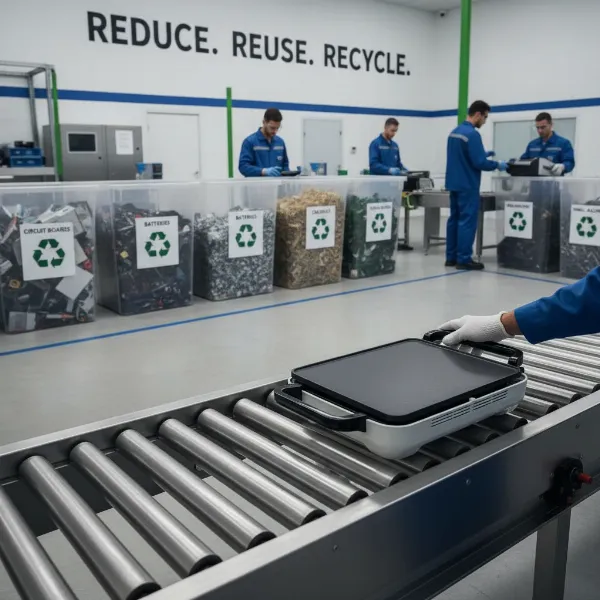 A clean, old electric grill being dropped off at an electronics recycling center, with sorting bins in the background.
Professional Junk Removal Services
If convenience is a priority, or if your grill is too large or heavy for you to transport, hiring a professional junk removal service is a viable option. Companies like 1-800-GOT-JUNK or local independent haulers specialize in removing unwanted items from your home. While this service comes with a cost, it saves you the effort of disassembling, loading, and transporting the grill. When choosing a service, inquire about their disposal practices to ensure they commit to environmentally responsible recycling rather than simply sending everything to a landfill.
Scrap Metal Recycling (Component Separation)
For those comfortable with a bit of DIY, scrapping your electric grill can be an option. Electric grills are primarily made of metal (steel, aluminum), which is highly recyclable. By disassembling the grill and separating the different metal components, you can take them to a local scrap metal yard. While you might earn a small amount of money, the primary benefit is ensuring these valuable resources are recycled. Remember, all non-metal parts, particularly electrical components and batteries, must still be separated and disposed of as e-waste or according to local regulations, as scrap yards typically only accept metal.
Navigating Local Regulations and Resources
Disposal guidelines for electric grills can vary significantly from one municipality to another. What might be acceptable in one town could be prohibited in another due to different local ordinances and available facilities. This is why consulting your local resources is not just recommended, but essential.
Start by visiting your city or county’s official waste management or public works department website. These sites typically provide comprehensive information on bulky item collection, e-waste drop-off locations, hazardous waste events, and specific rules for appliance disposal. Many also offer interactive tools or search functions to help you find nearby recycling centers. If online information isn’t clear, don’t hesitate to call your local waste management office directly. They can provide the most accurate and up-to-date guidance tailored to your area.
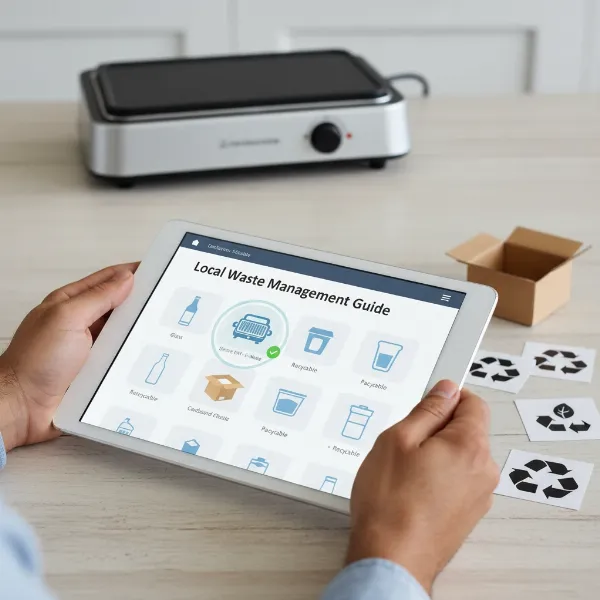 A person reading a local waste management guide on a tablet, with an electric grill icon highlighted, surrounded by recycling symbols.
Common Mistakes to Avoid When Disposing of an Electric Grill
Disposing of an electric grill seems straightforward, but several common pitfalls can lead to improper disposal, environmental harm, or even fines. Being aware of these can help you ensure a smooth and responsible process.
One of the most frequent mistakes is simply tossing the entire electric grill into your regular household trash bin. As previously discussed, electric grills are typically classified as e-waste due to their electronic components and metals, which are often banned from general landfills. Ignoring this can result in your trash not being collected or even incurring fines, depending on local regulations.
Another critical error is improperly disposing of batteries or small electrical parts. Many electric grills have digital displays, timers, or igniters that contain small batteries or circuit boards. These must be removed and recycled separately at designated e-waste collection points. Throwing them directly into the trash or mixing them with general recycling can release harmful chemicals into the environment.
Failing to adequately clean your electric grill before disposal can also cause issues. Most recycling centers, donation sites, or junk removal services prefer or even require items to be free of food residue and grease. A dirty grill can attract pests, create unpleasant odors, and make the recycling process more challenging.
Finally, neglecting to check local regulations is a widespread oversight. Waste disposal rules are highly localized. Assuming that a method acceptable in one area is universal can lead to incorrect disposal. Always verify the specific guidelines for your municipality to avoid unnecessary complications.
> “The greatest challenge in e-waste management is often awareness. Many consumers simply don’t realize their old electric grill isn’t just ‘trash,’ but a complex item requiring careful, specific recycling pathways to protect our planet.” – Dr. Elena Petrova, Environmental Waste Management Specialist
Conclusion
Disposing of an old electric grill doesn’t have to be a daunting task. By understanding that these appliances are a form of e-waste and by utilizing the various responsible options available—from donation and local bulk pickups to specialized electronics recycling centers—you can ensure your old grill is handled in an environmentally sound manner. Taking a few simple steps to prepare your grill and researching local regulations will make the process straightforward and effective. Making a conscious choice for proper disposal contributes significantly to waste reduction, resource conservation, and the overall health of our planet.
How will you make a difference with your next appliance disposal?
Frequently Asked Questions
Is an electric grill considered e-waste?
Yes, electric grills are generally considered e-waste because they contain electrical components, wiring, and various metals. These materials necessitate special handling to prevent environmental contamination and allow for the recovery of valuable resources through dedicated electronics recycling programs.
Can I put my electric grill in the regular trash?
In most areas, you cannot put an electric grill in your regular trash. Due to its classification as e-waste, many municipalities have regulations prohibiting landfill disposal of electronic appliances. It’s crucial to check local waste management guidelines for specific rules in your area.
Where can I recycle an electric grill near me?
You can typically recycle an electric grill at local electronics recycling centers, designated e-waste drop-off events, or through certain retail take-back programs. Many municipal waste management services also offer special bulky item or e-waste collection services. Consult your local government’s waste department website for nearby options.
Can I donate a broken electric grill?
Generally, donation centers like thrift stores or charities only accept electric grills that are in good, working condition. A broken electric grill is typically not accepted for donation and should instead be routed to an electronics recycling facility or a scrap metal yard after proper disassembly.