Choosing the perfect electric grill for your home can feel like navigating a culinary maze. With a myriad of options promising effortless cooking, understanding the fundamental differences between electric grill types is key to making an informed decision. Two prominent styles, the open grill and the contact grill, each offer distinct advantages and cater to varying cooking preferences and lifestyles. Whether you’re a seasoned chef or a beginner looking to expand your indoor cooking repertoire, knowing which grill aligns with your needs will transform your grilling experience from good to absolutely great.
Understanding Electric Grills: Open vs. Contact Types
Electric grills have revolutionized indoor cooking, bringing the joy of grilling into kitchens regardless of the weather. These convenient appliances eliminate the need for charcoal or gas, offering a smokeless, controlled, and often healthier way to cook. Their evolution has seen significant advancements, from early simple heating elements to sophisticated models with precise temperature controls and interchangeable plates. One of the pioneering figures in making indoor grilling accessible was George Foreman, whose contact grill design became a household name, demonstrating the efficiency of cooking from both sides simultaneously.
When considering electric grills, the two primary categories you’ll encounter are open grills and contact grills. An open grill, often resembling a traditional outdoor grill grate or a flat-top griddle, features a single cooking surface exposed to the air. Food is placed on this surface and cooked from the bottom up, requiring manual flipping. Conversely, a contact grill typically boasts a clamshell design, featuring two heated plates that close over the food, cooking it from both the top and bottom simultaneously. Both types offer unique benefits, making them suitable for different culinary adventures and cooking scenarios.
Open Grills: Characteristics, Advantages, and Disadvantages
An open electric grill, often akin to a flat-top griddle or a traditional barbecue grate without the flame, provides a single, expansive cooking surface. This design is familiar and intuitive, mirroring the experience of cooking on an outdoor grill or a stovetop griddle.
Advantages of Open Grills:
- Generous Cooking Area: Open grills typically offer a larger, unobstructed cooking surface, making them ideal for preparing multiple items simultaneously. This is particularly beneficial when cooking for a family or entertaining guests.
- Versatility for Diverse Foods: Their single-surface design is perfect for delicate items like pancakes, eggs, fish fillets, or chopped vegetables that require space and easy maneuverability. You can easily flip, stir, and rearrange food as needed.
- Authentic Grilling Feel: For those who enjoy the process of manually flipping burgers, searing steaks, and achieving perfect grill marks on one side at a time, the open grill provides a more traditional grilling experience.
- Enhanced Searing Capability: With an open surface, you often have more control over searing, allowing you to develop a beautiful crust on meats and vegetables without compressing them.
Disadvantages of Open Grills:
- Slower Cooking Time: Since heat is applied from only one side, cooking takes longer, as food needs to be manually flipped to ensure even cooking.
- Space Requirement: The typically larger cooking area means open grills can occupy more counter space, which might be a consideration for smaller kitchens.
- Potential for Splatter: Without a top plate to contain it, cooking on an open grill can sometimes lead to more grease splatter, requiring a bit more cleanup around the cooking area.
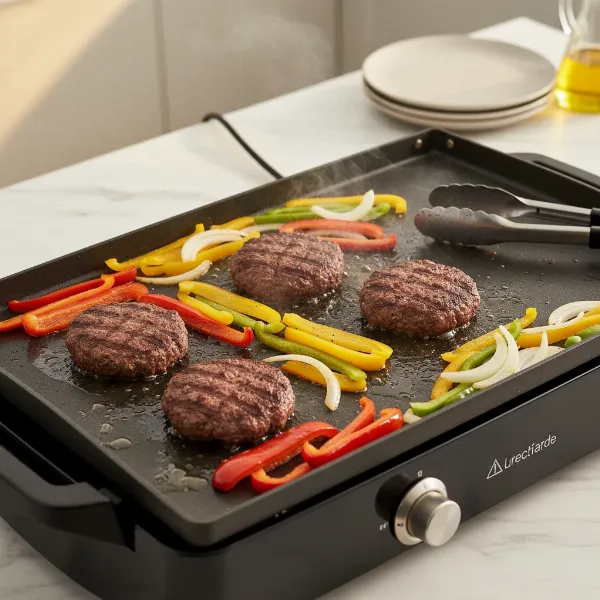 An open electric grill searing burgers and vegetables on a wide, flat cooking surface, illustrating its capacity for multiple items.
Contact Grills: Characteristics, Advantages, and Disadvantages
The contact grill, often recognized by its clamshell appearance, features two heated plates that press down on food, cooking it simultaneously from above and below. This design originated with the intent of efficient, even cooking without the need for flipping.
Advantages of Contact Grills:
- Rapid Cooking: The dual-sided heating mechanism significantly reduces cooking time, making it excellent for quick meals like paninis, grilled sandwiches, and burgers.
- Even Cooking and Grill Marks: By applying heat from both sides, contact grills ensure more uniform cooking and often produce appealing grill marks on both sides of the food without manual intervention.
- Efficient Fat Drainage: Many contact grills are designed with sloped surfaces that allow excess fat and grease to drain into a removable drip tray, promoting healthier cooking.
- Space-Saving Design: When not in use, contact grills often have a smaller footprint on the countertop compared to larger open grills, making them suitable for kitchens with limited space.
- Versatility (Convertible Models): A significant number of contact grills offer a convertible design, allowing them to open flat into an open grill, effectively giving you the best of both worlds.
Disadvantages of Contact Grills:
- Limited Capacity for Bulk Cooking: While efficient for individual items, the closed design can limit the number of items that can be cooked at once, especially thicker cuts of meat, unless the grill can open flat.
- Potential for Flattening Foods: The pressing action can flatten certain delicate foods, such as some fish or tender vegetables, altering their texture or presentation.
- Cleaning Challenges: While many come with removable, non-stick plates, cleaning the grooves of a contact grill can sometimes be more intricate than cleaning a flat open surface.
- Less Maneuverability: Once food is placed inside and the lid is closed, there’s less opportunity to stir, flip, or rearrange items during the cooking process.
Key Factors to Consider When Choosing Your Electric Grill
Deciding between an open grill and a contact grill involves more than just aesthetics; it’s about matching the appliance to your specific culinary habits and kitchen needs. Consider these factors to ensure you pick the best electric grill for your home.
Cooking Style and Food Preferences
|
Our Picks for the Best electric grill in 2026
As an Amazon Associate I earn from qualifying purchases.
|
||
| Num | Product | Action |
|---|---|---|
| 1 | Ninja Griddle and Indoor Grill, 14’’, Electric Grill, For Steak, Burgers, Salmon, Veggies, and More, Pancake Griddle, Nonstick, Dishwasher Safe, 500F, Even Cooking, Silver, GR101 |

|
| 2 | Ninja DG551 Foodi Smart XL 6-in-1 Indoor Grill with Air Fry, Roast, Bake, Broil, & Dehydrate, Foodi Smart Thermometer, 2nd Generation, Black/Silver |
|
| 3 | Artestia 1800W Electric Outdoor Grills with Lid Indoor Smokeless Grill for Balcony with Temperature Control Portable Removable Stand Grill for Cooking, BBQ Party, Family |
|
| 4 | Hamilton Beach Electric Indoor Searing Grill with Viewing Window & Adjustable Temperature Control to 450F, 118 sq. in. Surface Serves 6, PFAS-Free Removable Nonstick Grate, Stainless Steel |
|
| 5 | Electric Grill, CUSIMAX Electric Indoor/Outdoor Grill, 1600W Portable BBQ with Lid for Indoor & Outdoor Use, Adjustable Heat, Removable Stand Grill for Cookouts, BBQ Gatherings, Small Spaces |
|
| 6 | Chefman Smokeless Indoor Electric Grill, Extra Large Grilling Surface, Nonstick Table Top Grill for Indoor Grilling and BBQ with Adjustable Temperature Control, Drip Tray, Dishwasher-Safe Parts |
|
| 7 | Chefman XL Electric Griddle with Removable Temperature Control, Immersible Flat Top Grill, Burger, Eggs, Pancake Griddle, Nonstick Extra Large Cooking Surface, Slide Out Drip Tray, 10 x 20 Inch |
|
| 8 | Electric Grill, Techwood Indoor/Outdoor Electric BBQ Grill, 1600W Portable Removable Stand Grill with Adjustable Heat & Drip Tray, Double Layer Design for Party, Patio & Backyard (Blue) |
|
| 9 | Electric Grill, Techwood Indoor/Outdoor Electric BBQ Grill, 1600W Portable Removable Stand Grill with Adjustable Heat & Drip Tray, Double Layer Design for Party, Patio & Backyard (Black) |
|
| 10 | Chefman Electric Smokeless Indoor Grill w/ Non-Stick Cooking Surface & Adjustable Temperature Knob from Warm to Sear for Customized BBQing, Dishwasher Safe Removable Water Tray, Black |
|
Think about the types of food you plan to grill most often. If pressed sandwiches, paninis, thick cuts of meat, or quick-cooking items are your staples, a contact grill will likely be your best ally. Its dual-sided cooking excels at these tasks, delivering quick and even results. However, if you frequently prepare breakfast items like pancakes and eggs, delicate fish, or need to sauté larger quantities of vegetables, an open grill offers the necessary surface area and flexibility.
Cooking Speed and Efficiency
For those living in a fast-paced environment where quick meal preparation is a priority, the contact grill holds a significant advantage. Its ability to cook food from both sides simultaneously dramatically cuts down cooking time. An open grill, while still efficient, requires manual flipping and can take longer for certain dishes.
Capacity and Family Size
The number of people you typically cook for should heavily influence your decision. An open grill with its expansive surface is generally better suited for larger families or when entertaining, allowing you to cook multiple portions concurrently. Contact grills are often more compact and excel at cooking smaller batches, making them ideal for individuals or couples. However, many convertible contact grills can open up to provide a large, open grilling surface, combining versatility with capacity.
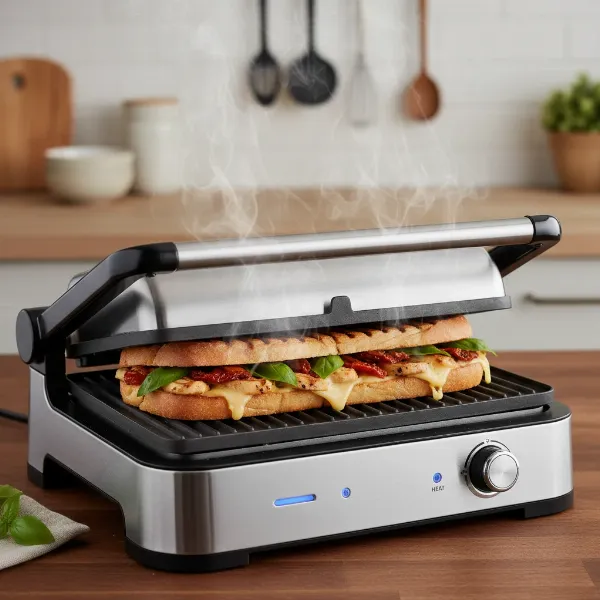 A closed contact electric grill pressing a delicious panini sandwich, highlighting its dual-cooking function and compact design.
Space and Portability
Kitchen counter space is a valuable commodity. If your kitchen is on the smaller side or you prefer to store your appliances away, a contact grill (when closed) typically has a more compact footprint. Open grills, especially larger models, demand more dedicated counter space. Consider if you need a portable option for outdoor use or tabletop grilling, as some models of both types offer this flexibility.
Versatility (Convertible Options)
Some of the most popular electric grills today offer hybrid functionality, allowing a contact grill to fully open flat, transforming it into an open grill or griddle. This “2-in-1” feature provides unparalleled versatility, letting you press a panini one moment and grill a batch of pancakes the next. If you can only invest in one appliance but desire the capabilities of both, a convertible model is an excellent choice.
Material and Cleaning
Look for grills with durable, non-stick cooking surfaces, such as those made from cast iron, stainless steel, or with PFOA-free coatings. Removable and dishwasher-safe plates are a huge bonus, simplifying the cleaning process. While open grills generally offer easier access for cleaning their flat surfaces, contact grills with deep grooves can sometimes be more challenging unless they have truly effective non-stick properties and removable plates.
Temperature Control and Features
Precise temperature control is crucial for optimal cooking. Most electric grills offer adjustable heat settings, but some advanced models include specific cooking presets, timers, or even temperature probes for greater accuracy. Features like an integrated grease tray are also essential for both types, managing excess fats and making cleanup easier.
Open Grill vs. Contact Grill: A Detailed Comparison
To help you visualize the differences, here’s a detailed comparison of open grills and contact grills:
| Feature | Open Grill (Flat-Top/Grill Plate) | Contact Grill (Clamshell/Panini Press) |
|---|---|---|
| Cooking Surface | Single, flat, or ridged surface | Dual, hinged top and bottom plates |
| Cooking Method | Cooks from bottom up; requires manual flipping | Cooks from top and bottom simultaneously; presses food |
| Cooking Speed | Slower for individual items; faster for large batches (no flip) | Faster for individual items; can be slower for large batches |
| Ideal Foods | Pancakes, eggs, bacon, delicate fish, vegetables, stir-fries | Paninis, grilled sandwiches, burgers, chicken breasts, thicker meats |
| Capacity | Generally larger surface area for multiple items | Smaller surface area for fewer items, but many open flat |
| Space | Takes up more counter space | Compact when closed; can take up more when opened flat |
| Versatility | Excellent for diverse flat cooking; less pressing capability | Best for pressing; many convert to open grill for more versatility |
| Grill Marks | One-sided grill marks (if ridged) | Two-sided grill marks (if ridged) |
| Fat Drainage | Often has a drip tray or channel | Sloped plates and integrated drip tray common |
| Cleaning | Generally easier to clean flat surfaces | Grooves can be harder to clean, but many have removable plates |
Top Recommendations: Best Open and Contact Electric Grills
While specific model recommendations can change frequently with new product releases, understanding the leading brands and what they excel at can guide your choice. For robust open electric grills, look for brands renowned for their durable non-stick surfaces, consistent heating across the entire plate, and easy-to-clean designs. These are often found in larger, more substantial tabletop models designed for cooking a full meal.
For contact grills, brands that pioneered the dual-plate concept often offer models with superior pressing mechanisms, intelligent temperature control, and often the coveted ability to open flat into an open grill. Prioritize models with removable, dishwasher-safe plates for hassle-free cleanup, and consider those with adjustable height settings to accommodate various food thicknesses without crushing them.
Ultimately, the “best” grill isn’t a single product but rather the one that perfectly fits your cooking habits, available kitchen space, and budget. Research current top-rated models from reputable kitchen appliance manufacturers, paying close attention to user reviews regarding durability, ease of use, and cleaning.
Tips for Maximizing Your Electric Grilling Experience
Regardless of whether you choose an open or contact electric grill, a few simple practices can elevate your cooking and extend the life of your appliance.
- Always Preheat Thoroughly: Just like an outdoor grill, electric grills need to reach their optimal temperature before food is added. Preheating ensures even cooking and helps achieve those desirable grill marks. Many models have indicator lights to signal when they’re ready.
- Use Minimal Oil: Electric grills are often designed with non-stick surfaces, meaning you need very little oil. A light brush of oil on the food or the plates is usually sufficient, promoting healthier cooking and easier cleanup.
- Don’t Overcrowd the Grill: Cooking too much food at once can lower the grill’s temperature, leading to steaming instead of searing. Cook in batches if necessary to maintain consistent heat and achieve better results.
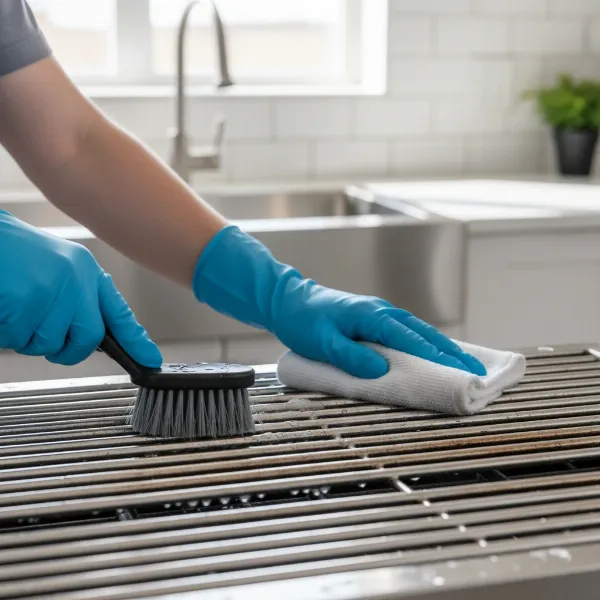
- Clean Immediately After Use: Once the grill has cooled down but is still warm, it’s the easiest time to clean it. For models with removable plates, pop them into the dishwasher. For fixed plates, use a damp cloth or a soft brush to wipe away food residue. Avoid abrasive scrubbers that can damage the non-stick coating.
- Store Properly: Ensure your grill is completely clean and dry before storing it. Keep it in a safe place where it won’t be easily damaged. Convertible contact grills are often designed for vertical storage to save space.
- Read the Manual: Every grill is slightly different. The manufacturer’s manual will provide specific instructions for operation, cleaning, and maintenance unique to your model.
By following these tips, you’ll not only enjoy delicious grilled meals but also ensure your electric grill remains a reliable kitchen companion for years to come.
Conclusion
Choosing between an open electric grill and a contact electric grill ultimately boils down to your personal cooking style, the types of food you love to prepare, and your kitchen’s demands. An open grill offers the freedom of a spacious, single cooking surface, perfect for large batches, delicate items, and mimicking a traditional barbecue experience. In contrast, a contact grill excels at speed and efficiency, cooking food from both sides, ideal for pressed sandwiches and quicker meals. Many modern contact grills even offer the versatility of opening flat to double as an open grill, providing a comprehensive solution.
Understanding these distinctions allows you to select an electric grill that doesn’t just sit on your counter, but actively enhances your culinary journey. Which type of electric grill will best unlock your indoor grilling potential?
Frequently Asked Questions
Can a contact grill be used as an open grill?
Yes, many modern contact grills are designed with a hinge that allows them to open flat, transforming them into an open grilling surface. This provides the versatility of using the appliance as a contact grill for pressed items or as an open grill for more delicate foods or larger cooking areas.
Do open grills cook as fast as contact grills?
Generally, no. Contact grills cook faster for individual items because they apply heat from both the top and bottom simultaneously. Open grills, with their single heating surface, require manual flipping and typically take longer to cook food through.
Which grill is better for cooking large quantities of food?
An open grill, or a convertible contact grill opened flat, is usually better for cooking larger quantities of food simultaneously. Their expansive, unobstructed cooking surface allows you to place more items side-by-side, making them ideal for family meals or entertaining.
Are electric grills healthy?
Electric grills can be a healthier cooking option as they often feature non-stick surfaces that require minimal oil. Many models also include built-in grease drainage systems that allow excess fats to drip away from the food, reducing fat content in your meals.
How do I clean my electric grill?
For most electric grills, it’s best to clean them once they have cooled down but are still slightly warm. If the plates are removable and dishwasher-safe, you can simply put them in the dishwasher. For fixed plates, wipe them down with a damp cloth or a soft sponge, avoiding abrasive materials that could damage the non-stick coating.