The aroma of freshly grilled food often brings to mind backyard barbecues and smoky char, but for millions around the globe, it also evokes the familiar sizzle of an indoor electric grill. Among these, one name stands out as an undeniable icon: the George Foreman Grill. Since its introduction, this countertop appliance has revolutionized how people approach healthy, convenient cooking, transforming kitchens and simplifying meal preparation. Its widespread popularity makes it easy to assume its origins are straightforward, but the story of the George Foreman Grill is a fascinating tale of innovation, marketing genius, and a boxing legend’s unexpected pivot into the world of kitchenware.
The Genesis of an Icon: What is the George Foreman Grill?
At its core, the George Foreman Grill is an indoor electric grill designed for quick, convenient cooking. Its signature feature is dual-contact heating, meaning it cooks food simultaneously from both the top and bottom. What truly set it apart, however, was its innovative design: a sloped grilling surface that allowed excess fat and grease to drain away into a removable drip tray. This simple yet brilliant engineering transformed the perception of grilled foods, offering a healthier cooking option right on your kitchen counter without the need for outdoor space or charcoal. This “lean, mean, fat-reducing” promise resonated deeply with consumers, carving out a unique niche in the burgeoning market for health-conscious kitchen appliances.
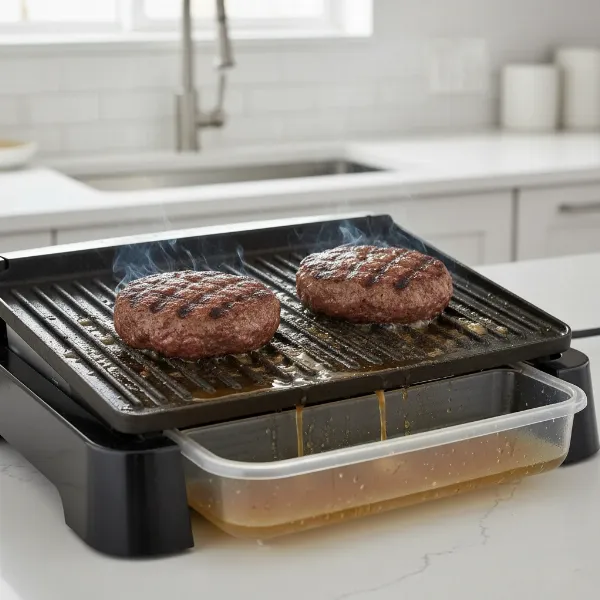 Close-up of a George Foreman grill cooking meat, with fat visibly draining into the drip tray.
The True Inventors Behind the Lean, Mean, Fat-Reducing Machine
While George Foreman’s name is synonymous with the grill, he was not its inventor. The credit for the original concept and design belongs to Michael Boehm and Robert W. Johnson. Boehm, an industrial designer and general manager at Tsann Kuen USA in the early 1990s, envisioned a grill that could cook food on both sides and, crucially, reduce fat. He developed a prototype featuring a lower cooking plate angled at 20 degrees, allowing grease to drain efficiently.
Initially, this innovative device went by several names, including the “Short-Order Grill” and “Fajita Express,” as it was sometimes pitched as a convenient way to prepare fajita meats, with the angled surface facilitating easy transfer into tortillas. Despite its clever design, the grill struggled to gain significant traction in its early days. The patent application for their “device for cooking food stuffs” was officially filed by Boehm and Johnson on January 11, 1995, and approved on March 4, 1997, with Tsann Kuen USA, Inc. listed as the assignee. The eventual success of the grill would ultimately come through a partnership with Salton, Inc., which acquired the rights to the design, setting the stage for its legendary rise.
From Boxing Ring to Kitchen Counter: George Foreman’s Endorsement
The pivotal moment in the grill’s history arrived with the involvement of George Foreman. In 1994, Foreman, then 45 years old, made an improbable comeback to win the heavyweight boxing championship, becoming the oldest man to do so. His public persona had shifted from fierce competitor to a charismatic, affable figure who championed a healthier lifestyle, attributing his renewed vigor to better eating habits. This focus on health made him a natural fit for the fat-reducing grill.
The story goes that Salton, Inc. sent samples of the grill to Foreman’s team. Initially, Foreman was hesitant, having endorsed numerous products throughout his career. However, it was his wife, Joan Foreman, who reportedly tried the grill first and was highly impressed with its ability to cook delicious, healthier burgers—a favorite food of George’s. Her positive experience convinced him to try it, and he was reportedly ecstatic with the results. His genuine enthusiasm, combined with his approachable personality, made him the perfect spokesperson. The product was officially rebranded and launched as the “George Foreman Lean Mean Fat-Reducing Grilling Machine” in 1994, accompanied by a memorable infomercial campaign that highlighted its benefits with Foreman’s signature charm.
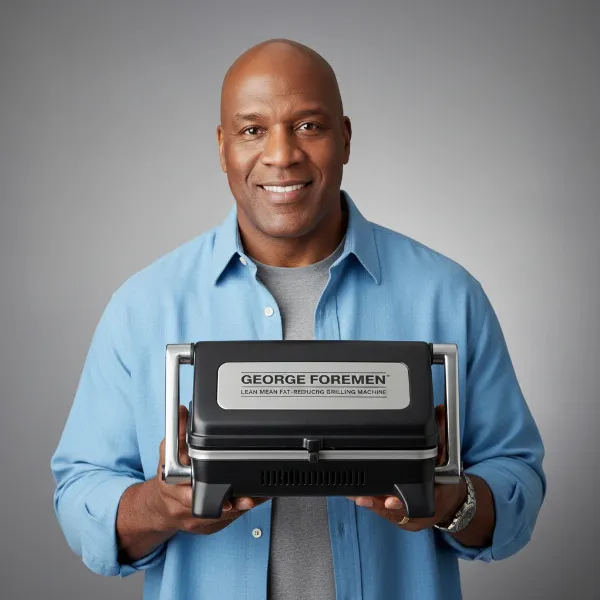 George Foreman, smiling, holding his iconic electric grill, promoting healthy cooking.
Unprecedented Success: The George Foreman Grill’s Impact on Kitchens Worldwide
The launch of the George Foreman Grill was nothing short of a phenomenon. Its clever design, coupled with George Foreman’s authentic and engaging endorsement, resonated with millions of consumers looking for convenient, healthier cooking solutions. The visual proof of fat draining into the drip tray provided a tangible benefit that was easy to understand and appreciate.
The sales figures speak volumes about its success. Within its first 15 years, the George Foreman Grill sold over 100 million units worldwide, making it one of the best-selling kitchen appliances of all time. This meteoric rise brought immense financial success not only to Salton, Inc. but also to George Foreman himself. While Foreman initially received a percentage of the profits, Salton, Inc. eventually bought out his naming rights in 1999 for an impressive sum reported to be between $137 million and $140 million. At its peak, Foreman was estimated to be earning around $4.5 million per month from the grill’s sales. The George Foreman Grill didn’t just sell; it became a cultural touchstone, a staple in dorm rooms, apartments, and family kitchens, changing the landscape of indoor electric grilling forever.
The Evolution of the George Foreman Grill: Beyond the Original Design
The success of the original model paved the way for a diverse range of George Foreman Grills, adapting to evolving consumer needs and technological advancements. Over the years, the product line expanded significantly, introducing various sizes from compact models perfect for single servings to larger family-sized grills. Innovations included removable plates for easier cleaning, adjustable temperature controls for greater cooking precision, digital timers, and specialized grill plates for specific foods like waffles or paninis.
Manufacturers also experimented with different materials for the grilling surfaces and incorporated new features like variable height hinges to accommodate thicker cuts of meat or sandwiches. This continuous evolution ensured that the George Foreman Grill remained relevant in a competitive market, maintaining its core promise of healthy, convenient cooking while offering enhanced functionality and versatility to a broad audience.
Why the George Foreman Grill Remains a Kitchen Staple
Decades after its initial launch, the George Foreman Grill continues to hold a prominent place in many kitchens. Its enduring appeal lies in its simplicity and effectiveness. It offers a straightforward solution for busy individuals and families seeking to prepare meals quickly without sacrificing taste or health. The ability to drain fat still provides a clear health benefit, making it a favorite for grilling burgers, chicken, fish, and vegetables.
The grill’s easy-to-clean design, particularly models with removable plates, further contributes to its longevity. It embodies the essence of practical kitchen technology, providing a no-fuss grilling experience that minimizes mess and maximizes convenience. The legacy of the George Foreman Grill is a testament to how a well-designed product, coupled with an authentic and powerful endorsement, can transform cooking habits and create a lasting impact on popular culture.
Conclusion
The journey of the George Foreman Grill from a designer’s innovative concept to a global household name is a captivating chapter in the history of kitchen appliances. It demonstrates the power of a simple, effective solution to a common problem: how to cook delicious, healthier meals quickly and conveniently indoors. Thanks to the ingenuity of its inventors, Michael Boehm and Robert W. Johnson, and the unforgettable charisma and credibility of George Foreman, this electric grill transcended its utility to become a true icon. Its story is a powerful reminder that sometimes, the greatest innovations are those that empower us to live a little leaner, and a lot meaner, in the kitchen. If you’ve never experienced the magic of dual-contact grilling and fat reduction, isn’t it time you discovered what makes the George Foreman Grill a continuing success?
Frequently Asked Questions
Who invented the George Foreman Grill?
The George Foreman Grill was primarily invented by Michael Boehm, with Robert W. Johnson credited as a co-inventor on the patent. George Foreman himself did not invent the grill; he famously lent his name and became the highly successful spokesperson for the product.
When was the George Foreman Grill first released?
The “George Foreman Lean Mean Fat-Reducing Grilling Machine” was officially launched in 1994. The core design, however, had been developed and patented by Michael Boehm and Robert W. Johnson earlier in the 1990s, initially under names like “Short-Order Grill.”
How many George Foreman Grills have been sold?
The George Foreman Grill has achieved remarkable sales success, with over 100 million units sold worldwide since its introduction. This milestone was reached within approximately 15 years of its initial launch, solidifying its place as one of the best-selling kitchen appliances ever.
What made the George Foreman Grill so popular?
The George Foreman Grill’s popularity stemmed from several key factors: its innovative fat-draining design for healthier cooking, the convenience of dual-contact indoor grilling, and the highly effective endorsement by boxing legend George Foreman, who championed its health benefits and ease of use.