The sizzle of an electric grill promising a delicious meal is one of life’s simple pleasures. But that satisfaction can quickly turn to frustration when your electric grill repeatedly trips the circuit breaker, plunging your cooking area into darkness and halting your culinary plans. This common issue can stem from various electrical problems, from simple overloads to more complex internal faults. Understanding the root cause is the first step toward a successful troubleshoot and getting back to grilling.
Understanding Why Your Electric Grill Trips the Breaker
When your electric grill trips a circuit breaker, it’s a safety mechanism at work, protecting your home’s wiring from potential damage or fire. Several factors can trigger this protective response.
Electrical Overload: The Circuit’s Limit
|
Our Picks for the Best electric grill in 2026
As an Amazon Associate I earn from qualifying purchases.
|
||
| Num | Product | Action |
|---|---|---|
| 1 | Electric Grill, CUSIMAX Electric Indoor/Outdoor Grill, 1600W Portable BBQ with Lid for Indoor & Outdoor Use, Adjustable Heat, Removable Stand Grill for Cookouts, BBQ Gatherings, Small Spaces |

|
| 2 | Electric Grill, Techwood Indoor/Outdoor Electric BBQ Grill, 1600W Portable Removable Stand Grill with Adjustable Heat & Drip Tray, Double Layer Design for Party, Patio & Backyard (Blue) |
|
| 3 | Chefman XL Electric Griddle with Removable Temperature Control, Immersible Flat Top Grill, Burger, Eggs, Pancake Griddle, Nonstick Extra Large Cooking Surface, Slide Out Drip Tray, 10 x 20 Inch |
|
| 4 | Artestia 1800W Electric Outdoor Grills with Lid Indoor Smokeless Grill for Balcony with Temperature Control Portable Removable Stand Grill for Cooking, BBQ Party, Family |
|
| 5 | Chefman Electric Smokeless Indoor Grill w/ Non-Stick Cooking Surface & Adjustable Temperature Knob from Warm to Sear for Customized BBQing, Dishwasher Safe Removable Water Tray, Black |
|
| 6 | Ninja Griddle and Indoor Grill, 14’’, Electric Grill, For Steak, Burgers, Salmon, Veggies, and More, Pancake Griddle, Nonstick, Dishwasher Safe, 500F, Even Cooking, Silver, GR101 |
|
| 7 | Chefman Smokeless Indoor Electric Grill, Extra Large Grilling Surface, Nonstick Table Top Grill for Indoor Grilling and BBQ with Adjustable Temperature Control, Drip Tray, Dishwasher-Safe Parts |
|
| 8 | Ninja DG551 Foodi Smart XL 6-in-1 Indoor Grill with Air Fry, Roast, Bake, Broil, & Dehydrate, Foodi Smart Thermometer, 2nd Generation, Black/Silver |
|
| 9 | Hamilton Beach Electric Indoor Searing Grill with Viewing Window & Adjustable Temperature Control to 450F, 118 sq. in. Surface Serves 6, PFAS-Free Removable Nonstick Grate, Stainless Steel |
|
| 10 | Electric Grill, Techwood Indoor/Outdoor Electric BBQ Grill, 1600W Portable Removable Stand Grill with Adjustable Heat & Drip Tray, Double Layer Design for Party, Patio & Backyard (Black) |
|
One of the most frequent culprits behind a tripped breaker is an electrical overload. This occurs when an electrical circuit draws more current (amperage) than it’s designed to safely handle. Electric grills are powerful appliances, often ranging from 1200 watts to over 2000 watts, with many models averaging around 1800 watts. A typical household circuit is rated for either 15 or 20 amps. To illustrate, an 1800-watt grill on a standard 120-volt circuit will draw about 15 amps (1800W / 120V = 15A). If you’re running other high-wattage appliances, like a toaster oven, microwave, or coffeemaker, on the same 15-amp circuit simultaneously, the combined draw can easily exceed the breaker’s limit, causing it to trip.
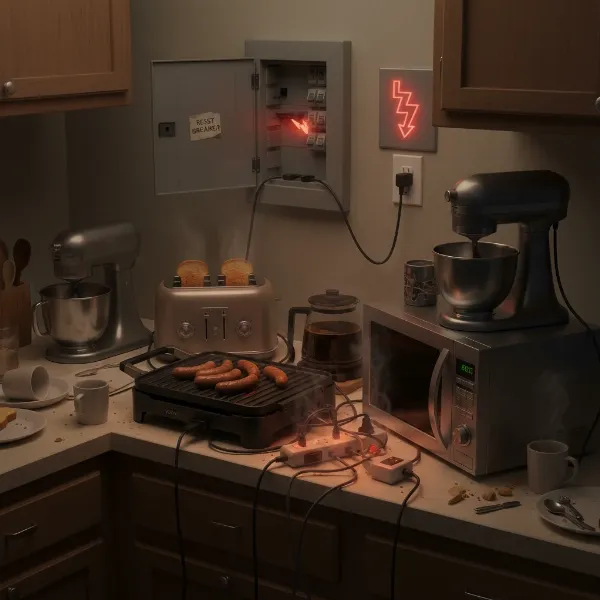 Illustration of an overloaded kitchen circuit with multiple appliances plugged in causing a breaker trip.
Short Circuits: Unexpected Paths
A short circuit happens when electricity deviates from its intended path, finding a shortcut through damaged wiring or components. This creates a sudden, massive surge of current that the circuit breaker quickly detects and shuts off. Within an electric grill, a short circuit can be caused by damaged internal wiring, insulation breakdown, or a fault in the heating element itself. These internal issues require careful inspection and often professional attention.
Ground Faults: When Safety Kicks In
Ground Fault Circuit Interrupters (GFCIs), or Residual Current Devices (RCDs) in some regions, are specialized outlets or breakers designed to protect against electric shock. They trip when they detect an imbalance in the electrical current, indicating that electricity is escaping its intended path and finding an unintended route to the ground – perhaps through you, or through moisture. Electric grills, especially those used outdoors or exposed to humidity, can develop ground faults if moisture infiltrates the heating element or electrical connections. This is why GFCIs are commonly found in kitchens, bathrooms, and outdoor areas where water exposure is a risk.
Faulty Components within the Grill
The problem might lie within the electric grill itself. Several components are susceptible to wear and tear:
- Defective Heating Element: The heating element is the heart of your grill, responsible for generating heat. Over time, its insulation can degrade, or it can suffer physical damage like cracks or corrosion, leading to short circuits or ground faults. A failing element is a common cause of frequent tripping.
- Damaged Power Cord: The grill’s power cord can become worn, frayed, or severed, especially with frequent use and storage. A damaged cord can overheat, create a short circuit, or pose a serious safety hazard.
- Internal Wiring Issues: Beyond the main power cord, loose or corroded internal wiring connections within the grill can disrupt the electrical flow and cause intermittent tripping.
External Electrical System Issues
Sometimes, the grill is not the problem, but rather the electrical system it’s plugged into.
- Worn-Out Circuit Breaker: Circuit breakers, like any mechanical device, can wear out over time. An older or faulty breaker might become overly sensitive and trip at lower loads than its rating, or it might fail to hold a connection reliably.
- Faulty Wall Outlet: The wall outlet itself could be damaged or have loose internal wiring, causing intermittent power issues.
- Improper Extension Cord Use: Using an undersized or damaged extension cord can lead to voltage drop, overheating, and ultimately, a tripped breaker. Always ensure any extension cord used is rated for outdoor, heavy-duty use and matches or exceeds the grill’s amperage requirements (typically 15 amps or more).
Step-by-Step Troubleshooting Your Electric Grill
When your electric grill trips the breaker, a systematic approach can help you diagnose the problem safely and effectively.
Prioritize Safety: Disconnect Power First
Before attempting any inspection or troubleshooting, always ensure your electric grill is completely unplugged from the power source. Electrical work can be dangerous, and disconnecting the power is the most critical first step to prevent electric shock or injury.
Isolate the Problem: Grill or Circuit?
To determine if the issue lies with the grill or your home’s electrical system, you need to isolate the appliance.
- Try a Different Outlet: Plug your electric grill into a different electrical outlet, ideally one on a separate circuit if possible. If the grill functions normally on another circuit, it suggests your original circuit was overloaded or has an issue.
- Unplug Other Appliances: If the grill is on a shared circuit, unplug all other appliances in that area. Then, plug in only the grill and turn it on. If it no longer trips the breaker, you’ve identified a circuit overload.
- Review Extension Cord Usage: If you’re using an extension cord, try plugging the grill directly into the wall outlet. If the tripping stops, the extension cord was likely the problem. Ensure any extension cord you use is heavy-duty, rated for outdoor use, and can handle the grill’s wattage (e.g., a 15-amp rated cord for most electric grills).
Inspect the Grill’s External Components
A visual inspection can often reveal obvious problems.
- Power Cord Check: Carefully examine the entire length of the power cord for any signs of damage. Look for frayed wires, cuts, kinks, or exposed insulation. Any damage here necessitates immediate replacement of the cord (or the grill if the cord isn’t replaceable).
- Plug Inspection: Check the grill’s plug for any bent or broken prongs, or signs of discoloration or burning, which could indicate a faulty connection.
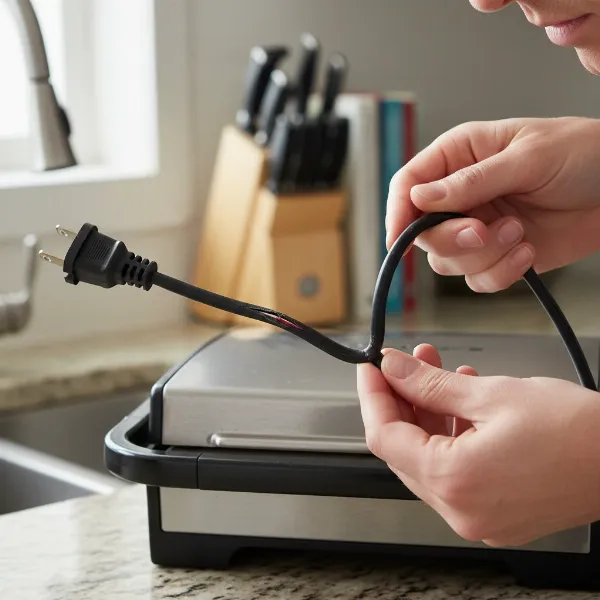 A person carefully inspecting the power cord of an electric grill for any signs of fraying or damage.
Examine Internal Grill Components (Caution Advised)
Inspecting internal components requires more caution and a basic understanding of electrical safety. If you’re uncomfortable, consult a professional.
- Heating Element Visual Check: Once the grill is unplugged and cool, carefully examine the heating element. Look for any visible cracks, bulges, discolored spots, or signs of burning or corrosion. These are indicators of a faulty element that needs replacement.
- Multimeter Test (for advanced users): For those comfortable with a multimeter, you can test the heating element for continuity. Set the multimeter to the Ohms setting and touch the probes to the terminals of the heating element. A healthy element should show a resistance reading (often between 12 and 60 Ohms, depending on the grill’s wattage and voltage). If the multimeter reads “OL” (open circuit) or “1,” the element has no continuity and is defective, requiring replacement.
- Internal Wiring and Connections: If you can safely access the internal wiring (refer to your grill’s manual), look for any loose, corroded, or burnt connections. Tighten any loose connections.
Assess Your Home’s Electrical System
If the grill appears fine, the issue might be with your home’s electrical infrastructure.
- Resetting the Breaker: Locate your electrical panel. If a standard breaker is tripped, it will typically be in an “off” or middle position. Push it firmly to the “off” position first, then back to “on.” For a GFCI outlet, press the “Reset” button. If the breaker immediately trips again, a serious electrical fault exists.
- Test the Outlet: Plug another appliance (like a lamp or a small blender) into the outlet where the grill was connected. If that appliance works normally, the outlet itself is likely fine, pointing the problem back to the grill.
Preventative Measures and When to Call a Professional
Maintaining your electric grill and understanding your home’s electrical limits can prevent future tripping incidents.
Best Practices for Electric Grill Use
- Dedicated Circuit: For high-wattage electric grills, consider having a licensed electrician install a dedicated 20-amp circuit. This ensures the grill has its own power supply, minimizing the risk of overload from other appliances.
- Avoid Overloading: Be mindful of how many appliances are running on the same circuit, especially in the kitchen or outdoor areas. Prioritize the grill by unplugging other unnecessary devices.
- Proper Extension Cords: If an extension cord is essential, always use a heavy-duty, outdoor-rated cord with a gauge (thickness) appropriate for the grill’s power draw. Avoid using multiple extension cords daisy-chained together.
- Keep It Clean and Dry: Regularly clean your electric grill, paying attention to areas around the heating element and electrical connections. Ensure the grill is completely dry before plugging it in, as moisture is a common cause of ground faults. Store the grill and its controller in a dry, protected environment.
- Regular Inspections: Periodically check the power cord, plug, and visible components for any signs of wear or damage. Early detection can prevent larger problems.
When to Seek Expert Help
While many issues can be resolved with basic troubleshooting, some problems are best left to qualified professionals.
- Persistent Tripping: If your electric grill continues to trip the breaker after you’ve performed basic checks and isolation, it indicates a more serious internal fault in the grill or an underlying issue with your home’s wiring.
- Visible Electrical Panel Damage: Any signs of burning, sparking, or unusual noises coming from your electrical panel or wall outlets warrant immediate professional attention from a licensed electrician.
- Unfamiliarity with Electrical Work: If you’re uncomfortable disassembling your grill, testing components with a multimeter, or dealing with your home’s electrical panel, it’s safer to call an appliance repair technician or an electrician. Attempting repairs beyond your skill level can lead to further damage, injury, or fire hazards.
“A tripped breaker is a warning sign from your electrical system. Ignoring it or using a larger fuse can be incredibly dangerous. Always address the root cause, or seek professional help when in doubt.” – John Electrician, Master Electrician and Safety Expert.
Conclusion
An electric grill tripping the breaker is a common but resolvable issue. By systematically checking for electrical overloads, short circuits, ground faults, and component failures within both your grill and your home’s electrical system, you can often identify and fix the problem. Always prioritize safety by disconnecting power and exercising caution. With a little troubleshooting know-how and adherence to best practices, you can ensure your electric grill operates safely and reliably, bringing countless delicious meals to your table. What’s your go-to grilling recipe when your electric grill is running perfectly?
Frequently Asked Questions
Why does my electric grill keep tripping the GFCI outlet?
Your electric grill likely trips a GFCI (Ground Fault Circuit Interrupter) outlet because it detects a ground fault. This means electricity is flowing along an unintended path to the ground, often due to moisture ingress into the heating element or electrical connections, or insulation breakdown. Try drying the grill completely and inspecting for visible damage. If it persists, the heating element or internal wiring may be faulty and require professional inspection.
Can a faulty heating element always trip a breaker immediately?
Not always immediately. A severely shorted heating element will likely trip the breaker instantly. However, if the fault is intermittent, or if moisture is causing a ground fault, the breaker might only trip after the element heats up, expands, or the moisture creates a sufficient leakage path. It’s a common characteristic for RCDs/GFCIs to detect failing heating elements on their way out.
Is it safe to use an extension cord with an electric grill?
It can be safe if the correct extension cord is used. Always use a heavy-duty, outdoor-rated extension cord that can handle the high wattage of an electric grill (typically 15 amps or more). Using a cord that is too thin or damaged can lead to overheating, voltage drop, and potentially trip the breaker or cause a fire hazard. Plugging directly into a wall outlet is always preferable if possible.
How do I know if my circuit is overloaded?
You can suspect a circuit overload if the breaker trips when multiple high-wattage appliances are running simultaneously on the same circuit, especially if the grill works fine when other devices are unplugged. To confirm, turn off the tripped breaker, unplug all devices on that circuit, reset the breaker, and then plug in and turn on devices one by one. If the breaker trips after a specific device or combination, that circuit is likely overloaded.