Grilling outdoors offers an unparalleled experience, bringing together delicious food and fresh air. If you’re using an electric grill, however, there’s one often-overlooked component that’s absolutely critical for both performance and safety: the right extension cord. Many outdoor electric grills come with short power cords, necessitating an extension, but choosing the wrong one can lead to frustrating power issues, potential appliance damage, or even serious hazards. This guide will walk you through everything you need to know to select the best extension cord for your outdoor electric grill, ensuring your grilling sessions are safe, efficient, and enjoyable.
Understanding Extension Cords for Outdoor Electric Grills
An extension cord, at its core, is designed to extend the reach of an electrical outlet to your appliance. For outdoor electric grills, these aren’t just any cords; they are crucial conduits for power, and their specifications must meet the demanding requirements of a high-wattage outdoor appliance while enduring various environmental conditions. Unlike indoor cords, outdoor extension cords are built with robust insulation and jackets to withstand elements like moisture, UV rays, and temperature fluctuations. They are engineered to provide a stable power supply to your grill, which often draws significant amperage to generate the heat needed for cooking.
Choosing the appropriate outdoor-rated cord is paramount. These specialized cords feature designations like “W” or “SJTW” on their jacket, indicating their suitability for wet or outdoor use and their thermoplastic construction. These markings are your first clue that a cord is designed to handle the rigors of the outdoors, providing a safer and more reliable connection for your electric grill.
Why the Right Extension Cord is Non-Negotiable: Safety and Performance
The decision to use a suitable extension cord for your outdoor electric grill isn’t just about convenience; it’s a critical safety and performance imperative. Using an incorrect cord can introduce a host of problems, transforming your backyard cooking endeavor into a potential hazard.
One of the most significant advantages of using the correct, heavy-duty outdoor extension cord is safety. Electric grills are high-wattage appliances, drawing considerable current. A cord that is too thin or not rated for outdoor use can overheat, melt, or even ignite, posing a severe fire risk. Proper cords are designed with thicker wires and durable insulation to safely manage this electrical load, significantly reducing the chances of overheating and electrical fires. They also prevent tripped circuit breakers, which can interrupt your grilling.
Beyond safety, the right extension cord ensures optimal grill performance. A cord with an insufficient wire gauge (too thin) or excessive length can lead to “voltage drop.” This means the grill doesn’t receive the full voltage it needs to operate efficiently, resulting in slower heating times, uneven cooking, and potentially even damage to the grill’s heating elements over time. A robust, appropriately gauged cord minimizes resistance, delivering consistent power for peak grilling efficiency. It also provides the necessary reach, allowing you to position your grill in a safe, convenient location away from walls or combustible materials. Conversely, using an unsuitable cord introduces several disadvantages, including increased risk of electrical shock in damp conditions, appliance malfunction due to inadequate power, and rapid wear and tear of the cord itself when exposed to the elements.
Essential Factors When Choosing an Extension Cord for Your Electric Grill (Buying Guide)
Selecting the ideal extension cord for your outdoor electric grill requires careful consideration of several technical specifications and features. Understanding these factors will ensure you make an informed and safe choice.
Outdoor Rating and Certifications
|
Our Picks for the Best electric grill in 2026
As an Amazon Associate I earn from qualifying purchases.
|
||
| Num | Product | Action |
|---|---|---|
| 1 | Artestia 1800W Electric Outdoor Grills with Lid Indoor Smokeless Grill for Balcony with Temperature Control Portable Removable Stand Grill for Cooking, BBQ Party, Family |

|
| 2 | Hamilton Beach Electric Indoor Searing Grill with Viewing Window & Adjustable Temperature Control to 450F, 118 sq. in. Surface Serves 6, PFAS-Free Removable Nonstick Grate, Stainless Steel |
|
| 3 | Ninja Griddle and Indoor Grill, 14’’, Electric Grill, For Steak, Burgers, Salmon, Veggies, and More, Pancake Griddle, Nonstick, Dishwasher Safe, 500F, Even Cooking, Silver, GR101 |
|
| 4 | Chefman XL Electric Griddle with Removable Temperature Control, Immersible Flat Top Grill, Burger, Eggs, Pancake Griddle, Nonstick Extra Large Cooking Surface, Slide Out Drip Tray, 10 x 20 Inch |
|
| 5 | Ninja DG551 Foodi Smart XL 6-in-1 Indoor Grill with Air Fry, Roast, Bake, Broil, & Dehydrate, Foodi Smart Thermometer, 2nd Generation, Black/Silver |
|
| 6 | Chefman Electric Smokeless Indoor Grill w/ Non-Stick Cooking Surface & Adjustable Temperature Knob from Warm to Sear for Customized BBQing, Dishwasher Safe Removable Water Tray, Black |
|
| 7 | Chefman Smokeless Indoor Electric Grill, Extra Large Grilling Surface, Nonstick Table Top Grill for Indoor Grilling and BBQ with Adjustable Temperature Control, Drip Tray, Dishwasher-Safe Parts |
|
| 8 | Electric Grill, Techwood Indoor/Outdoor Electric BBQ Grill, 1600W Portable Removable Stand Grill with Adjustable Heat & Drip Tray, Double Layer Design for Party, Patio & Backyard (Black) |
|
| 9 | Electric Grill, Techwood Indoor/Outdoor Electric BBQ Grill, 1600W Portable Removable Stand Grill with Adjustable Heat & Drip Tray, Double Layer Design for Party, Patio & Backyard (Blue) |
|
| 10 | Electric Grill, CUSIMAX Electric Indoor/Outdoor Grill, 1600W Portable BBQ with Lid for Indoor & Outdoor Use, Adjustable Heat, Removable Stand Grill for Cookouts, BBQ Gatherings, Small Spaces |
|
Always opt for an outdoor-rated extension cord. These cords are specifically designed to withstand external environmental conditions like rain, UV exposure, and temperature extremes. Look for designations such as “W” (weather-resistant) or “SJTW” (Service Junior Thermoplastic Weather-resistant) printed on the cord’s jacket. Furthermore, ensure the cord has been tested and certified by a nationally recognized testing laboratory like UL (Underwriters Laboratories) or ETL. This certification guarantees that the cord meets stringent safety standards for its intended use. Using an indoor-only cord outdoors is a significant safety risk, as its insulation is not built to protect against moisture or physical damage common outside.
Wire Gauge (AWG) Explained
The wire gauge, indicated by the American Wire Gauge (AWG) number, refers to the thickness of the wires inside the cord. It’s crucial to remember that the lower the gauge number, the thicker the wire, and the greater its capacity to carry electrical current. For high-power appliances like electric grills, which typically draw between 13 to 15 amps, a thicker wire gauge is essential to prevent overheating and voltage drop.
- 12-Gauge (AWG): This is generally the recommended minimum for outdoor electric grills, especially for cords 50 feet or longer. A 12-gauge cord can safely handle 15 to 20 amps for lengths up to 50 feet and 14 to 15 amps for lengths up to 100 feet. Its thicker construction minimizes resistance and ensures sufficient power delivery.
- 14-Gauge (AWG): While suitable for smaller outdoor appliances or very short runs, a 14-gauge cord for an electric grill might be acceptable for lengths typically under 25-50 feet, where it can handle 14-15 amps. However, its capacity drops to 11-13 amps for longer runs (e.g., 100 feet), making it potentially insufficient for many electric grills and increasing the risk of voltage drop and overheating.
- 16-Gauge (AWG): Generally not recommended for electric grills. These cords are typically for light-duty indoor appliances or very low-power outdoor items (e.g., holiday lights) and cannot safely handle the amperage requirements of an electric grill.
Cord Length and Voltage Drop
The length of your extension cord directly impacts its performance and safety. As a general rule, use the shortest possible extension cord that safely reaches your outlet. The longer an extension cord, the more electrical resistance it presents, which can lead to a “voltage drop.” When voltage drops, your grill receives less power, affecting its ability to heat up and maintain temperature, and can also put strain on the appliance.
For high-power appliances, excessive length combined with an inadequate gauge can be particularly problematic. If you absolutely need a longer cord, you must compensate by choosing a lower (thicker) gauge to counteract the increased resistance. For instance, a 100-foot cord for an electric grill would almost certainly require a 12-gauge wire, whereas a 25-foot cord might safely use a 14-gauge, depending on the grill’s exact wattage.
Amperage and Wattage Capacity
Before purchasing, identify your electric grill’s amperage and wattage requirements, usually found on a label on the grill or in its user manual. Most electric grills operate on a standard 120V circuit and draw anywhere from 12 to 15 amps, which translates to 1440 to 1800 watts (Amps x Volts = Watts).
Your chosen extension cord must have an amperage rating equal to or higher than your grill’s maximum amperage draw. For example, if your grill draws 15 amps, you need an extension cord rated for at least 15 amps. Using a cord with a lower amperage rating than your appliance demands will lead to overheating and potential damage to both the cord and the grill.
Durability and Construction Materials
An outdoor extension cord needs to withstand harsh conditions. Look for cords with a robust, heavy-duty jacket made from materials like vinyl or rubber. These materials offer excellent resistance to abrasion, moisture, oils, and UV degradation. Rubber jackets often remain more flexible in colder temperatures compared to vinyl. The plugs should also be sturdy, well-insulated, and preferably grounded (three-prong) to ensure a safe electrical connection.
Additional Features
Some extension cords offer convenient features that enhance usability and safety:
- Lighted Ends: An indicator light in the plug signals that power is flowing through the cord, useful for quick troubleshooting.
- E-Zee Lock or Locking Connectors: These features secure the connection between the grill’s cord and the extension cord, preventing accidental disconnections that could be dangerous or interrupt grilling.
- Flat Plugs: Can be useful for outlets behind furniture, though less common for heavy-duty outdoor use.
“When it comes to outdoor electric grills, never compromise on your extension cord. The correct gauge and outdoor rating are fundamental for preventing fire hazards and ensuring your grill performs as it’s designed to.” – John M. Davis, Master Electrician with 20+ Years Experience
Selecting the Best: What to Look for in Top Extension Cords for Electric Grills
Choosing a “best” extension cord isn’t about a single brand or model, but rather a combination of characteristics that define a high-quality, safe, and effective product for outdoor electric grills. The top extension cords will consistently exhibit robust construction and appropriate electrical specifications to meet the demands of high-draw appliances in outdoor environments.
When evaluating options, prioritize heavy-duty, outdoor-rated cords with a 12-gauge wire for most electric grills. These cords feature a thicker copper conductor, minimizing resistance and voltage drop, which is crucial for maintaining consistent power to your grill’s heating elements. A superior cord will also boast a durable, weather-resistant outer jacket, typically made from high-quality rubber or tough vinyl. This ensures flexibility in various temperatures and protection against abrasion, moisture, and UV damage. Look for cords explicitly marked with “SJTW” or “W” ratings, signifying their suitability for outdoor, wet, and general service.
Safety certifications from organizations like UL or ETL are non-negotiable indicators of a cord’s reliability and adherence to safety standards. Desirable additional features include lighted ends that confirm power flow and locking connectors that prevent accidental disconnections, enhancing both convenience and safety during use. While specific product names may vary, focusing on these attributes will guide you toward an extension cord that provides dependable, safe, and efficient power for your outdoor electric grill, ensuring years of trouble-free grilling.
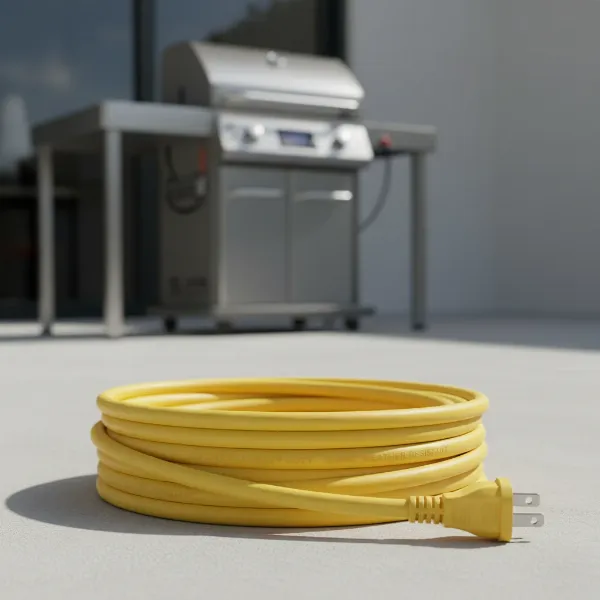 A robust, bright yellow 12-gauge outdoor extension cord coiled on a patio with an electric grill in the background, emphasizing safety and durability.
Tips for Safe Use and Maintenance of Extension Cords with Electric Grills
Even with the right extension cord, proper usage and maintenance are crucial to ensure safety and extend the life of both your cord and your electric grill.
Safe Usage Practices
- Fully Uncoil the Cord: Always unroll an extension cord completely before use. A coiled cord can trap heat, leading to overheating and potential fire hazards, especially when powering high-amperage appliances like electric grills.
- Avoid Overloading: Never plug multiple high-wattage appliances into a single extension cord or power strip connected to an extension cord. This can easily overload the circuit, trip breakers, or cause the cord to overheat.
- Keep Connections Dry and Elevated: Ensure that the connection points between your grill’s cord and the extension cord, as well as the extension cord’s plug into the outlet, remain dry and off the ground. Moisture can cause short circuits and electric shocks. Use a cord protector or elevated surface to keep connections out of puddles or damp grass.
- Avoid Tripping Hazards: Route your extension cord carefully to prevent it from becoming a tripping hazard. If necessary, use cord covers designed for outdoor use or position the cord along a wall or under furniture where it won’t be stepped on.
- Never Daisy-Chain: Do not connect multiple extension cords together to achieve a longer length. This practice significantly increases resistance and the risk of voltage drop and overheating. If you need a longer reach, invest in a single, appropriately gauged cord of the necessary length.
Maintenance and Storage Tips
- Regular Inspection: Before each use, visually inspect your extension cord for any signs of damage. Look for frayed wires, cracked insulation, exposed conductors, bent or missing prongs, or discoloration (which can indicate overheating). Any damaged cord should be immediately replaced.
- Cleanliness: Keep your cord clean and free of dirt, grease, or debris. These can degrade the jacket material over time.
- Proper Storage: When not in use, coil the cord loosely and store it in a dry, cool place away from direct sunlight, extreme temperatures, and moisture. Avoid tightly wrapping it around sharp objects, which can stress the wiring and insulation.
- Protect from Critters: If storing outdoors or in a garage, consider placing the cord in a protective container to prevent damage from rodents or other pests.
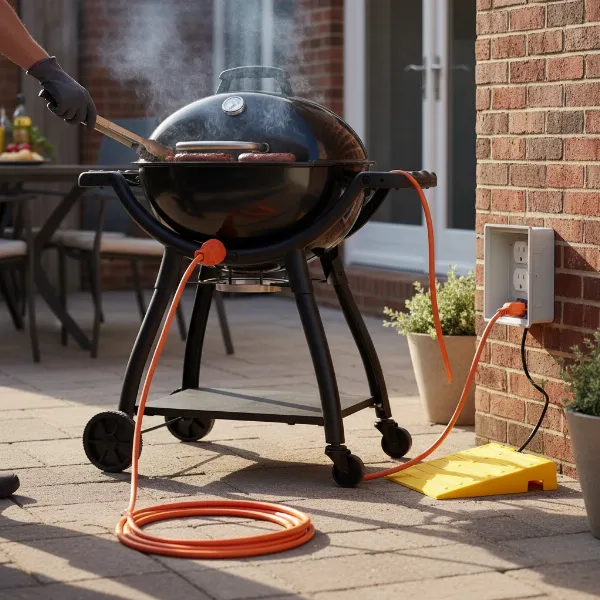 An outdoor electric grill being safely used with a heavy-duty extension cord, showing the cord fully uncoiled and connections protected from elements.
Conclusion
Choosing the best extension cord for your outdoor electric grill is far more than an afterthought; it’s a critical decision that impacts the safety, efficiency, and overall enjoyment of your grilling experience. By understanding the importance of outdoor ratings, selecting the correct wire gauge (preferably 12-gauge for most grills), and matching the cord’s amperage capacity to your grill’s demands, you safeguard against potential hazards like overheating and voltage drop. Remember to always prioritize the shortest possible length and adhere to safe usage practices, such as fully uncoiling the cord and keeping connections dry. Investing in a high-quality, appropriately specified extension cord is an investment in countless safe and perfectly grilled meals.
What kind of delicious dishes will you create now that your outdoor electric grill is powered perfectly and safely?
Frequently Asked Questions
What gauge extension cord should I use for my electric grill?
For most outdoor electric grills, a 12-gauge extension cord is highly recommended. This thicker wire gauge can safely handle the high amperage drawn by grills, minimizing the risk of overheating and ensuring your grill receives consistent power for optimal performance.
Can I use a regular indoor extension cord for my outdoor electric grill?
No, it is unsafe to use a regular indoor extension cord for an outdoor electric grill. Indoor cords lack the necessary robust insulation and weather resistance to withstand outdoor elements like moisture and UV rays, posing a significant risk of electrical shock and fire. Always use an outdoor-rated cord.
How do I know if an extension cord is rated for outdoor use?
Look for specific markings on the cord’s jacket, such as “W” (weather-resistant) or “SJTW” (Service Junior Thermoplastic Weather-resistant). These designations indicate that the cord is designed and certified for safe outdoor use and exposure to environmental factors.
Does the length of the extension cord matter for an electric grill?
Yes, the length matters significantly. Use the shortest extension cord possible that still allows for safe placement of your grill. Longer cords increase electrical resistance, leading to “voltage drop,” which can reduce power to your grill and affect its performance.
What happens if I use an extension cord with a lower amperage rating than my grill?
Using an extension cord with a lower amperage rating than your electric grill requires can cause the cord to overheat, melt, or even ignite. It can also lead to tripped circuit breakers and potentially damage your grill due to insufficient power delivery, creating a serious safety hazard.